A Study in Solitude and Faith: Unveiling St. Fernando
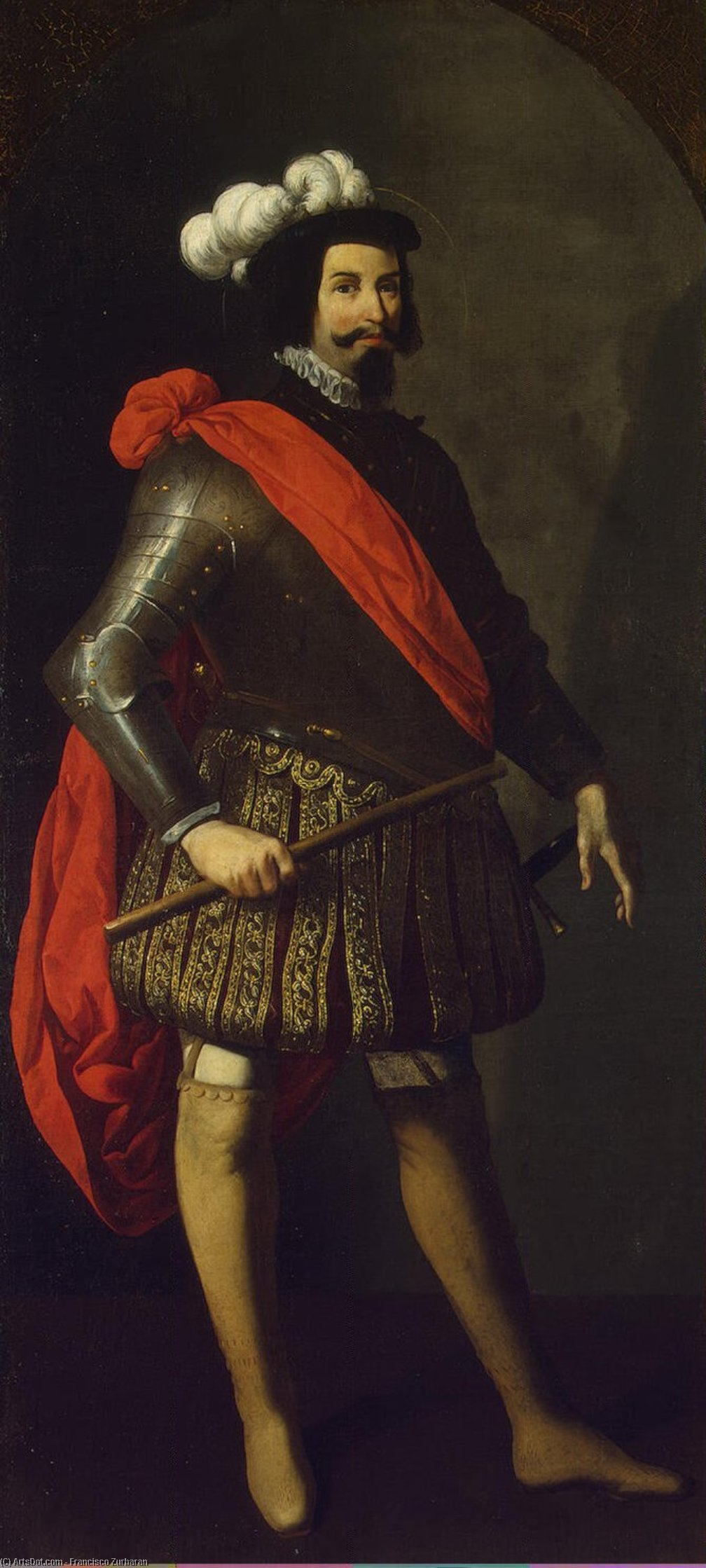
Francisco de Zurbarán’s “St. Fernando” is not merely a portrait; it's a profound meditation on faith, austerity, and the spiritual journey. Painted circa 1630-1640 during his most intensely focused period, this oil-on-wood panel embodies the core tenets of the Spanish Baroque style – dramatic chiaroscuro, meticulous detail, and an almost palpable sense of devotion. The subject, identified as St. Fernando (also known as Saint Ferdinand III of León), is presented not in triumphant glory but in a state of quiet contemplation, embodying a stark contrast between earthly power and divine grace.

The composition is strikingly simple yet powerfully effective. St. Fernando stands before a dark, receding wall – a deliberate choice that draws the viewer’s eye directly to the figure and his attire. He wears a deep crimson cape, rich in texture and subtly rendered with meticulous brushstrokes, symbolizing sacrifice and martyrdom. The white hat, a symbol of royalty and authority, is juxtaposed against the somber tones of the robe, suggesting a relinquishing of worldly power for spiritual allegiance. His sword, held at his side, isn’t brandished aggressively but rests calmly, representing both defense and submission to God's will.
The Baroque Masterclass: Light, Shadow, and Texture
Zurbarán was a master of *tenebrism*, a technique popularized by Caravaggio, where strong contrasts between light and dark dominate the scene. The intense illumination focuses entirely on St. Fernando’s face and clothing, highlighting his features and emphasizing the solemnity of his expression. This dramatic lighting isn't simply aesthetic; it serves to elevate the subject, imbuing him with a sense of sacredness. The artist’s attention to detail is extraordinary – observe the intricate folds of the cape, the texture of the fabric, and the subtle nuances in St. Fernando’s face. Zurbarán employed a layering technique, building up thin glazes of paint to achieve remarkable depth and luminosity, a hallmark of his style.
Furthermore, the use of *sfumato* – a soft, hazy effect – subtly blurs the edges of the figure and background, creating an atmosphere of mystery and reverence. The wood panel itself contributes to the artwork’s impact; its dark surface absorbs light, intensifying the contrast between illumination and shadow and reinforcing the painting's solemn mood.
A Window into 17th-Century Spain
“St. Fernando” is deeply rooted in the religious fervor of 17th-century Spain, a period marked by the Counter-Reformation and a renewed emphasis on Catholic piety. The painting reflects the austere aesthetic favored by Zurbarán – a rejection of the opulent Baroque style prevalent elsewhere in Europe. His works often depicted scenes from the lives of saints and biblical figures, emphasizing their humility, devotion, and suffering. St. Ferdinand himself was a popular saint, revered for his unwavering loyalty to God and his willingness to sacrifice his life for his king and country.
The painting’s context within Zurbarán's oeuvre—particularly his commissions for religious institutions—underscores the importance of faith in Spanish society at the time. It’s a poignant reminder of a period when art served as a powerful tool for spiritual instruction and moral guidance. The work also speaks to the influence of Juan Sánchez Cotán, whose stark landscapes and still lifes provided Zurbarán with a model for his own restrained yet deeply expressive style.
Bringing “St. Fernando” Home: A Reproduction for Reflection
ArtsDot offers meticulously crafted hand-painted reproductions of “St. Fernando,” allowing you to experience the profound beauty and spiritual depth of this iconic masterpiece in your own space. Our skilled artisans replicate Zurbarán’s techniques with exceptional precision, capturing the nuances of light, shadow, and texture that define his work. Whether displayed in a chapel, a study, or a living room, this reproduction will serve as a constant source of contemplation and inspiration – a tangible connection to one of Spain's greatest artistic treasures.