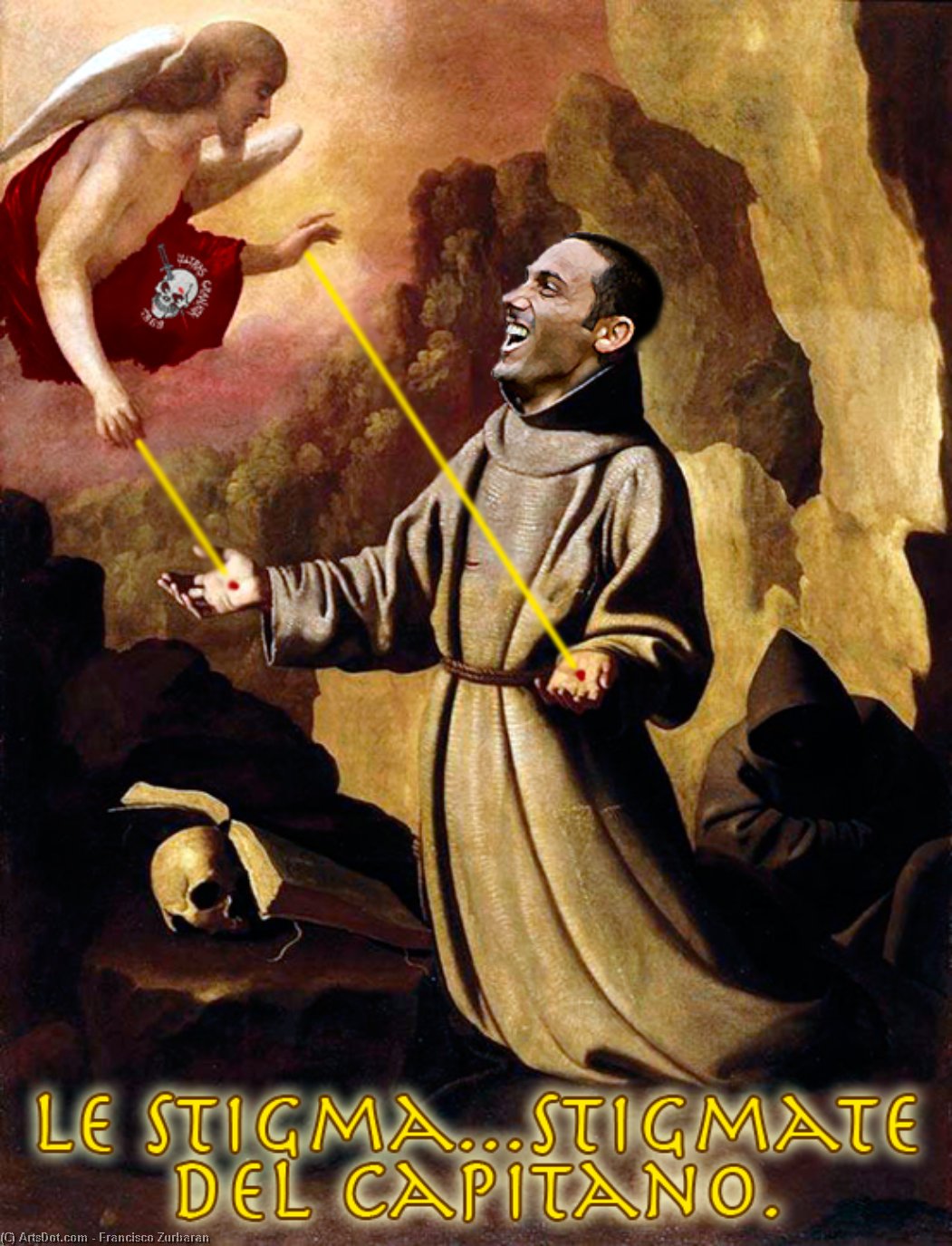
Discover Zurbarán’s Baroque masterpiece: 'St Francis of Assisi Receiving the Stigmata.' Experience dramatic light, profound spirituality & symbolic depth in this iconic depiction of faith and sacrifice.
Francisco de Zurbarán (1598-1664): Spanish Baroque master of dramatic tenebrism & religious art. Explore paintings of monks, saints & still lifes – the 'Spanish Caravaggio'!
A Moment Suspended in Divine Light
Francisco de Zurbarán’s *St Francis of Assisi Receiving the Stigmata* is not merely a painting; it's an encounter. A deeply moving and profoundly spiritual experience rendered on canvas, this Baroque masterpiece captures the precise instant Saint Francis receives the wounds of Christ – the stigmata – bestowed upon him by a descending angel. The scene unfolds with a quiet intensity, drawing the viewer into a realm where earthly suffering meets divine grace. Painted during a period of fervent religious revival in 17th-century Spain, the artwork embodies the Counter-Reformation’s emphasis on direct emotional connection with faith and serves as a powerful testament to Saint Francis' unwavering devotion. Zurbarán doesn’t present a dramatic spectacle; instead, he offers an intimate moment of mystical transformation, imbued with a solemn reverence that resonates across centuries.
The Language of Shadow and Light
Zurbarán was a master of *tenebrism*, the dramatic use of light and shadow that defines much of Baroque painting. In *St Francis Receiving the Stigmata*, this technique isn’t simply aesthetic; it's integral to the narrative. A stark contrast exists between the luminous figure of the angel and the shadowed cliff face against which Saint Francis kneels, focusing our attention on the pivotal exchange taking place. The light doesn’t flood the scene but rather spotlights the saint’s hands and chest – the very points where he will receive the sacred wounds. This masterful manipulation of illumination heightens the emotional intensity, creating a sense of awe and mystery. Zurbarán's style, rooted in the Seville school, is characterized by this striking naturalism and austere simplicity. He eschews elaborate compositions, preferring to isolate his figures against dark backgrounds, fostering an atmosphere of profound contemplation and reverence. The result is a painting that feels less like a depiction *of* faith and more like an invitation *to* faith.
Symbols of Mortality and Transcendence
The composition itself is carefully constructed to guide the viewer’s eye and deepen the symbolic resonance of the scene. Saint Francis, kneeling in humble devotion, becomes the focal point, his posture conveying both surrender and acceptance. The angel, a radiant presence descending from above, extends its hand not as an act of power but as an offering of shared suffering. Subtly placed in the lower portion of the painting are two skulls – potent *memento mori* symbols reminding us of mortality and the fleeting nature of earthly life. These aren’t morbid additions; they serve as a meditation on sacrifice, suffering, and the ultimate promise of spiritual transcendence. The angel's cherubic form adds an element of innocence and divine purity to the scene, contrasting with the stark reality of the wounds about to be inflicted. Every detail, from the folds of Saint Francis’ simple robe to the rugged texture of the cliff face, contributes to a powerful visual language that speaks to the core tenets of Christian belief.
A Legacy of Faith and Artistic Power
Zurbarán's *St Francis of Assisi Receiving the Stigmata* is more than just a historical artifact; it’s a timeless meditation on faith, sacrifice, and the enduring power of divine grace. The painting evokes a sense of awe, reverence, and profound empathy, inviting us to witness this deeply personal and transformative moment with Saint Francis. It stands as a testament to Zurbarán's skill not only as a painter but also as a storyteller, capable of conveying complex theological concepts through the power of visual imagery. The artwork’s somber palette, dramatic lighting, and realistic depiction of human emotion create an atmosphere of intense spiritual experience that continues to resonate with audiences today, making it a compelling addition to any collection or interior space seeking to inspire contemplation and reverence.