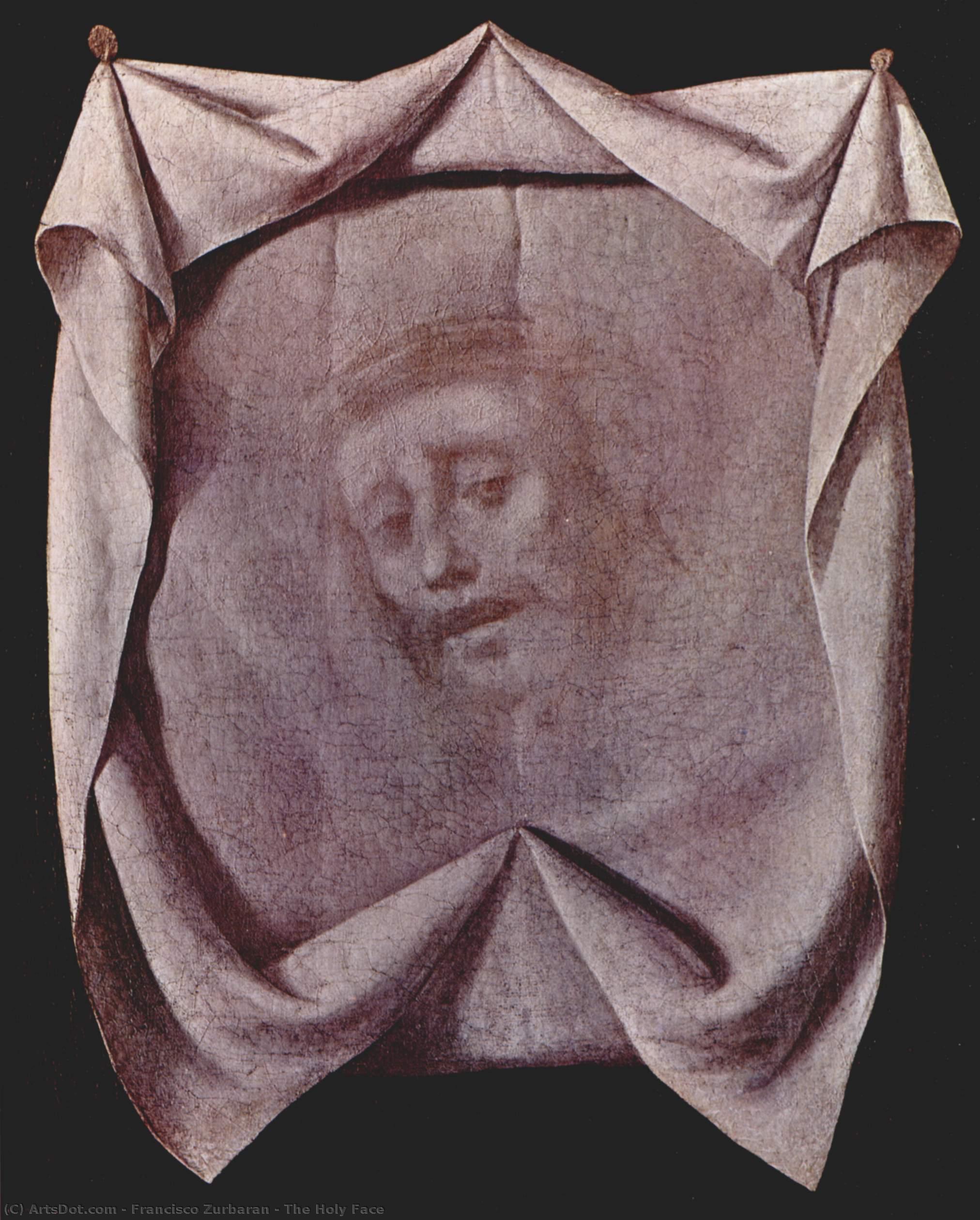
A Portrait of Devotion: Francisco de Zurbarán’s “The Holy Face”
Francisco de Zurbarán's "The Holy Face," painted in 1631, is not merely a portrait; it’s an immersion into the profound spirituality that permeated 17th-century Spain. Born in Fuente de Cantos, Extremadura, Zurbarán’s artistic journey was inextricably linked to the austere landscapes and deeply ingrained religious practices of his homeland. This painting, rendered with remarkable precision and imbued with a palpable sense of solemnity, offers a window into this world – a world where faith manifested not through elaborate spectacle but through quiet contemplation and unwavering devotion.
The subject himself is presented with an arresting directness. A man, likely a cleric or a devout layperson, sits in profile, his gaze lowered as if lost in prayer or deep reflection. His beard and mustache, meticulously rendered, speak to a life lived within the rhythms of faith and community. The crown resting upon his head isn’t a symbol of earthly power but rather an emblem of spiritual authority – a visual representation of his dedication to the sacred. Zurbarán's skill lies in his ability to convey this internal state through subtle gestures and the carefully chosen details of the figure’s attire. Note, for instance, the simple, dark robe, devoid of ornamentation, reflecting the monastic ideals prevalent at the time.
The Baroque Masterclass: Technique and Light
Zurbarán was a master of *tenebrism*, a dramatic technique characterized by stark contrasts between light and shadow. In “The Holy Face,” this is most evident in the way he illuminates the subject’s face, hands, and clothing, while leaving the background shrouded in darkness. This deliberate manipulation of light isn't simply an aesthetic choice; it serves to draw the viewer’s attention directly to the figure, intensifying his presence and emphasizing the solemnity of the scene. The use of *sfumato*, a subtle blurring of edges, further softens the forms and contributes to the overall sense of depth and realism.
- Chiaroscuro: Zurbarán’s masterful control of light and shadow creates an almost sculptural effect, highlighting the textures of the fabric and the contours of the face.
- Smooth Surfaces: He achieved this remarkable realism through a technique of applying thin layers of paint to create smooth, polished surfaces – a hallmark of his style.
- Monochromatic Palette: The painting’s predominantly dark palette reinforces the mood of piety and introspection.
Symbolism and Spiritual Resonance
Beyond its technical brilliance, “The Holy Face” is rich in symbolic meaning. The depiction itself – a man in prayer, crowned with a symbol of spiritual authority – directly references the veneration of the Holy Face of Jesus, an image believed to be the veil that covered Christ’s face during the crucifixion. This devotion was widespread throughout Spain and Europe during the 17th century, offering a tangible connection to the divine. The painting, therefore, becomes more than just a portrait; it's a visual testament to this fervent religious practice.
The setting, though somewhat indistinct, evokes the austere interiors of churches and monasteries – spaces designed for contemplation and spiritual reflection. It’s important to consider that Zurbarán was deeply influenced by the Jesuit order, known for their emphasis on piety and devotion. The painting reflects this influence, presenting a scene of quiet reverence and unwavering faith.
A Timeless Portrait: Reproduction and Interior Design
TopImpressionists offers meticulously crafted hand-painted reproductions of “The Holy Face,” allowing you to bring this powerful image into your home or office. Our skilled artisans faithfully recreate Zurbarán’s technique, capturing the nuances of his *tenebrism* and the profound emotional impact of the original painting. This reproduction is not merely a copy; it's an experience – a chance to connect with one of the most significant works of Spanish Baroque art.
The solemn beauty of “The Holy Face” makes it particularly well-suited for contemplative spaces, such as libraries, studies, or meditation rooms. Its rich textures and dramatic lighting will add depth and gravitas to any interior design scheme, creating an atmosphere of quiet reverence and artistic inspiration. Consider this piece not just as a decoration, but as a window into the heart of 17th-century Spanish spirituality.