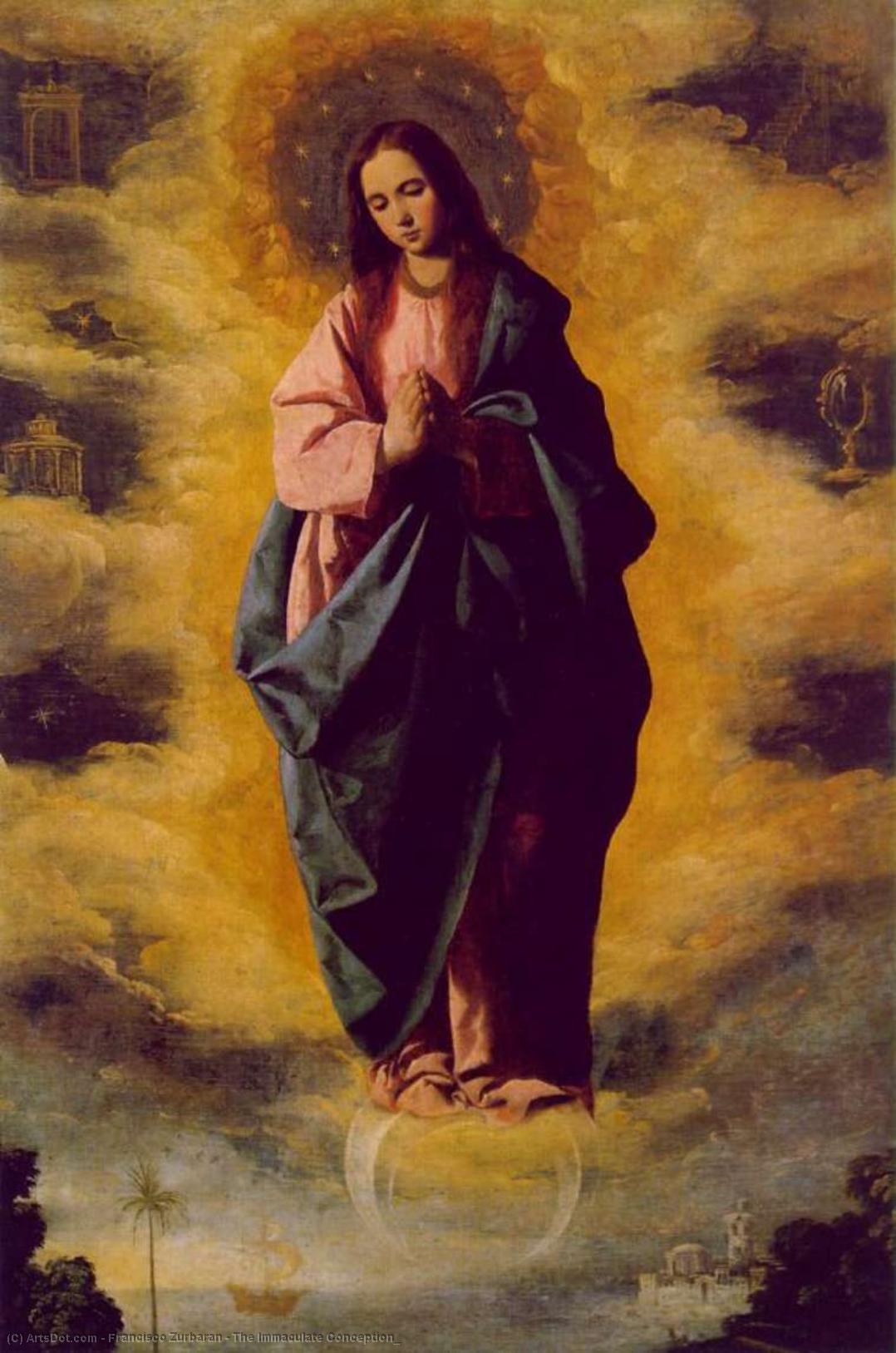
Francisco de Zurbarán’s masterful depiction of The Immaculate Conception embodies Baroque drama—a serene Mary cradling Jesus against a luminous cloudscape—capturing the spiritual essence of Spain's Golden Age and inviting you to experience its timeless beauty.
Francisco de Zurbarán (1598-1664): Spanish Baroque master of dramatic tenebrism & religious art. Explore paintings of monks, saints & still lifes – the 'Spanish Caravaggio'!
A Vision of Heavenly Grace: Exploring Francisco de Zurbarán’s The Immaculate Conception
The painting “The Immaculate Conception,” attributed to Francisco de Zurbarán (1598-1664), stands as a cornerstone of Baroque art and embodies the profound spiritual convictions that characterized Spain during its Golden Age. More than just a depiction of Mary cradling Jesus, it’s an exquisitely crafted meditation on purity, divine grace, and theological contemplation—themes central to Catholic piety at the time. Its enduring appeal lies not only in its visual splendor but also in the artist's masterful ability to convey intangible emotions through meticulous observation and restrained artistry.
The Artist’s Vision: Zurbarán’s Extremadura Roots
Born in Fuente de Cantos, Extremadura, Zurbarán’s formative years instilled within him a worldview deeply rooted in the austere landscapes and fervent religious traditions of his homeland. This environment profoundly influenced his artistic sensibilities, prioritizing simplicity, solemnity, and an unwavering focus on conveying spiritual truth. His apprenticeship with Alejandro de la Mina followed by studies under Alonso de Najera cemented his understanding of the Baroque style—a dramatic reaction against Mannerism’s convoluted compositions and ornamental excesses—yet Zurbarán retained a core aesthetic that distinguished him from many of his contemporaries. He wasn't interested in flamboyant displays; rather, he sought to capture the essence of faith through unwavering realism.
Style and Technique: Mastery of Light and Shadow
Zurbarán’s technique is instantly recognizable for its breathtaking use of chiaroscuro—the dramatic interplay between light and shadow—a hallmark of Baroque painting. He achieved this effect not through elaborate brushstrokes but through painstaking layering of thin glazes, creating an illusion of depth and luminosity that transcends mere representation. The muted palette – predominantly browns, ochres, and whites – contributes to the painting’s contemplative atmosphere, emphasizing Mary's serene countenance and Jesus’s tender repose. This deliberate restraint serves not to diminish the image’s impact but to heighten its spiritual resonance, inviting viewers into a space of profound stillness and contemplation.
Symbolism: Representations of Divine Perfection
The Immaculate Conception itself is laden with symbolic significance. It asserts Mary's virginity before conception—a belief that underscores her holiness and purity—representing God’s divine grace protecting her from original sin. The positioning of Mary and Jesus, bathed in ethereal light emanating from an unseen source, symbolizes the divine illumination that guides souls towards salvation. Furthermore, the sparse drapery around Mary emphasizes her vulnerability yet simultaneously conveys a sense of majesty, reflecting the Virgin Mother's unwavering devotion to God. The angels flanking Mary are depicted with dignified composure, reinforcing the painting’s solemn character and highlighting the sanctity of the scene.
Emotional Impact: A Timeless Expression of Faith
“The Immaculate Conception” transcends mere visual beauty; it evokes a powerful emotional response in the viewer. Its stillness speaks volumes about faith—a quiet acceptance of divine providence and an unwavering trust in God's benevolence. The painting’s luminous quality imbues the scene with warmth and serenity, transporting viewers to a realm beyond earthly concerns. It remains a poignant reminder of humanity’s yearning for spiritual transcendence and serves as an enduring testament to Zurbarán’s artistic genius—a genius capable of capturing not just what is seen but what is felt.