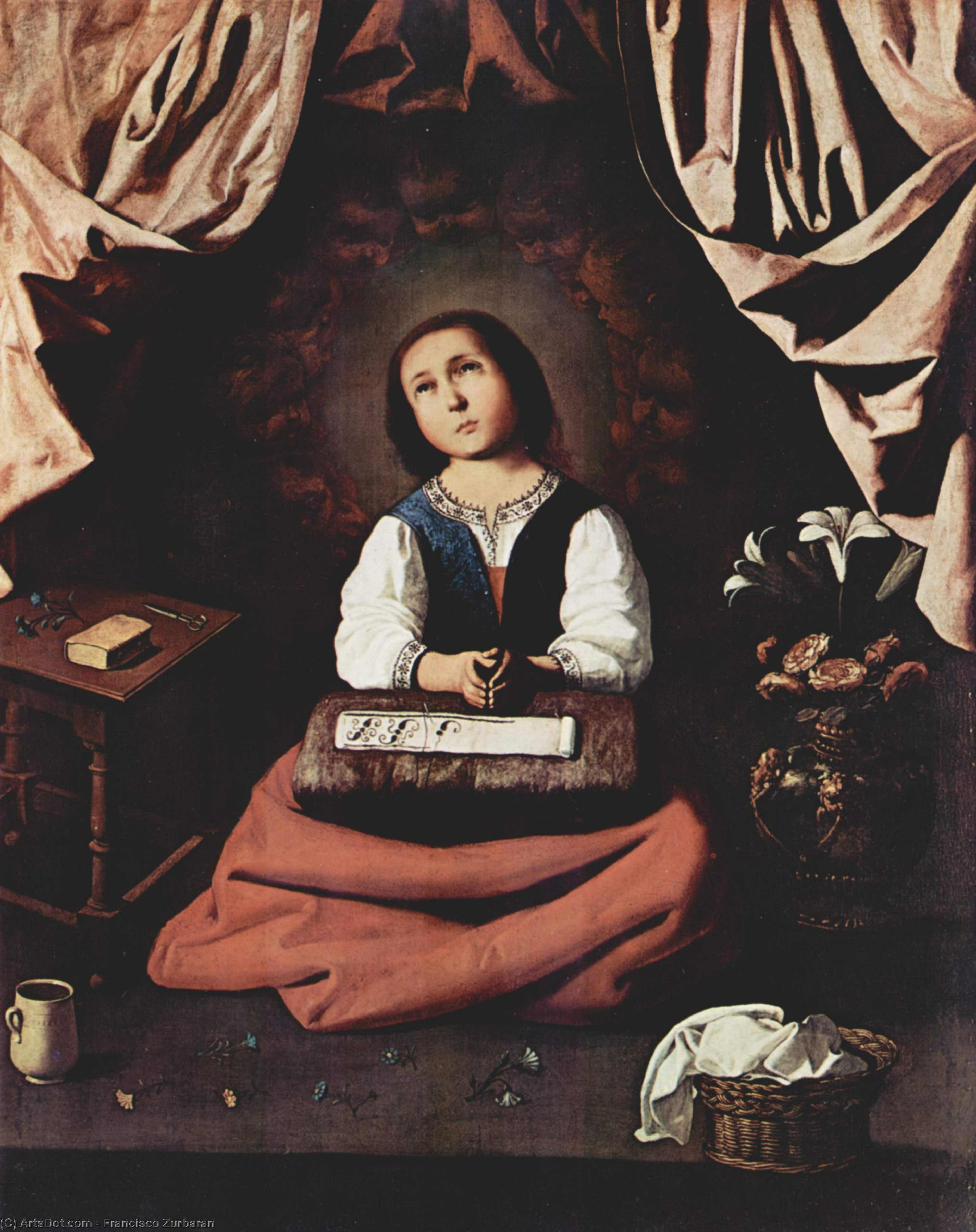
Francisco de Zurbarán’s serene depiction of ‘The Young Virgin,’ executed in the Baroque era, captures a moment of contemplative prayer against a muted pink and black backdrop—a masterful blend of stillness and devotion. Explore this iconic artwork and bring its timeless beauty into your home.
A Portrait of Serenity: Exploring Francisco de Zurbarán’s “The Young Virgin”
The painting "The Young Virgin," attributed to the Spanish Baroque master Francisco de Zurbarán (1598-1664), transcends mere representation; it embodies a profound meditation on piety and contemplation. Executed sometime around 1630, this intimate portrait captures a young girl seated gracefully upon the earth, her hands clasped in prayer—a gesture that speaks volumes about the spiritual landscape of its era. The artwork’s impact resonates powerfully with viewers today, offering a glimpse into the artistic sensibilities of a period defined by fervent religious devotion and an unwavering commitment to naturalism.
- Subject Matter & Composition: At the heart of the piece is a young woman—likely a nun—positioned centrally against a backdrop of draped curtains. This deliberate framing emphasizes her solitude and inward focus, inviting contemplation on themes of faith and humility. The positioning of the girl’s hands symbolizes reverence and supplication, mirroring the prevalent spiritual practices of the time.
- Style & Technique: Zurbarán's signature style is characterized by its austere beauty—a hallmark of Spanish Baroque art. He employs a masterful technique known as *tenebrismo*, dramatically contrasting areas of intense light with deep shadows. This chiaroscuro effect isn’t merely stylistic; it serves to heighten the emotional impact, conveying a sense of solemn stillness and spiritual illumination. The artist meticulously renders textures – from the folds of fabric to the girl's skin—with astonishing realism, demonstrating an unparalleled understanding of anatomy and observation.
Historical Context: Spain Under Philip IV’s Reign
“The Young Virgin” emerged during the reign of Philip IV (1605-1665), a period marked by significant political instability and economic hardship despite Spain's continued dominance in Europe. However, it was also an era profoundly shaped by Catholicism—the Catholic Monarchs’ legacy continuing to exert considerable influence on societal values and artistic expression. Zurbarán’s work reflects this pervasive religious fervor, aligning with the Counter-Reformation’s emphasis on piety and moral virtue. The painting served as a visual testament to the Church's role in upholding spiritual ideals amidst turbulent times.
- Symbolism: Beyond its depiction of prayer, “The Young Virgin” is laden with symbolic significance. The curtains represent divine grace enveloping the subject, shielding her from worldly distractions and fostering inner peace. The vase and bowl—simple yet carefully placed objects—suggest a connection to earthly sustenance and humility—a reminder that spiritual devotion must be grounded in practical considerations.
- Emotional Impact: The painting’s enduring appeal lies in its ability to evoke feelings of tranquility, reverence, and introspection. Zurbarán skillfully captures the essence of contemplative piety, conveying a profound sense of serenity and spiritual grace. It invites viewers to contemplate themes of faith, purity, and inner harmony—qualities that continue to resonate powerfully across cultures and generations.
Interior Design Considerations
For interior designers seeking inspiration, “The Young Virgin” offers a compelling aesthetic proposition. Its muted palette—dominated by earthy tones accented by subtle pinks and blacks—creates an atmosphere of understated elegance perfectly suited for calming spaces such as bedrooms or meditation rooms. The painting’s monumental scale lends itself beautifully to gallery walls, providing a focal point that commands attention without overwhelming the surrounding environment. Reproductions crafted with archival inks on premium canvas offer collectors the opportunity to experience Zurbarán's artistic vision in exquisite detail—a timeless masterpiece destined to inspire and enchant for years to come.