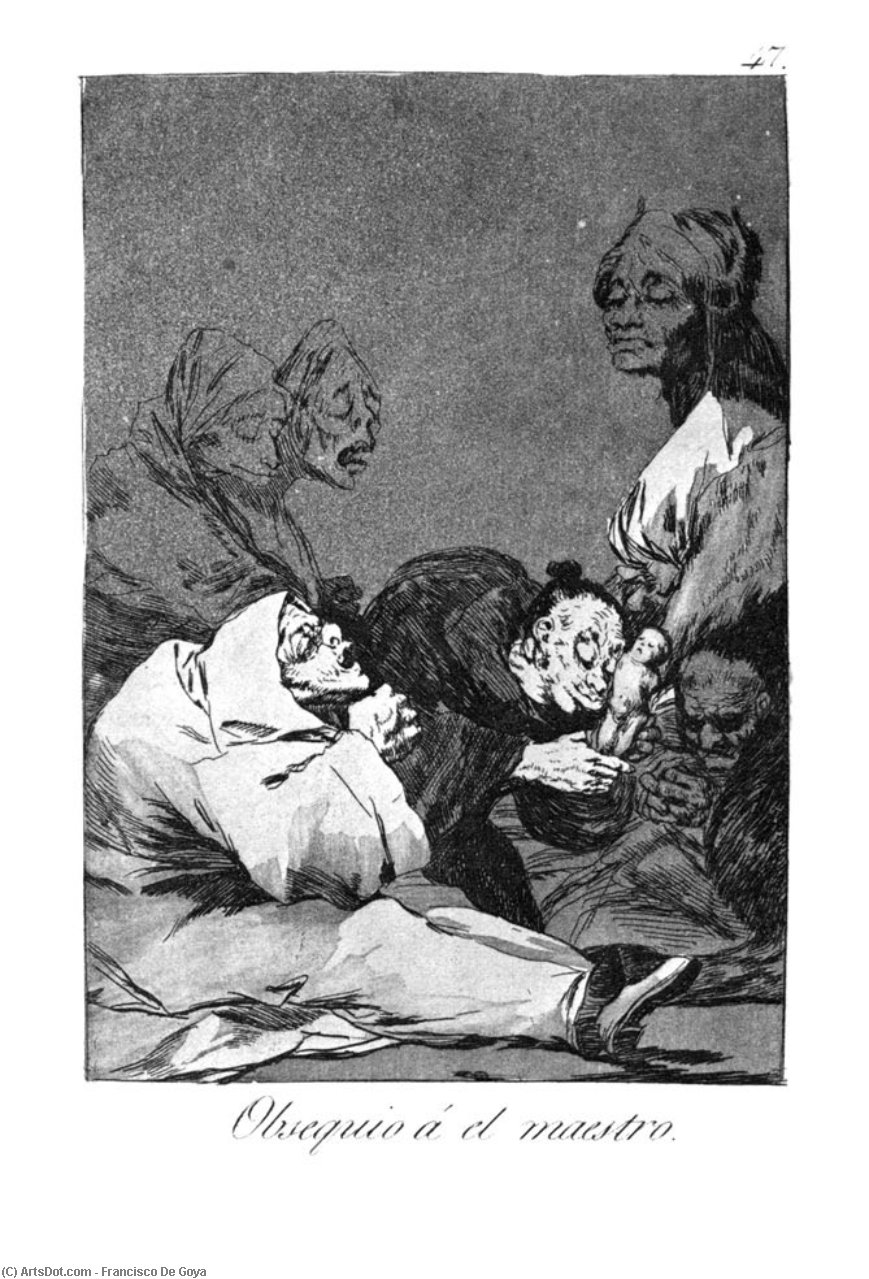
This striking black and white engraving portrays a scene of profound concern as figures surround a man suffering from ailment. Goya’s expressive lines and masterful use of tonal variation convey the somber mood of this pivotal work from Los Caprichos, reflecting his satirical vision.
A Detailed Examination of Francisco Goya’s “A Gift for the Master”
Francisco José de Goya y Lucientes's "A Gift for the Master," created in 1799, stands as a haunting testament to both artistic brilliance and profound psychological insight. This monochrome engraving—a plate from his seminal series ‘Los Caprichos’—immediately draws the viewer into a scene fraught with tension and concern: a man lies prone on the ground, surrounded by figures intently observing him. The artwork isn't merely aesthetically pleasing; it’s a meticulously crafted exploration of vulnerability, mortality, and societal critique, firmly rooted in Goya’s distinctive Romantic style.
Composition and Technique – Mastering Line and Shadow
The composition is strikingly simple yet powerfully effective. Dominating the center is the figure incapacitated on the earth, encircled by a group of onlookers—a deliberate arrangement designed to maximize dramatic impact. Lines play an indispensable role in conveying this narrative; Goya employs extensive hatching and cross-hatching techniques throughout the engraving, meticulously defining forms and establishing texture. Varying line thickness contributes to tonal gradation, simulating light and shadow with remarkable accuracy – a hallmark of printmaking during the late eighteenth century.
Symbolism and Emotional Resonance: Capturing Human Suffering
Beyond its formal qualities, “A Gift for the Master” resonates deeply on an emotional level. The expressions etched onto the faces of those surrounding the ailing man convey palpable anxiety and compassion. Goya’s masterful use of tonal contrast amplifies these emotions, creating a somber atmosphere that reflects his unwavering commitment to portraying human suffering with unflinching honesty. This engraving embodies Goya's characteristic satirical impulse—a challenge to conventional notions of beauty and virtue—and invites contemplation on the fragility of human existence.
Historical Context: The Shadow of Enlightenment
Created during the turbulent years preceding Napoleon’s invasion of Spain, “A Gift for the Master” reflects the anxieties prevalent in European intellectual circles. Goya's work aligns with the Romantic movement’s rejection of Neoclassical ideals and its embrace of emotional intensity—a reaction against the rationalism championed by the Enlightenment. The engraving serves as a poignant commentary on social hierarchies and the vulnerability inherent in human condition, mirroring broader societal concerns about illness, death, and moral decay.
Influence and Legacy: A Masterpiece Enduring Through Time
"A Gift for the Master" cemented Goya’s reputation as one of Spain's most important artists. Its meticulous execution—the precise rendering of anatomical detail combined with expressive linework—established a precedent for Romantic printmaking, influencing generations of artists to come. Today, reproductions of this iconic engraving continue to captivate audiences worldwide, offering a glimpse into the artist’s visionary perspective and enduring contribution to art history.