A Haunting Vision of Confinement: Exploring Goya’s ‘A Prison Scene’
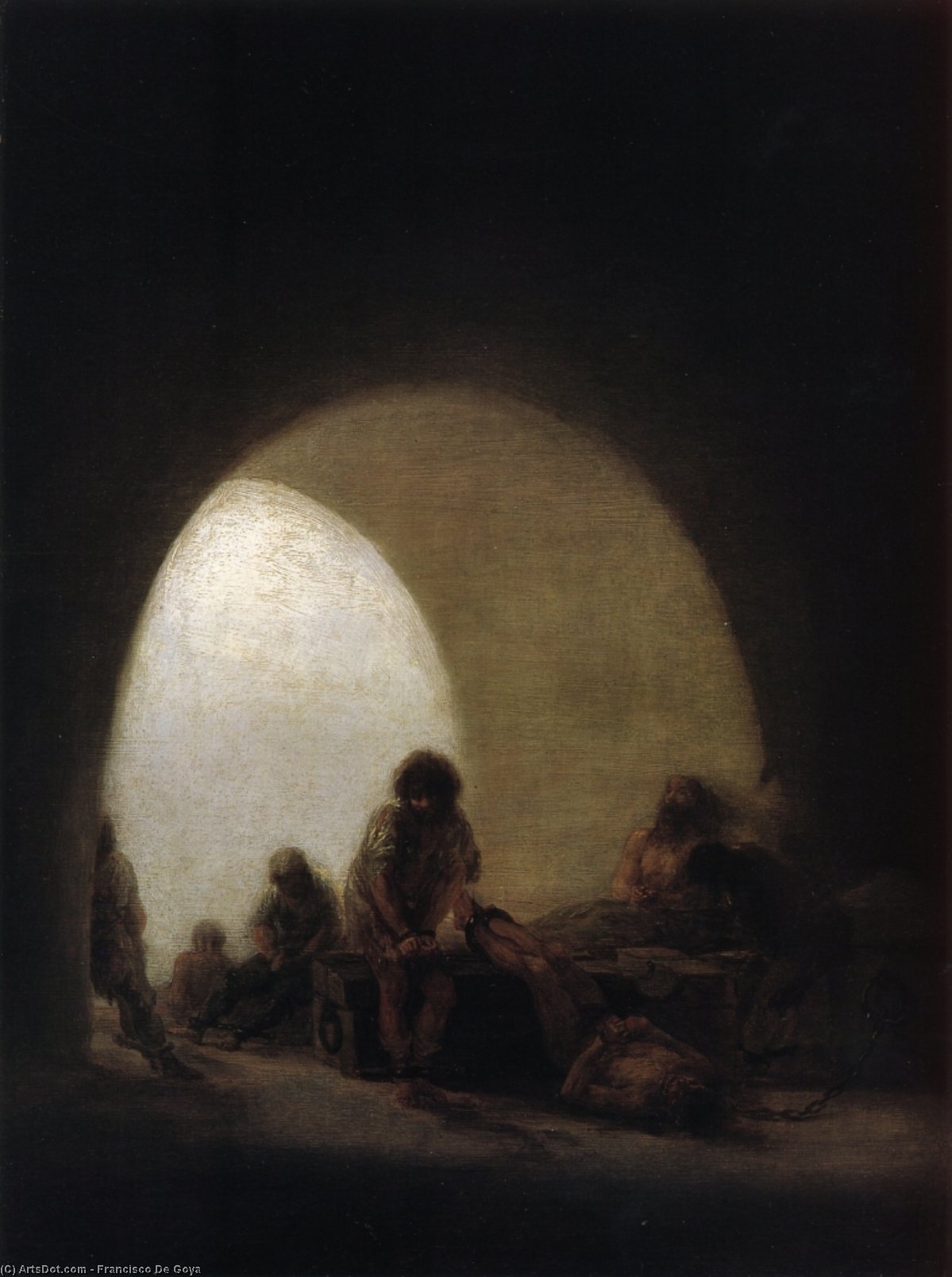
This intensely dramatic oil painting by Francisco de Goya, created in 1814, offers a chilling glimpse into the depths of human despair and resilience. Measuring just 42 x 31 cm, its compact size belies the immense emotional weight it carries. ‘A Prison Scene’ is not merely a depiction of physical imprisonment; it's an exploration of psychological and spiritual confinement – themes that resonated deeply with Goya throughout his life and work.
Subject & Narrative
The scene unfolds within what appears to be a cavernous, subterranean space. A tightly clustered group of figures are illuminated by a single, powerful circle of light, drawing the viewer’s eye immediately to their plight. At the center lies a prone figure, seemingly deceased or gravely ill, surrounded by companions exhibiting a range of emotions – grief, resignation, and perhaps even a somber acceptance. The precise narrative remains ambiguous; is this a death watch? A clandestine ritual? Or a representation of collective suffering under oppressive circumstances? This ambiguity is intentional, inviting contemplation rather than providing easy answers.
Style & Technique
Goya’s masterful technique is on full display here. He employs a
Romantic style characterized by dramatic lighting – *chiaroscuro* – and emotionally charged subject matter. However, the painting also bears a distinctly
Spanish influence, particularly reminiscent of his own later, darker works and those of masters like Velázquez. The brushwork is meticulous, building up layers of paint to create rich textures and depth, especially within the illuminated areas. Lines are organic and flowing, contributing to a sense of unease and movement. The color palette is dominated by somber tones – deep browns, blacks, and muted greens – punctuated by the stark contrast of yellow and cream within the central light source.
Historical Context & Symbolism
Painted in 1814, following the tumultuous Peninsular War (part of the Napoleonic Wars), ‘A Prison Scene’ reflects a period of profound political and social upheaval in Spain. Goya had witnessed firsthand the brutality of war and the suffering it inflicted upon his countrymen. The painting can be interpreted as an allegory for the nation's plight – imprisoned by conflict, oppression, and uncertainty.
The light itself is powerfully symbolic. It could represent a glimmer of hope or divine revelation amidst darkness, but also serves to highlight the figures’ vulnerability and isolation. The enclosed space reinforces the feeling of confinement, both literal and metaphorical. Goya frequently explored themes of madness, mortality, and social injustice in his work, and ‘A Prison Scene’ is a potent example of this preoccupation.
Emotional Impact & Interpretation
‘A Prison Scene’ evokes a powerful sense of melancholy, despair, and the fragility of human existence. It's a deeply unsettling image that lingers in the mind long after viewing. The painting’s strength lies not only in its technical brilliance but also in its ability to tap into universal emotions – grief, loss, and the search for meaning in the face of adversity.
For collectors and interior designers, this artwork offers a compelling statement piece. Its dark palette and dramatic composition would lend themselves well to spaces seeking an atmosphere of sophistication, introspection, or historical resonance. A high-quality reproduction captures the emotional depth and technical mastery of Goya’s original vision, bringing a touch of artistic brilliance into any environment.
Goya's Legacy
- Born in 1746, Francisco de Goya bridged the gap between Old Masters and modern art.
- He served as a court painter to the Spanish Crown but evolved his style to reflect social and political realities.
- His works, including ‘The Disasters of War’ and ‘The Third of May 1808’, are renowned for their emotional intensity and unflinching portrayal of human suffering.