A Vision in Shadow: The Enigma of Antonia Zarate
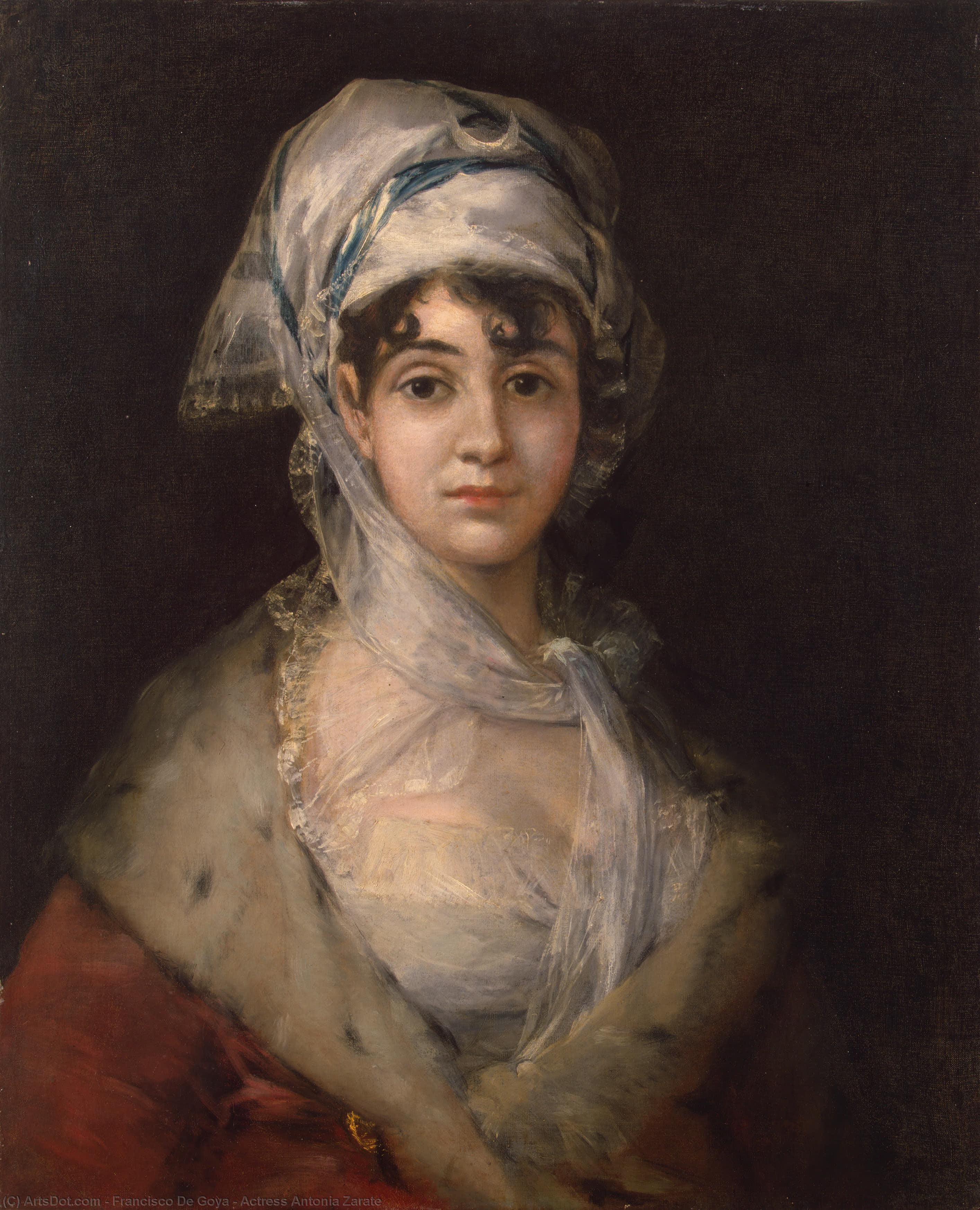
In the quiet, dramatic depths of Francisco de Goya’s 1811 masterpiece, Actress Antonia Zarate, we encounter more than a mere portrait; we meet a soul suspended between the stage and the infinite. As a quintessential emblem of the Romantic movement, this oil on canvas transcends the boundaries of traditional portraiture to offer a profound meditation on emotion and mystery. The subject, the celebrated Spanish actress Antonia Zarate, is presented not with the bright, superficial clarity of Neoclassicism, but through a lens of psychological complexity. Goya captures her in a moment of ethereal poise, where her beauty is inextricably linked to an air of melancholic introspection that continues to captivate viewers centuries later.
The painting’s power lies in its masterful use of chiaroscuro, a technique where the artist orchestrates a breathtaking tension between light and dark. Goya plunges much of the canvas into a profound, velvety shadow, effectively isolating Zarate within a void that feels both intimate and vast. This darkness serves as a dramatic stage, pushing her illuminated features toward the viewer with startling immediacy. The light does not merely rest upon her skin; it seems to emerge from within, highlighting the delicate contours of her face and the intricate textures of her attire, while leaving much of her identity shrouded in an alluring, enigmatic gloom.
The Artistry of Emotion and Texture
To observe Goya’s brushwork is to witness a master at the height of his expressive powers. There is a palpable vitality in the way he handles the materials of the era; the delicate folds of Zarate’s gown and the soft, tactile quality of her bonnet are rendered with a meticulousness that invites the eye to linger. Yet, Goya avoids the sterile perfection of academic painting. Instead, his strokes possess an organic, breathing quality that contributes to the painting's overall emotional weight. The subtle shading around the eyes and the nuanced transitions of color in her clothing create a sense of movement and life, suggesting a figure caught in a fleeting, private thought.
For the discerning collector or interior designer, this piece offers an unparalleled opportunity to introduce a sense of historical gravity and sophisticated drama into a space. The painting’s palette—dominated by deep, somber tones punctuated by the luminous highlights of the subject's skin and dress—makes it a versatile anchor for high-end decor. Whether placed in a contemporary gallery setting or a classic, richly appointed study, the work commands attention through its sheer atmospheric presence. It is a piece that does not merely decorate a wall; it transforms an environment, providing a focal point of profound intellectual and aesthetic depth.
A Legacy of Romanticism
Historically, this portrait stands as a pivotal moment in Spanish art history, reflecting the turbulent transition from the structured elegance of the 18th century to the raw, subjective fervor of the 19th. Commissioned during a period of immense social and political upheaval in Spain, the work embodies the Romantic fascination with the sublime—the idea that true beauty often resides in the overwhelming, the mysterious, and even the slightly unsettling. By stripping away the distracting details of a background setting, Goya forces us to confront the human condition directly through the gaze of his subject.
Owning a high-quality reproduction of Actress Antonia Zarate is an invitation to participate in this enduring dialogue with history. It allows the admirer to bring the haunting beauty of Goya’s vision into their daily lives, serving as a constant reminder of the power of art to capture the intangible essence of the human spirit. This is not just a depiction of a famous actress; it is a window into the very heart of Romanticism, offering a timeless elegance that resonates with anyone moved by the interplay of light, shadow, and the profound mysteries of the soul.