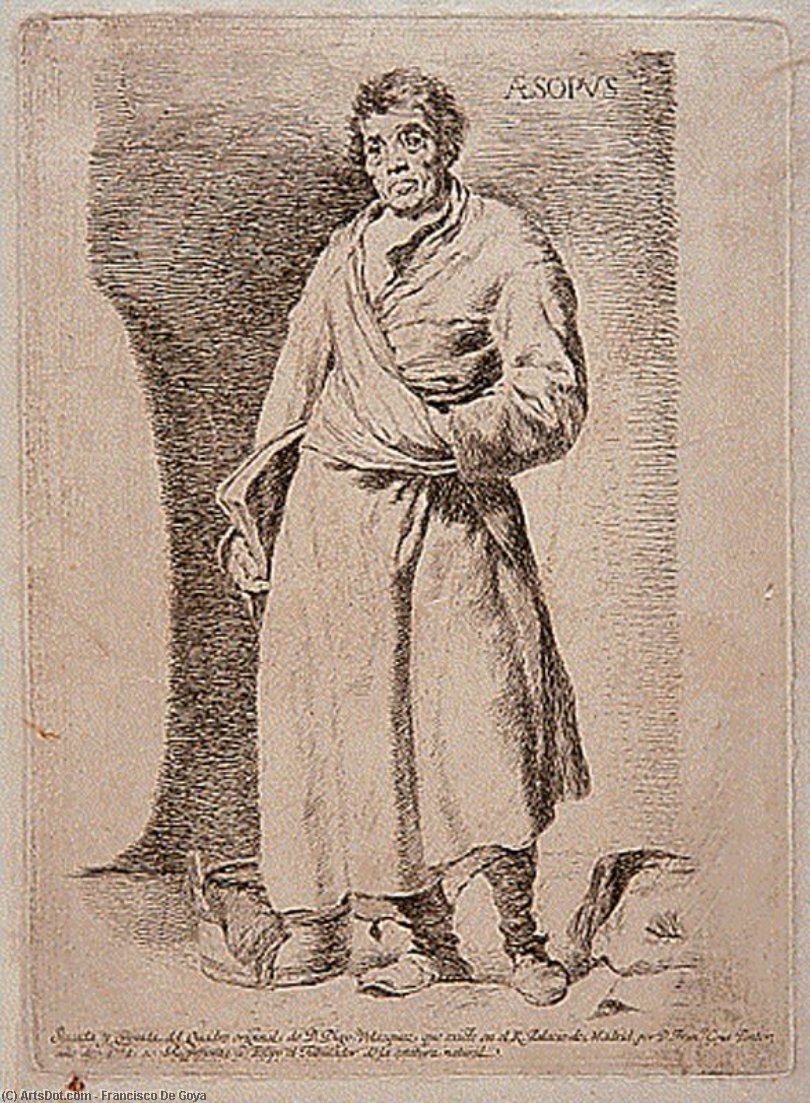
Explore Francisco Goya’s ‘Aesopus,’ a haunting monochromatic etching showcasing dramatic chiaroscuro & poignant emotion. A Baroque portrait of aged suffering, by a Spanish master.
Aesopus: A Portrait of Suffering Under Baroque Light
Francisco José de Goya y Lucientes’s “Aesopus” stands as a haunting testament to the Romantic spirit emerging from Spain in the late 18th century. Executed around 1778, this monochromatic etching delves into profound psychological depth, capturing not merely an image but an emotional resonance that continues to captivate viewers today. It's a masterful distillation of Baroque artistic principles—drama, chiaroscuro, and meticulous detail—transformed into a singularly unsettling portrait.
- Subject Matter: The artwork depicts an elderly man, rendered with remarkable realism despite the stark tonal palette. While the precise identity of Aesopus remains debated amongst scholars – likely based on a historical figure or noble lineage – his gaze holds an arresting stillness, conveying a palpable sense of sorrow and contemplation.
- Style & Technique: Goya’s approach aligns squarely with Baroque portraiture, prioritizing expressive emotion over idealized beauty. The etching technique itself is paramount; utilizing acid to carve lines onto zinc plates before transferring the image onto paper through printing, it demands painstaking precision and showcases Goya's unparalleled skill in manipulating light and shadow.
- Composition & Lighting: Centered on the figure’s torso, “Aesopus” employs a subtle off-center placement that generates visual tension—a characteristic Baroque device designed to draw the eye and heighten dramatic impact. Directional lighting casts deep shadows across the man's face and clothing, emphasizing wrinkles and contributing significantly to the artwork’s melancholic mood.
- Symbolism: The man’s gaze is laden with symbolic weight; it speaks of hardship endured, wisdom gained through experience, and perhaps a quiet acceptance of mortality—themes prevalent in Romantic art and reflecting Goya's own preoccupation with human vulnerability.
Historical Context & Influences
Goya’s artistic trajectory was shaped by the intellectual currents of his time – Enlightenment ideals juxtaposed against burgeoning anxieties about social change and religious dogma. He absorbed influences from Velázquez, whose masterful use of chiaroscuro established a precedent for portraying human emotion with unflinching honesty. This stylistic kinship is evident in “Aesopus,” where Goya skillfully replicates Velázquez’s technique to convey the profound psychological complexity of his subject. The IIIF Manifest confirms this connection and highlights the importance of understanding Baroque artistic traditions.
Material Analysis & Craftsmanship
The artwork's materiality underscores its artistic significance. Zinc served as the etching plate, meticulously prepared by Goya’s workshop to ensure optimal image transfer. Ink—likely a rich black pigment—was applied with precision, followed by printing onto paper using a stylus. The resulting surface texture—characterized by varying line weights and hatching—simulates fabric and skin, enhancing visual realism and contributing to the overall impression of solemn dignity.
Emotional Impact & Legacy
“Aesopus” transcends mere representation; it achieves an emotional depth that resonates powerfully with viewers. The artist’s masterful manipulation of light and shadow, combined with his unflinching portrayal of aging and sorrow, compels contemplation on themes of human suffering and resilience. As a cornerstone of Romantic art history, Goya's etching continues to inspire artists and collectors alike—a timeless masterpiece embodying the enduring power of artistic expression.