Francisco de Goya’s ‘Attack on a Coach’: A Collision of Chaos and Humanity
Francisco José de Goya y Lucientes, a name synonymous with the tumultuous spirit of his era, remains one of art history's most compelling figures. His oeuvre—spanning portraits, landscapes, etchings, and murals—offers an unparalleled glimpse into the anxieties, passions, and contradictions of 18th and early 19th-century Spain. Among his vast body of work, ‘Attack on a Coach’ (1793) stands as a particularly arresting example of his ability to capture raw emotion and dramatic narrative within a deceptively simple composition. This painting isn't merely a depiction of violence; it’s a profound meditation on power, vulnerability, and the unsettling realities of human conflict.
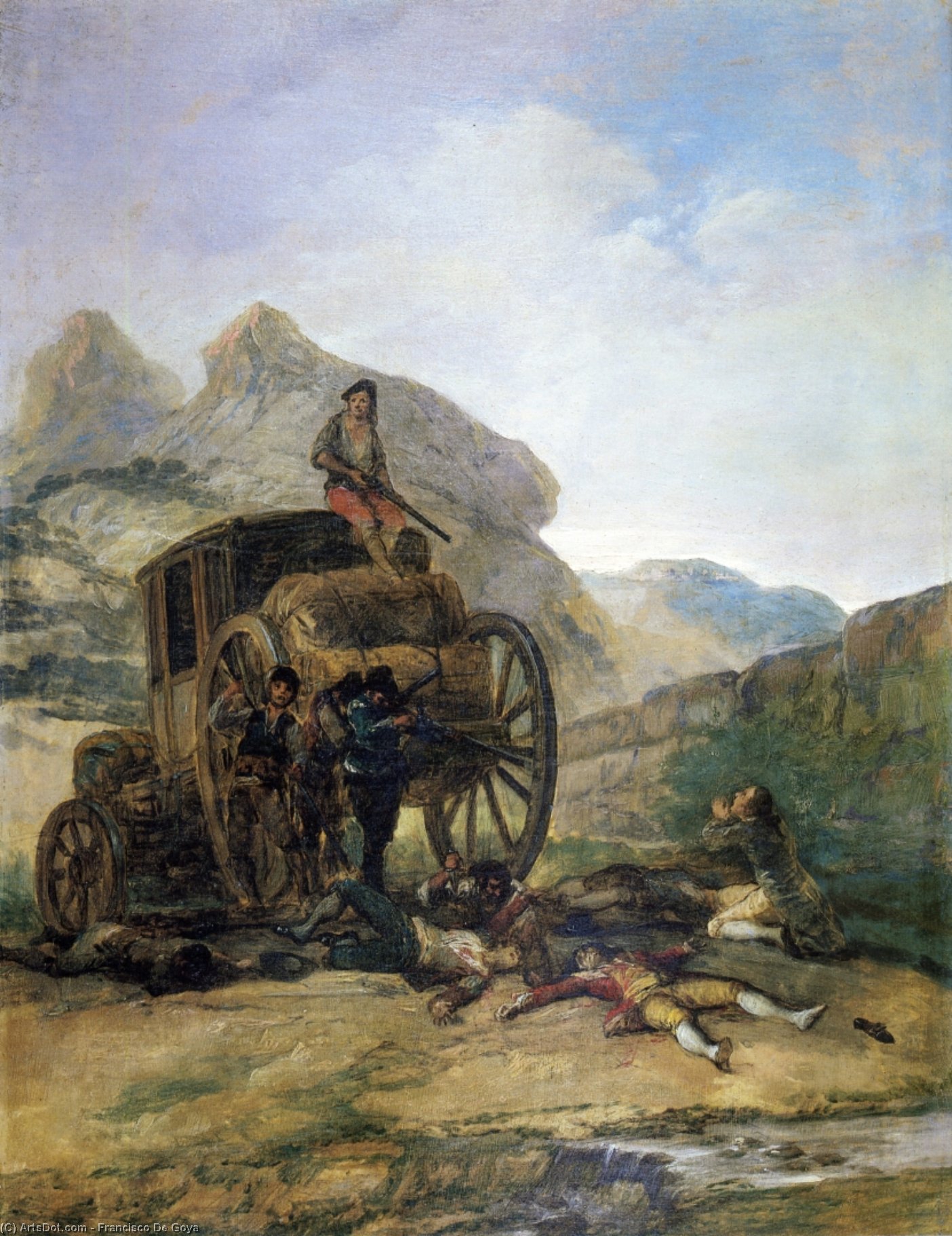
Painted during a period of significant political instability in Spain – a time marked by shifting alliances, military campaigns, and simmering social unrest – ‘Attack on a Coach’ immediately plunges the viewer into a scene of immediate peril. The composition is dominated by a chaotic tableau: a stagecoach, its two wheels partially detached, lies overturned amidst a desolate moorland landscape. Figures are strewn across the ground—some clearly dead or dying, others wounded and disoriented – creating an atmosphere of utter devastation. Yet, despite the overwhelming sense of horror, Goya masterfully avoids gratuitous detail, focusing instead on conveying the *feeling* of the event rather than presenting a literal record.
The Romantic Palette: Light, Shadow, and Emotional Intensity
Goya’s masterful use of color is central to the painting's impact. He employs a predominantly muted palette—ochres, browns, grays, and deep reds—to evoke the bleakness of the moorland and the grim reality of the attack. However, strategically placed bursts of vibrant red – particularly in the garments worn by some of the bandits – draw the eye and heighten the sense of drama. The artist’s brushwork is remarkably dynamic, with visible strokes that convey a palpable sense of movement and urgency. Notice how he uses loose, expressive marks to depict the swirling dust and smoke, further intensifying the chaotic atmosphere.
The lighting in ‘Attack on a Coach’ is equally crucial. Goya utilizes dramatic chiaroscuro—the stark contrast between light and shadow—to sculpt the figures and create a sense of depth. The scene is largely bathed in an ominous twilight, suggesting both the impending danger and the aftermath of violence. A single, diffused light source illuminates key elements – the overturned coach, the wounded figures, and the menacing silhouettes of the bandits – drawing our attention to the most critical aspects of the composition.
Symbolism and Social Commentary
Beyond its immediate depiction of a violent encounter, ‘Attack on a Coach’ is laden with symbolic meaning. The stagecoach itself represents wealth, privilege, and social status—a microcosm of the broader societal inequalities that plagued Spain at the time. The bandits, lurking in the shadows, embody rebellion, lawlessness, and the threat to established order. The positioning of the figures – some attempting to flee, others frozen in terror – speaks volumes about the vulnerability of those caught in the crossfire of conflict.
Interestingly, Goya’s work reflects a growing Romantic sensibility—a shift away from the rigid formality of Neoclassicism towards an emphasis on emotion, imagination, and the sublime. ‘Attack on a Coach’ captures this spirit perfectly, conveying not just a historical event but also a profound sense of unease and moral ambiguity. It's a painting that forces us to confront uncomfortable truths about human nature and the dark side of society.
A Legacy of Vision: Goya and His Enduring Influence
Francisco de Goya’s ‘Attack on a Coach’ is more than just a captivating artwork; it’s a testament to his extraordinary artistic vision. His ability to blend technical skill with emotional depth, realism with symbolic resonance, cemented his place as one of the most influential artists of all time. His work continues to resonate today, prompting viewers to contemplate themes of violence, power, and the human condition. Reproductions of this powerful painting offer a remarkable opportunity to experience Goya’s genius firsthand, bringing this dramatic scene into any space with an undeniable sense of impact.
For those seeking a high-quality reproduction of ‘Attack on a Coach,’ ArtsDot offers meticulously crafted hand-painted reproductions that capture the essence of Goya's original masterpiece. Explore our collection and bring this iconic work into your home or office – a timeless reminder of art’s ability to provoke, inspire, and endure.