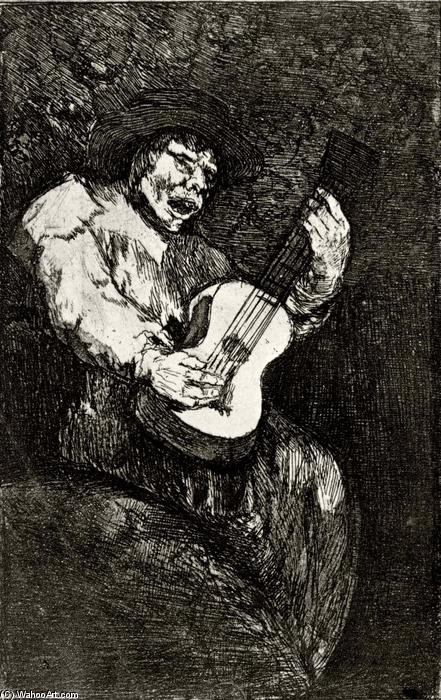
A Portrait of Vulnerability and Artistic Passion: Exploring “Blind Singer”
Francisco José de Goya y Lucientes, a titan amongst Romantic artists, bequeathed to us not merely images but profound meditations on the human condition. His etching, "Blind Singer," created in 1820, transcends its medium—a deceptively simple printmaking process—to deliver an emotionally resonant statement about resilience and artistic dedication. This artwork stands as a cornerstone of Goya’s oeuvre and continues to captivate audiences today with its masterful execution and haunting symbolism.
Technical Brilliance: Mastering Chiaroscuro and Texture
Goya's genius resided in his ability to transform ordinary materials into instruments of extraordinary expressive power. “Blind Singer” exemplifies this mastery through the meticulous application of etching technique. The artist painstakingly scratched lines onto a copper plate, meticulously inked it, and pressed it onto paper—a process demanding precision and patience—resulting in an image imbued with remarkable textural depth. Dense crosshatching dominates the composition, creating a palpable surface quality that mimics the roughness of aged paper and subtly mirroring the contours of the singer’s face and clothing.
- Light and Shadow: Goya employs chiaroscuro—the dramatic interplay between light and dark—to illuminate the singer's visage, drawing the viewer’s gaze directly to his expressive countenance. This technique emphasizes emotional intensity and contributes significantly to the overall atmosphere of solemn contemplation.
- Line Density: Varying line density creates a sense of dimensionality, simulating the subtle gradations of tone found in oil paintings. The artist skillfully manipulates lines to define form and sculpt texture, elevating the etching beyond mere representation.
Historical Context and Romantic Ideals
"Blind Singer" emerged from Goya’s broader exploration of human suffering during a turbulent period in Spanish history—the Napoleonic Wars and their aftermath. As a pivotal figure in the Romantic movement, Goya championed emotion, imagination, and individualism, rejecting the rigid formalism of Neoclassicism. His works interrogated moral dilemmas and confronted societal injustices, establishing him as a pioneer in artistic innovation.
The etching’s subject matter—a blind musician performing music—resonates with Romantic ideals of compassion and spiritual insight. The artist deliberately contrasts the darkness surrounding the singer with the focused illumination of his face, symbolizing inner vision and unwavering passion for art. This deliberate juxtaposition underscores Goya's commitment to portraying human experience in its rawest form.
Symbolic Resonance: Blindness as Emblematic Virtue
Beyond its technical brilliance and historical significance, “Blind Singer” possesses a profound symbolic dimension. The blindness of the musician is interpreted not merely as physical impairment but as emblematic virtue—a heightened sensitivity to beauty and truth that transcends sensory limitations. This interpretation aligns with Romantic notions of transcendence and spiritual contemplation, elevating the artwork’s emotional impact.
Considered alongside other works by Goya, “Blind Singer” serves as a poignant reminder of his unwavering dedication to capturing the complexities of human emotion and experience. It remains an enduring testament to artistic genius and a captivating window into the spirit of Romanticism—a movement that continues to inspire artists and collectors alike.