Introduction to the Artist and Painting
Francisco De Goya, a renowned Spanish artist, painted '
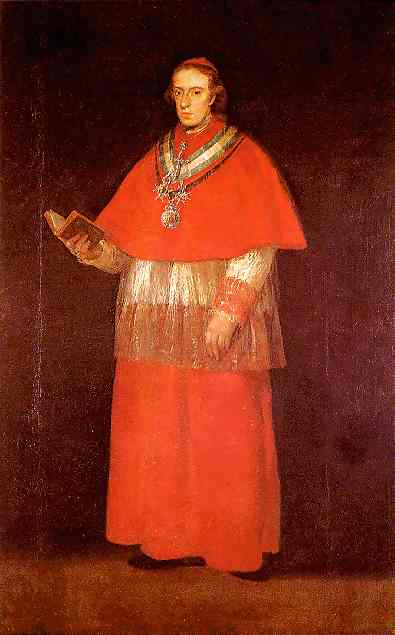
Cardinal Luis Maria de Borbón y Vallabriga' in 1797. This oil on canvas masterpiece is an exceptional example of the artist's skill and his ability to capture the essence of his subjects. The painting is a portrait of
Cardinal Luis Maria de Borbón y Vallabriga, a Spanish nobleman and the Archbishop of Toledo.
Historical Context
The painting was created during Goya's time as a court painter for King Charles IV of Spain. The subject,
Cardinal Luis Maria de Borbón y Vallabriga, was a prominent figure in the Catholic Church and played an influential role in Spanish society during this period. You can find more information about Goya's works on
ArtsDot.
Artistic Style
Goya's painting style is characterized by his mastery of light and shadow, as well as his ability to capture the individuality of his subjects. In '
Cardinal Luis Maria de Borbón y Vallabriga', Goya uses a dark background to emphasize the cardinal's figure, drawing attention to his facial features and clothing. The use of chiaroscuro creates a sense of depth and realism, making the painting an exceptional example of Goya's artistic style.
Availability at ArtsDot
At
ArtsDot, we offer high-quality reproductions of '
Cardinal Luis Maria de Borbón y Vallabriga' and other works by
Francisco De Goya. Our hand-painted oil reproductions are created with the utmost care and attention to detail, ensuring that every brushstroke is an accurate representation of the original masterpiece. You can also visit the
page dedicated to this painting on our website.
Conclusion
Francisco De Goya's '
Cardinal Luis Maria de Borbón y Vallabriga' is a remarkable example of Spanish art from the late 18th century. The painting's historical significance, combined with Goya's masterful use of light and shadow, make it an exceptional work of art that continues to inspire and captivate audiences today. You can learn more about Goya's life and works on
Wikipedia.
The original painting is housed in the
Museo del Prado, a world-renowned museum in Madrid, Spain.