The Colossus: A Romantic Vision of Humanity’s Place in Cosmos
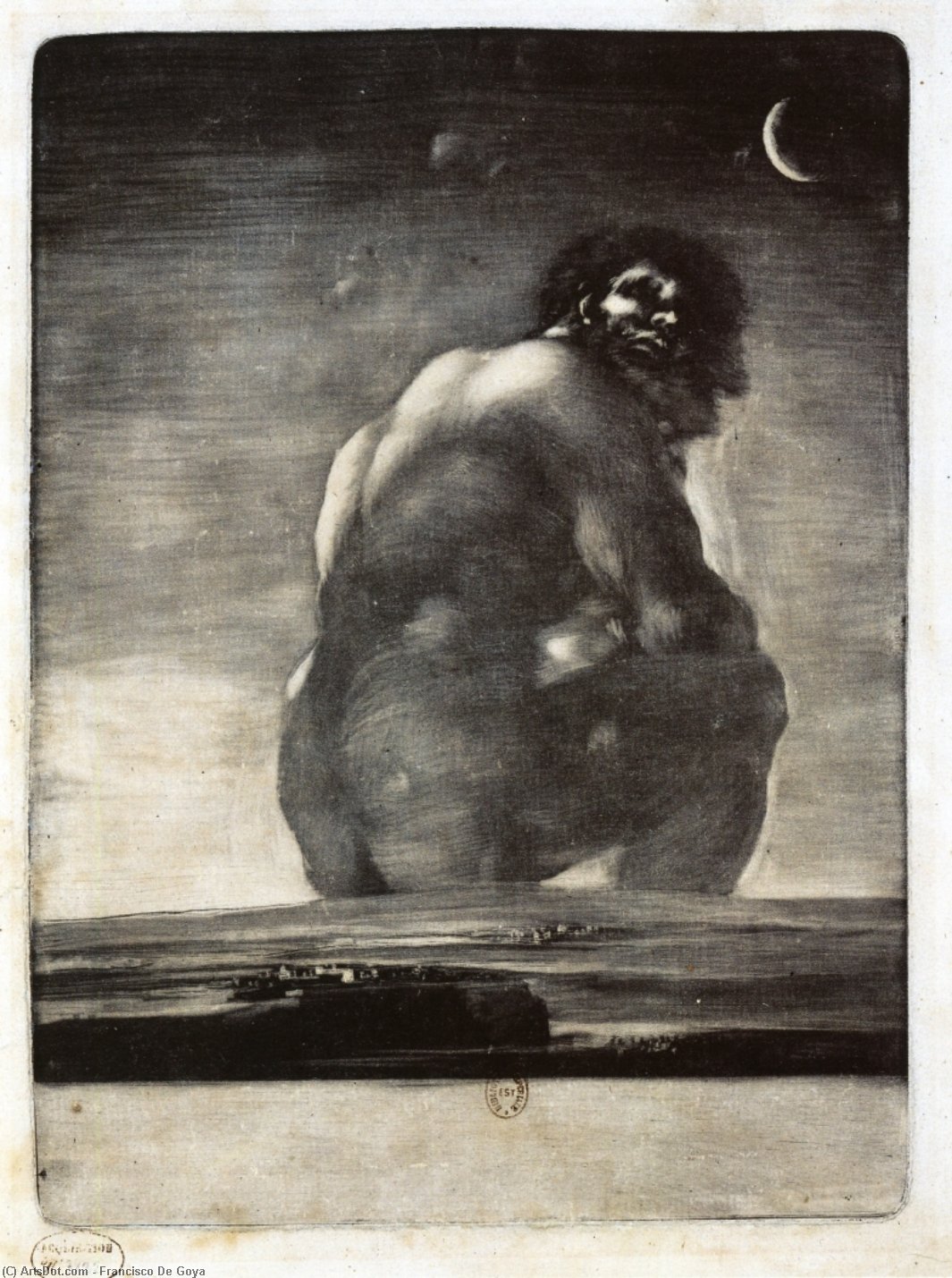
Francisco José de Goya y Lucientes' “The Colossus” stands as an arresting emblem of Romanticism, capturing not merely a visual image but a profound contemplation on the human condition against the backdrop of an awe-inspiring universe. Executed around 1798-1800 during his tumultuous period at Campo Santo in Madrid—a time marked by personal struggles and political upheaval—this painting transcends mere artistic representation; it’s a visceral exploration of emotion, imagination, and the sublime.
- Subject Matter: The artwork depicts a solitary man seated upon a rocky outcrop, gazing upwards at two luminous moons dominating the expansive sky. This deliberate juxtaposition immediately establishes a sense of isolation yet simultaneously invites contemplation on the grandeur of creation.
- Style & Technique: Goya’s masterful use of chiaroscuro—the dramatic interplay between light and dark—dominates the composition. He employs bold brushstrokes to convey texture and movement, particularly evident in the depiction of the rocky surface beneath the man's feet. The muted palette contributes to an atmosphere of solemnity and mystery.
- Historical Context: Created during the Napoleonic Wars, “The Colossus” reflects the anxieties of its time—the questioning of established authority and the burgeoning fascination with the irrational and supernatural. Goya’s work aligns perfectly with the Romantic movement's rejection of Neoclassical ideals in favor of subjective experience.
Symbolism & Emotional Impact: The man’s posture embodies humility before the immensity of nature, suggesting a yearning for transcendence. The moons symbolize duality—light and darkness, reason and emotion—reflecting the Romantic preoccupation with confronting existential questions. More than just a beautiful image, “The Colossus” compels viewers to confront their own insignificance within the cosmos while simultaneously acknowledging the power of human perception.
Further Exploration: To delve deeper into Goya’s artistic legacy and his influence on subsequent generations of artists, visit Museo de Bellas Artes de Sevilla to admire a stunning collection showcasing Goya's oeuvre. Alternatively, explore the Museo de Arte Popular José Hernández in Buenos Aires for insights into Argentinian folk art traditions.
- Recommended Reproduction: Consider acquiring a meticulously crafted oil painting reproduction of “The Colossus” from ArtsDot to bring this iconic masterpiece into your home or workspace.
For a comprehensive understanding of Goya’s life and artistic journey, consult Wikipedia.