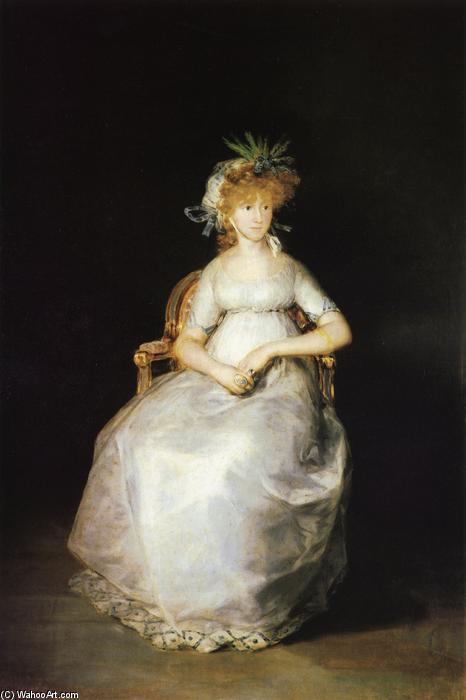
A Portrait of Aristocratic Grace: Goya’s Condesa de Chinchón
Francisco de Goya's 1800 portrait of *María Teresa de Borbón*, the 15th Countess of Chinchón, is a masterful example of Spanish Romanticism at its nascent stage. More than just a likeness, this painting offers a compelling glimpse into both the sitter’s personality and the shifting artistic landscape of early 19th-century Spain. Commissioned shortly after Goya's appointment as First Court Painter in 1799, it reflects his growing confidence and skill in capturing not only physical resemblance but also psychological depth.
Historical Context & The Countess Herself
María Teresa de Borbón was a figure of considerable social standing, known for her beauty and elegance within the Spanish court. Her marriage into the Chinchón lineage connected her to a family steeped in history – notably linked to the famed medicinal quinine bark discovered in the region. Goya’s access to such prominent figures through his royal appointment allowed him to create portraits that served as both official representations and intimate studies of character. This portrait was created during a period of political upheaval, foreshadowing the Peninsular War, adding a layer of subtle melancholy often found within Goya's work from this era.
Style & Technique: A Masterclass in Romantic Portraiture
The *Condesa de Chinchón* exemplifies Goya’s evolving style. While rooted in Rococo traditions – evident in the refined depiction of fabrics and delicate features – it foreshadows the emotional intensity and looser brushwork characteristic of his later, more overtly Romantic paintings.
- Light & Shadow: Goya's masterful use of *chiaroscuro* (the interplay of light and shadow) creates a sense of depth and volume, drawing attention to the Countess’s face and hands.
- Brushwork: The painting showcases delicate brushstrokes that render the textures of her silk gown and feathered hat with remarkable realism. Yet, there's also a subtle looseness, hinting at the artist’s growing freedom from strict academic conventions.
- Composition: The neutral background serves to isolate the Countess, emphasizing her presence and allowing her elegant attire and contemplative expression to take center stage.
Symbolism & Emotional Resonance
The portrait is not merely a display of wealth and status; it’s imbued with subtle symbolism. The white dress suggests purity and innocence, while the green feathers adorning her hat may allude to hope or renewal. However, it's the Countess’s expression that truly captivates. Her gaze is introspective, hinting at an inner life filled with quiet contemplation – perhaps even a touch of melancholy.
This sense of vulnerability and psychological depth sets Goya’s portraiture apart from earlier, more idealized representations.
A Timeless Appeal for Modern Interiors
The *Condesa de Chinchón* is a work that transcends its historical context. Its serene elegance and sophisticated color palette make it an ideal addition to a variety of interior design schemes – from traditional drawing rooms to more contemporary spaces seeking a touch of classic refinement. A high-quality reproduction captures the essence of Goya’s artistry, bringing a sense of history, beauty, and intellectual depth into any home or collection. The painting's subdued tones and focus on the human form ensure it remains a captivating focal point for years to come.