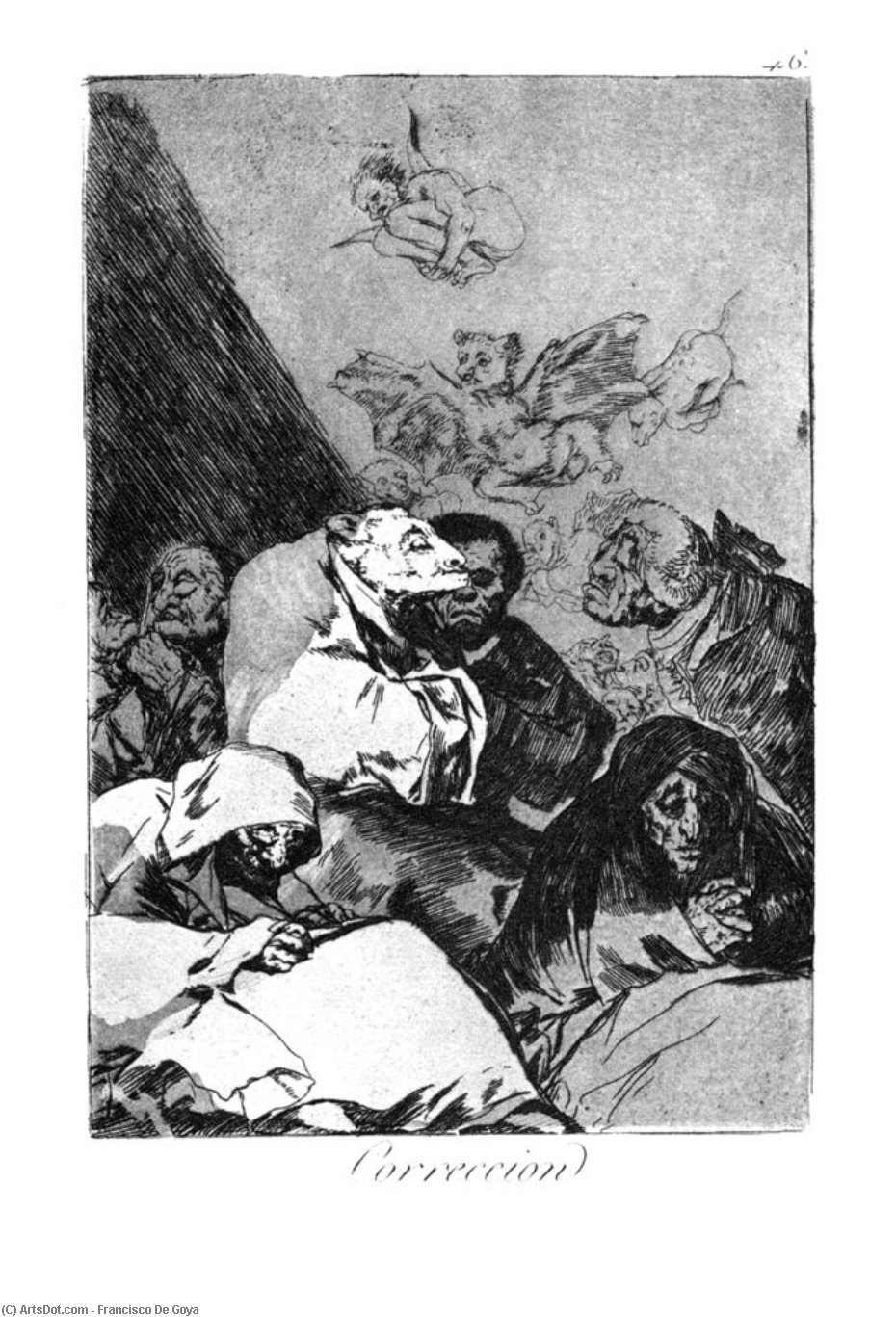
Correccion: A Descent into Darkness by Goya
Francisco José de Goya y Lucientes’s “Correction,” etched in 1799, is more than just a print; it's a visceral confrontation with human cruelty and the unsettling exploration of psychological torment—a hallmark of his mature artistic vision. This monumental work transcends mere visual representation, delving into themes of moral judgment and societal critique within the framework of Romanticism’s preoccupation with emotion and imagination.
The etching depicts a disturbing tableau: a man strapped to a wooden chair, subjected to brutal correction by an unseen tormentor wielding instruments of pain. Surrounding him are figures – some impassive observers, others complicit in the act—creating a claustrophobic atmosphere that underscores the vulnerability of the victim and the chilling indifference of those around him. Above this grim scene floats a fantastical assemblage of winged creatures and a cherubic figure, an ironic juxtaposition designed to amplify the artwork’s unsettling core.
Technique and Style: The Language of Darkness
Goya's masterful command of etching technique is evident in every meticulously crafted line. Employing hatching and crosshatching with astonishing precision, he builds up tonal gradations that convey texture and depth—the roughness of the chair, the sheen of perspiration on the victim’s brow, and the ethereal glow of the celestial realm above. The jaggedness and unevenness of the lines contribute to a palpable sense of unease, mirroring the psychological turmoil depicted within the image.
- Medium: Etching and Burnished Aquatint on Laid Paper
- Artist: Francisco José de Goya y Lucientes (1746-1828)
- Date: 1799
- Size: 21 x 15 cm
Symbolism and Emotional Resonance
“Correction” operates on multiple levels of symbolic interpretation. The central figure embodies suffering and humiliation, representing humanity’s susceptibility to oppression—a potent commentary on the political climate of Spain during Goya's time. The cherubic figure serves as a jarring counterpoint, embodying divine judgment and highlighting the moral implications of the depicted actions. Ultimately, the artwork evokes feelings of fear, anxiety, and profound discomfort, prompting viewers to contemplate the darker recesses of human nature.
Historical Context: Romantic Critique
Goya’s etching emerged during the turbulent years following the Napoleonic Wars, a period marked by social upheaval and intellectual ferment. As a staunch critic of absolutist rule and aristocratic decadence—traits evident in his broader oeuvre—Goya utilized art as a vehicle for exposing injustice and challenging conventional morality. “Correction” stands as a testament to his unwavering commitment to portraying human experience with unflinching honesty, cementing his legacy as one of the most influential artists of the Romantic era.