Donde Vá Mamà: A Study in Dramatic Tension and Romantic Symbolism
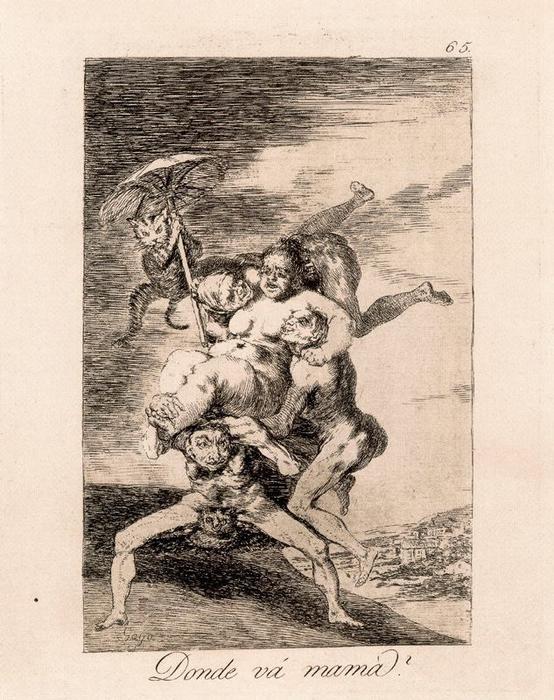
Francisco José de Goya y Lucientes’ “Donde Vá Mamà,” completed in 1799, stands as a haunting testament to the anxieties simmering beneath the surface of Enlightenment Spain. This etching, aquatint, and drypoint on laid paper transcends mere visual representation; it delves into psychological complexity and confronts viewers with uncomfortable truths about familial bonds and societal pressures.
- Subject Matter: The painting depicts a stark tableau – a man shielding two nude women from an impending storm. The figures are positioned in a deliberate manner, emphasizing vulnerability and highlighting the precariousness of human existence amidst turbulent circumstances.
- Style & Technique: Goya’s masterful use of tonal etching demonstrates his unwavering commitment to capturing nuanced emotional states. The artist skillfully employs hatching and cross-hatching to build up textures and contours, creating a palpable sense of atmosphere—the oppressive darkness of the storm mirroring the unspoken tensions between the man and women involved.
- Historical Context: Produced during Goya’s tumultuous period at court, “Donde Vá Mamà” reflects the broader anxieties surrounding social morality and familial responsibility prevalent in Spain during the Napoleonic Wars. It speaks to a fascination with themes of vulnerability and protection—a preoccupation that would become characteristic of Romantic art.
Symbolism: The Umbrella as Emblematic Representation
The umbrella itself is more than just a practical device; it functions as a potent symbol representing guardianship, defense against adversity, and the futile attempt to control forces beyond human comprehension. Its placement above the women underscores their vulnerability and emphasizes the man’s role as protector—a figure burdened by responsibility and grappling with anxieties about safeguarding his loved ones.
Emotional Impact: Confronting Darkness Within Light
Despite its monochrome palette, “Donde Vá Mamà” exudes an overwhelming sense of drama and unease. Goya's deliberate choice to depict nudity—a bold departure from academic conventions—serves not merely as a visual element but as a conduit for exploring themes of shame, vulnerability, and the darker aspects of human desire. The painting compels viewers to confront uncomfortable truths about societal expectations and the complexities of familial relationships.
Further Exploration: Connections to Goya’s Oeuvre
“Donde Vá Mamà” exemplifies Goya's broader artistic vision—a preoccupation with portraying human suffering and challenging conventional notions of beauty. It aligns seamlessly with his exploration of psychological realism, foreshadowing the expressive freedom that would define Romantic art. Examining this etching alongside other works reveals Goya’s unwavering commitment to confronting uncomfortable truths about the human condition.