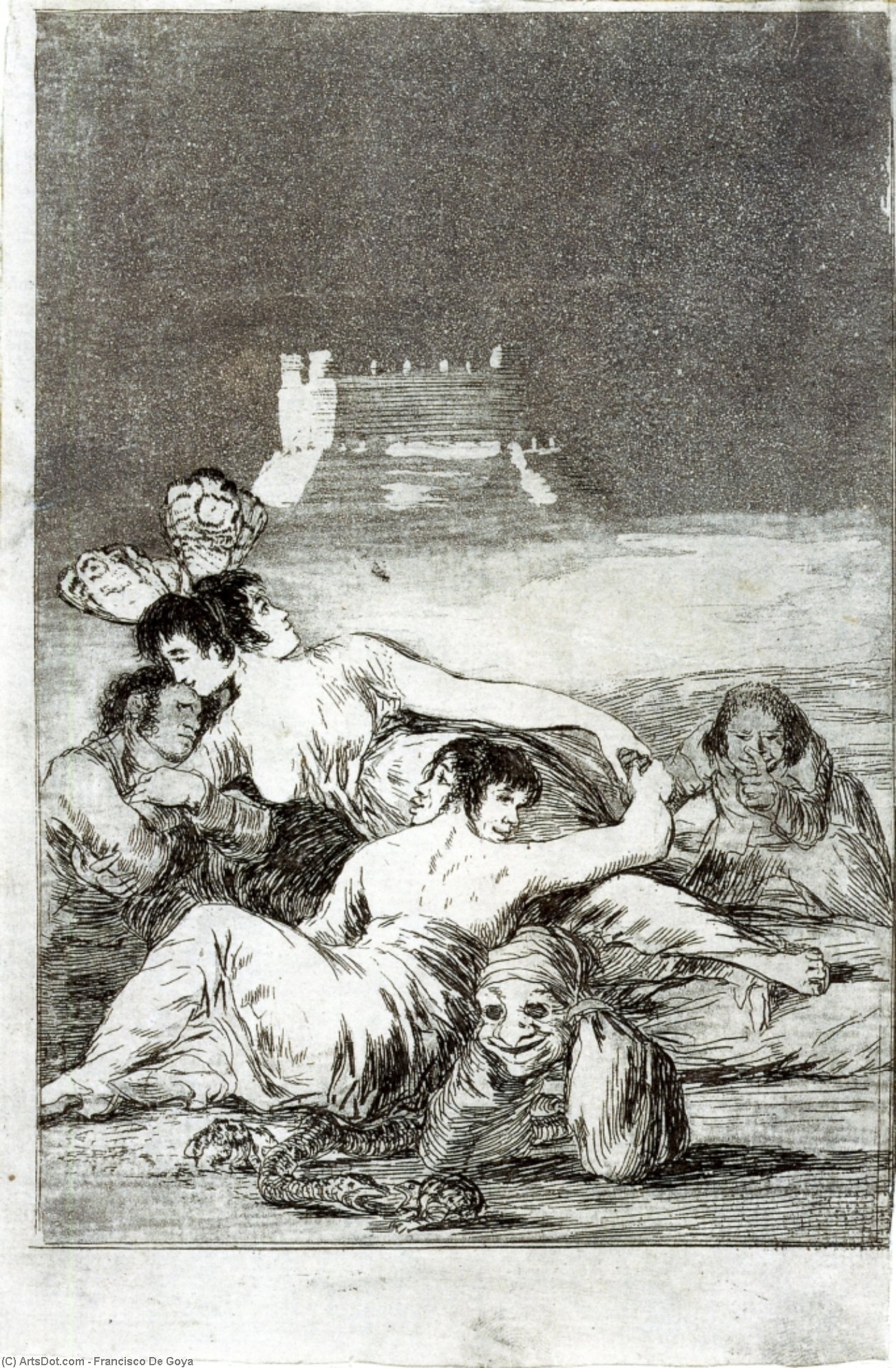
The
Dream of Lying and Inconstancy is a captivating drawing created by the renowned Spanish artist
Francisco De Goya in 1797. This artwork is a testament to Goya's skill and his ability to convey complex emotions and themes through his art. As seen on
ArtsDot.com, the drawing features a group of people in various positions, engaged in different activities, surrounded by symbolic elements such as birds and a clock.
Analysis of the Painting
The
Dream of Lying and Inconstancy is characterized by its use of black and white, which creates a sense of simplicity and intimacy. The drawing's composition is complex, with multiple figures and objects interacting with each other. Goya's use of symbolism adds depth to the artwork, inviting the viewer to interpret the meaning behind the images. For example, the birds may represent freedom or truth, while the clock could symbolize the passing of time.
Key Features of the Painting: - The use of black and white creates a sense of simplicity and intimacy
- The composition is complex, with multiple figures and objects interacting with each other
- Goya's use of symbolism adds depth to the artwork, inviting the viewer to interpret the meaning behind the images
As seen in other works by Goya, such as the
Cardinal Luis Maria de Borbón y Vallabriga, available on
ArtsDot.com, the artist's ability to capture the essence of his subjects is unparalleled. The
Museo del Prado in Madrid, Spain, is home to many of Goya's works, including the
Shootings of May Third Prado, which can be found on
ArtsDot.com.
The
Dream of Lying and Inconstancy is a thought-provoking artwork that showcases Goya's skill as an artist and his ability to convey complex themes and emotions. As a masterpiece of Spanish art, it continues to inspire and intrigue art enthusiasts around the world. For more information on Goya and his works, visit
ArtsDot.com or consult the Wikipedia page on
Francisco De Goya.