Francisco Goya (1746-1828): Explore the life & work of Spain's Romantic master. Known for portraits, dark satire & 'Disasters of War'. A pivotal figure in art history.
A Portrait of Uncertainty: Goya’s “Even So He Cannot Make Her Out”
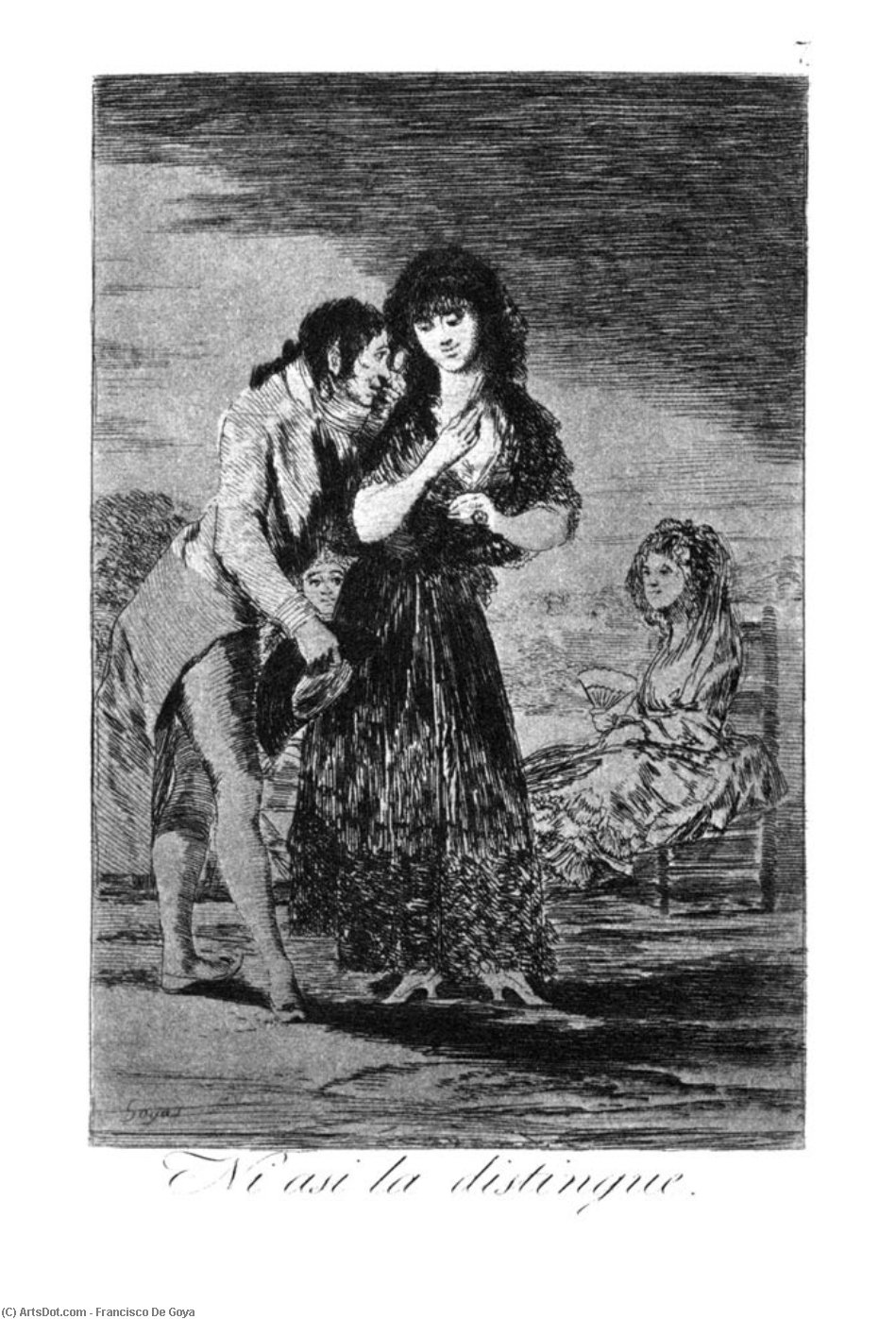
Francisco José de Goya y Lucientes, a titan amongst Romantic artists, bequeathed to us not merely images but profound meditations on human perception and the elusive nature of truth. His etching, "Even So He Cannot Make Her Out," created in 1799, exemplifies this legacy—a deceptively simple composition brimming with psychological complexity that continues to fascinate viewers centuries later. This artwork resides within the Museo del Prado’s collection and is currently unavailable for viewing, yet its impact resonates powerfully through scholarly analysis and reproductions alike.
The Composition: A Dance of Observation and Conjecture
At first glance, “Even So He Cannot Make Her Out” presents a seemingly straightforward tableau: three figures inhabiting an interior space bathed in diffused light. However, Goya’s masterful hand guides the eye beyond surface appearances. Two women dominate the scene—one embracing another with her gaze fixed downwards, conveying intimacy or perhaps vulnerability; the other leans towards her companion, attempting to discern her expression. A third man stands silently to the right, positioned as an observer, scrutinizing the unfolding drama. This deliberate arrangement underscores Goya’s preoccupation with capturing fleeting moments of emotion and challenging viewers to interpret what lies beneath the surface.
Technique: The Alchemy of Etching and Aquatint
Goya's technique—primarily etching combined with aquatint—is crucial to understanding the artwork’s emotive power. Copper or zinc plates were meticulously prepared, covered in a resin coating, and then subjected to acid attacks. These attacks created recessed lines that would subsequently be filled with ink, transferring tonal variations onto paper through pressure printing. The resulting image is characterized by dense cross-hatching—a technique Goya perfected—which builds up texture and shading with astonishing precision. Fine lines delineate forms, suggesting depth and creating an atmosphere of palpable stillness. This painstaking process reflects Goya’s dedication to capturing the subtleties of human expression and conveying a sense of psychological realism unattainable through other mediums.
Historical Context: The Shadow of Enlightenment
“Even So He Cannot Make Her Out” emerged during the turbulent years following the Napoleonic Wars, marking a pivotal moment in Spanish artistic history. While Goya initially served as court painter under Charles IV, his disillusionment with the monarchy and his growing sympathy for liberal ideals fueled his artistic exploration into darker themes—particularly social critique and human suffering. This etching aligns perfectly with Goya’s broader oeuvre, which confronts viewers with uncomfortable truths about power, morality, and the human condition. As evidenced by research links provided, similar depictions of perception and observation can be found in other works like “Plate 7 from Los Caprichos,” demonstrating Goya's consistent engagement with challenging subjects.
Symbolism: Beyond Appearances
The enigmatic gaze of the woman attempting to discern her companion’s expression speaks volumes about the artwork’s symbolic core. It encapsulates the difficulty inherent in truly understanding another person—the limitations of observation and the impossibility of grasping inner thoughts or feelings. Furthermore, the muted lighting contributes to an atmosphere of mystery and uncertainty, mirroring the psychological complexities explored by Goya throughout his life's work. The image invites contemplation on themes of privacy, vulnerability, and the elusive nature of truth – concepts central to Romantic art’s preoccupation with emotion and subjective experience.