The Inferno of Human Experience
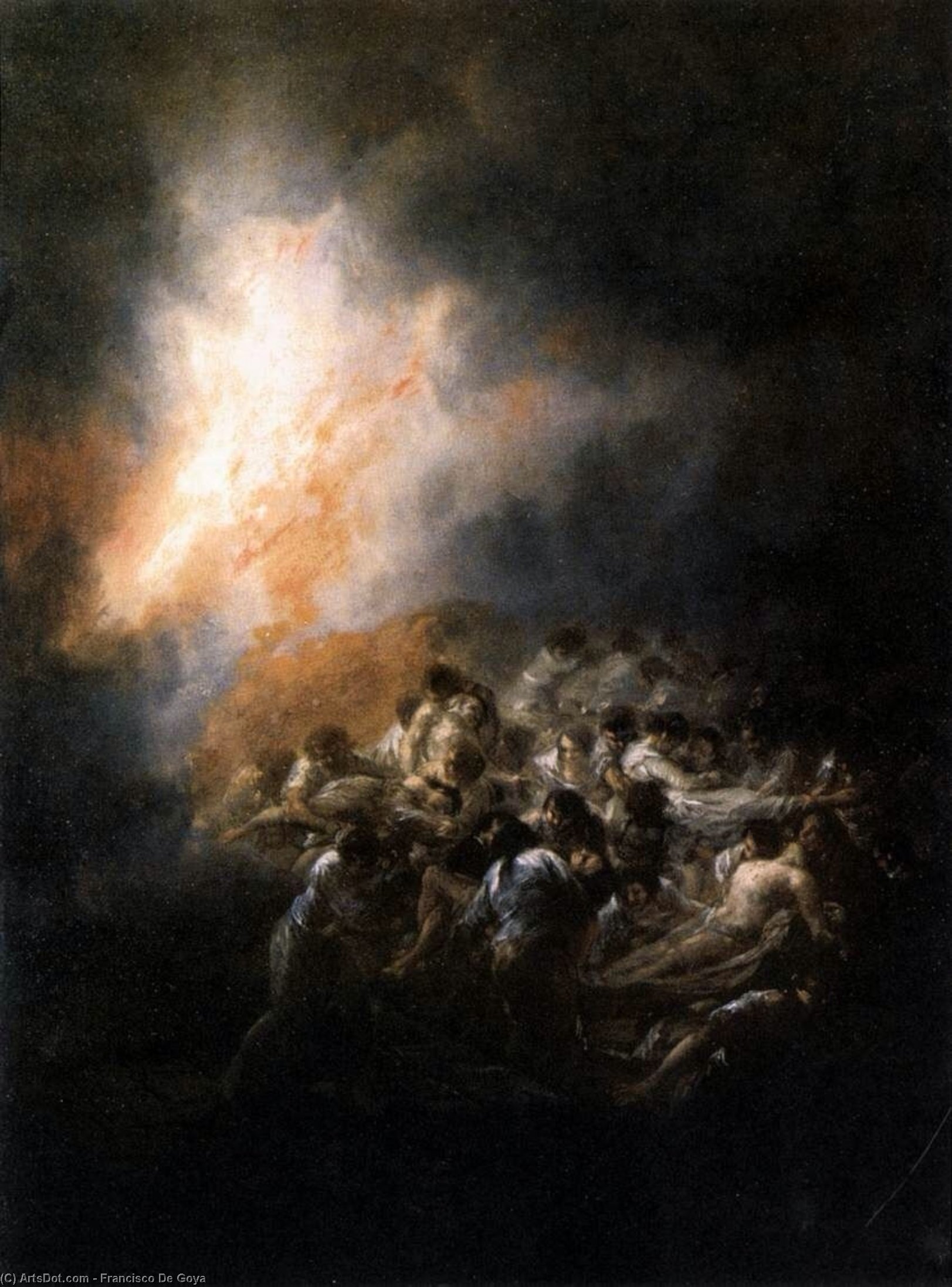
To stand before Goya’s depiction of Fire at Night is not merely to observe a scene; it is to be plunged into the very heart of human panic. This masterful composition, dating from 1794, arrests the viewer with its raw, visceral energy. The black and white rendering strips away the comforting veneer of color, leaving only the stark drama of life confronting overwhelming peril. We see a chaotic tableau—a desperate throng of figures caught amidst towering flames that consume the lower register of the canvas. There is no heroism here, only the primal struggle for survival, making the piece an immediate and deeply unsettling confrontation with mortality.
A Glimpse into Revolutionary Turmoil
To understand this painting is to understand the tempestuous spirit of late 18th-century Spain, a period marked by profound social upheaval. Francisco José de Goya y Lucientes was a painter whose career spanned the transition from Enlightenment refinement to the brutal realities that would define modern consciousness. While his early work showed mastery in courtly portraiture, pieces like this one reveal an artist grappling with deeper, more unsettling truths. The scene speaks less of a literal accident and more of the societal conflagrations—the political, the emotional, the existential fires—that threatened to engulf civilization itself.
Mastery in Shadow and Flame: Technique and Symbolism
Goya’s technique here is breathtakingly dramatic. The contrast between the deep, consuming blacks of the background and the implied brilliance of the flames creates a chiaroscuro effect that feels both immediate and eternal. The composition guides the eye through the clustered figures, each body contorted in an attitude of flight or despair. Symbolically, fire has always been a dual force—it purifies, it destroys. In this context, it represents overwhelming forces beyond human control: revolution, madness, societal collapse. The anonymity of the crowd allows the viewer to project their own fears and urgent moments onto the canvas, making the piece intensely personal despite its grand scale.
Bringing the Drama Home
For those seeking art that does not whisper but proclaims, this reproduction offers unparalleled dramatic weight. Imagine this powerful narrative anchoring a space—a drawing-room corner or an entryway where conversation and contemplation meet. The stark, high-contrast nature of the piece ensures it commands attention without relying on overt color saturation. It is a work for the discerning collector, the interior designer who understands that true decoration can be deeply evocative. Owning this reproduction allows one to curate not just a wall, but an atmosphere—one charged with history, urgency, and profound human resilience.