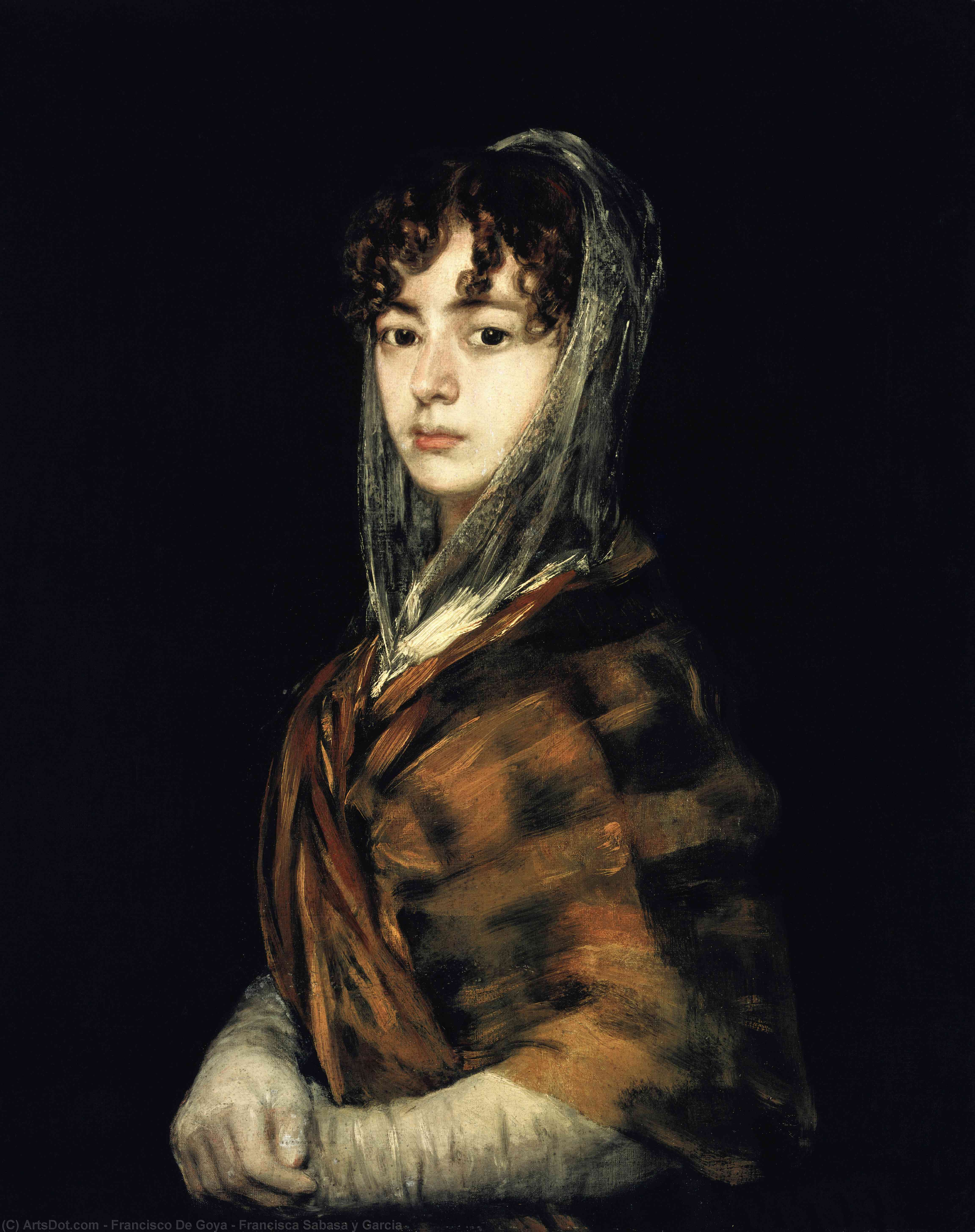
A Portrait of Quiet Contemplation: Francisco Goya’s ‘Francisca Sabasa y Garcia’
Francisco José de Goya y Lucientes, a titan amongst Spanish artists, stands as an unparalleled figure whose oeuvre transcends mere representation; it delves into the very soul of humanity. Born in 1746 in Fuendetodos, Spain, his artistic journey began humbly but swiftly ascended to extraordinary heights, marked by both formal brilliance and profound emotional depth—a duality that continues to fascinate scholars and captivate audiences today. This portrait, “Francisca Sabasa y Garcia,” painted in 1808, exemplifies Goya’s mastery of Romanticism and offers a glimpse into the anxieties and sensitivities of his time. Measuring 71 x 58 cm, it's more than just pigment on canvas; it’s an invitation to contemplate beauty alongside sorrow.
The Subject: A Woman Defined by Presence
The central figure is Francisca Sabasa y Garcia herself—a woman whose gaze holds a remarkable stillness, directly confronting the viewer and establishing an intimate connection that transcends time. Her posture exudes composure, hinting at inner reflection – a characteristic prevalent in Goya’s depictions of women during the Napoleonic era. The artist skillfully captures her serene expression, conveying a sense of quiet dignity amidst the turbulent backdrop of Spanish history. Details like the scarf draped around her neck and the handbag subtly reinforce her role as an independent woman navigating societal expectations.
Romanticism Embodied: Color, Light, and Dramatic Composition
Goya’s stylistic choices powerfully communicate the spirit of Romanticism. The dominant color palette utilizes a striking contrast between the fiery red shawl and the enveloping black background—a technique designed to heighten visual impact and emphasize the subject's prominence. Goya’s masterful manipulation of light casts delicate shadows across Sabasa’s face, illuminating her features with an ethereal glow that underscores the painting’s emotional resonance. Furthermore, the composition prioritizes simplicity and directness, mirroring the Romantic preoccupation with capturing raw emotion and conveying profound psychological insight.
Historical Context: Spain Under Siege
Painted during a period of immense political upheaval—the Peninsular War against Napoleon—Goya's work reflects the anxieties and uncertainties of his era. The backdrop’s darkness symbolizes not only visual drama but also the oppressive atmosphere of wartime Spain, mirroring Goya’s broader exploration of human suffering and social critique. This painting serves as a poignant reminder that art can illuminate both beauty and despair simultaneously, capturing the complexities of human experience within its frame.
Symbolism and Emotional Impact: An Invitation to Reflection
Beyond its formal brilliance, “Francisca Sabasa y Garcia” resonates with symbolic significance. The woman’s gaze invites contemplation—a challenge to viewers to consider her inner thoughts and emotions alongside the visual spectacle. Goya's intention was to provoke introspection, prompting audiences to confront questions of identity, resilience, and the human condition. Like many of his masterpieces – including “The Wedding” and “The Clothed Maja” – this portrait transcends mere depiction; it aspires to evoke feeling and stimulate intellectual engagement.
Own a piece of history with ArtsDot.com! High-quality oil painting reproductions are available.