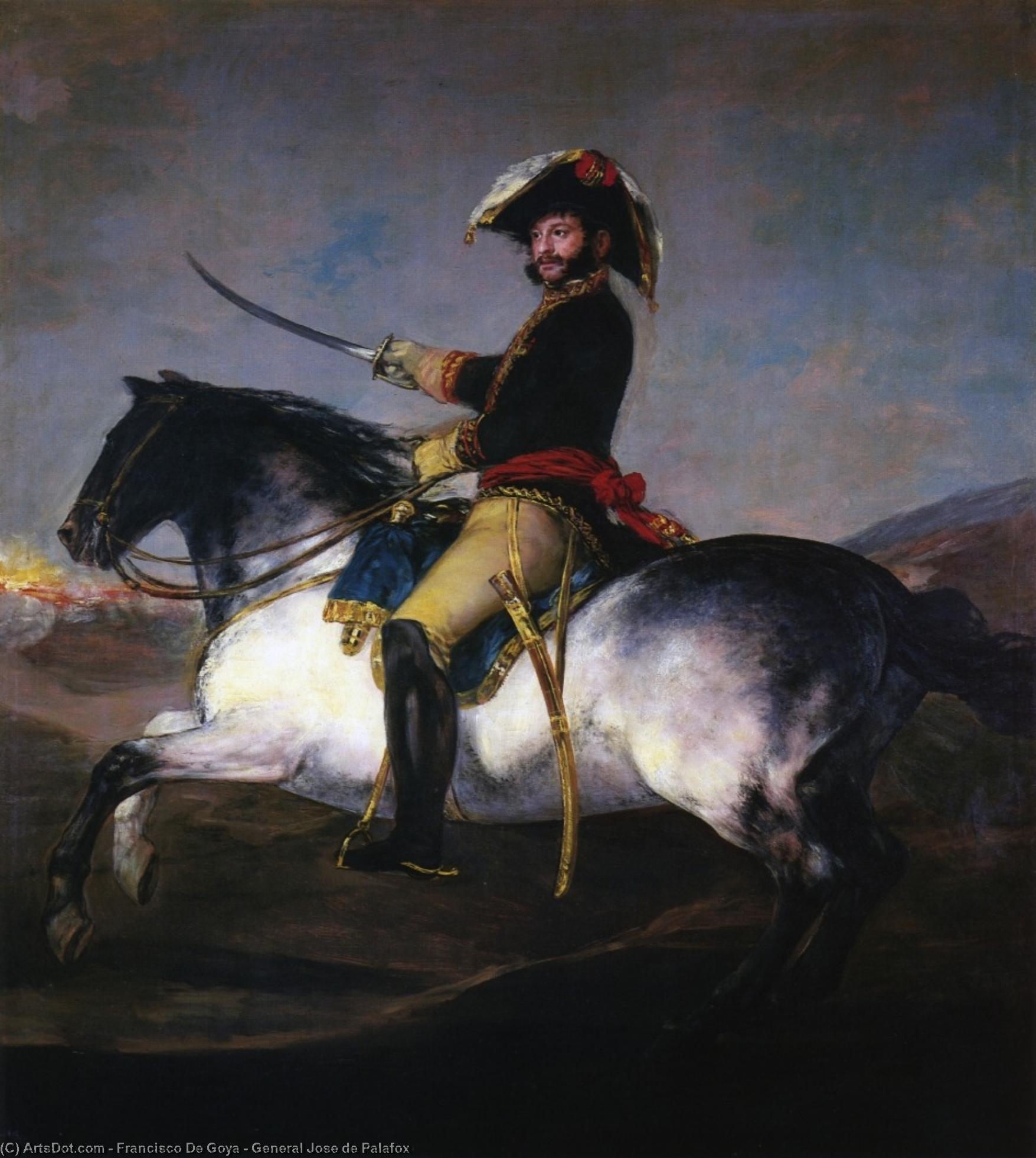
Francisco Goya’s masterful portrait captures the solemn grandeur of Romanticism, depicting General Jose de Palafox astride a horse against a dramatic mountainous backdrop—a poignant glimpse into Spanish history and artistic innovation. Explore this iconic masterpiece and bring its timeless beauty home.
Francisco Goya (1746-1828): Explore the life & work of Spain's Romantic master. Known for portraits, dark satire & 'Disasters of War'. A pivotal figure in art history.
A Portrait Steeped in Romantic Drama: Exploring Goya’s General Jose de Palafox
The painting “General Jose de Palafox” by Francisco José de Goya y Lucientes stands as a cornerstone of Romantic art, encapsulating the movement's preoccupation with emotion, grandeur, and the darker side of human experience. Completed in 1814 during a period marked by political upheaval and societal anxieties – specifically following Napoleon’s invasion of Spain – this monumental oil on canvas transcends mere portraiture; it’s an immersive tableau that speaks volumes about its subject and the spirit of the age.
Subject Matter and Composition: Capturing Power and Vulnerability
At first glance, “General Jose de Palafox” presents a commanding figure astride a horse, dressed in opulent military attire. The subject embodies authority and nobility, symbolized by his sword held aloft – a potent emblem of power and duty. Yet, beneath the surface formality lies an unsettling vulnerability. Goya’s masterful composition directs our gaze across the expansive mountainous landscape, creating a dynamic interplay between man and nature. Two horses dominate the scene: one bearing the General, conveying movement and dynamism, while another positioned further back adds depth to the backdrop. This deliberate arrangement isn't merely aesthetically pleasing; it underscores the inherent contradictions within Romantic ideals – striving for heroic grandeur alongside confronting the realities of human suffering.
Technique and Style: The Painter’s Bold Embrace of Impressionism
Goya’s technique exemplifies the burgeoning influence of Impressionism, albeit predating its formal articulation. He employs a loose brushstroke style that prioritizes capturing fleeting impressions rather than meticulous detail. Layers of pigment create rich textures and vibrant colors—particularly noticeable in the depiction of the horse's musculature and the rugged terrain—allowing for an unprecedented level of expressive nuance. Unlike the polished surfaces favored by earlier Baroque artists, Goya’s approach embraces spontaneity and immediacy, mirroring the Romantic yearning for unfiltered emotion. The artist skillfully utilizes chiaroscuro – dramatic contrasts between light and dark – to sculpt form and heighten emotional impact, drawing viewers into the scene's palpable atmosphere.
Historical Context: Reflecting Spain’s Turbulent Era
“General Jose de Palafox” emerged from a Spain grappling with the Napoleonic Wars and subsequent Bourbon Restoration. The painting serves as a poignant commentary on the political climate of the time, capturing the anxieties surrounding national identity and military prowess. Goya himself was deeply affected by the horrors witnessed during the Peninsular War (1808-1814), experiences that profoundly shaped his artistic vision. This biographical context informs our understanding of the painting’s emotional core—a subtle suggestion of unease beneath the veneer of regal dignity, hinting at the psychological burdens borne by those in positions of power.
Symbolism and Emotional Resonance: Beyond Appearance
Beyond its visual splendor, “General Jose de Palafox” resonates with symbolic significance. The horse itself represents nobility, strength, and virility—qualities deemed essential for upholding the monarchy’s legacy. However, Goya subtly undermines these symbols by portraying the horse as weary and vulnerable, mirroring the anxieties of a nation struggling to regain its footing after defeat. Furthermore, the desolate mountainous landscape symbolizes hardship and isolation – themes prevalent throughout Romantic literature and art. The painting compels viewers to contemplate not just what is seen but also what lies beneath—the unspoken fears and uncertainties that characterize the human condition.
Conclusion: An Enduring Legacy of Artistic Innovation
“General Jose de Palafox” remains a testament to Goya’s artistic genius and his unwavering commitment to portraying the complexities of human experience. Its bold technique, evocative composition, and poignant historical context solidify its place as an iconic masterpiece of Romantic art—a painting that continues to captivate audiences with its dramatic beauty and profound emotional depth. Reproductions offer a remarkable opportunity to appreciate Goya’s vision and immerse oneself in the spirit of a transformative era.