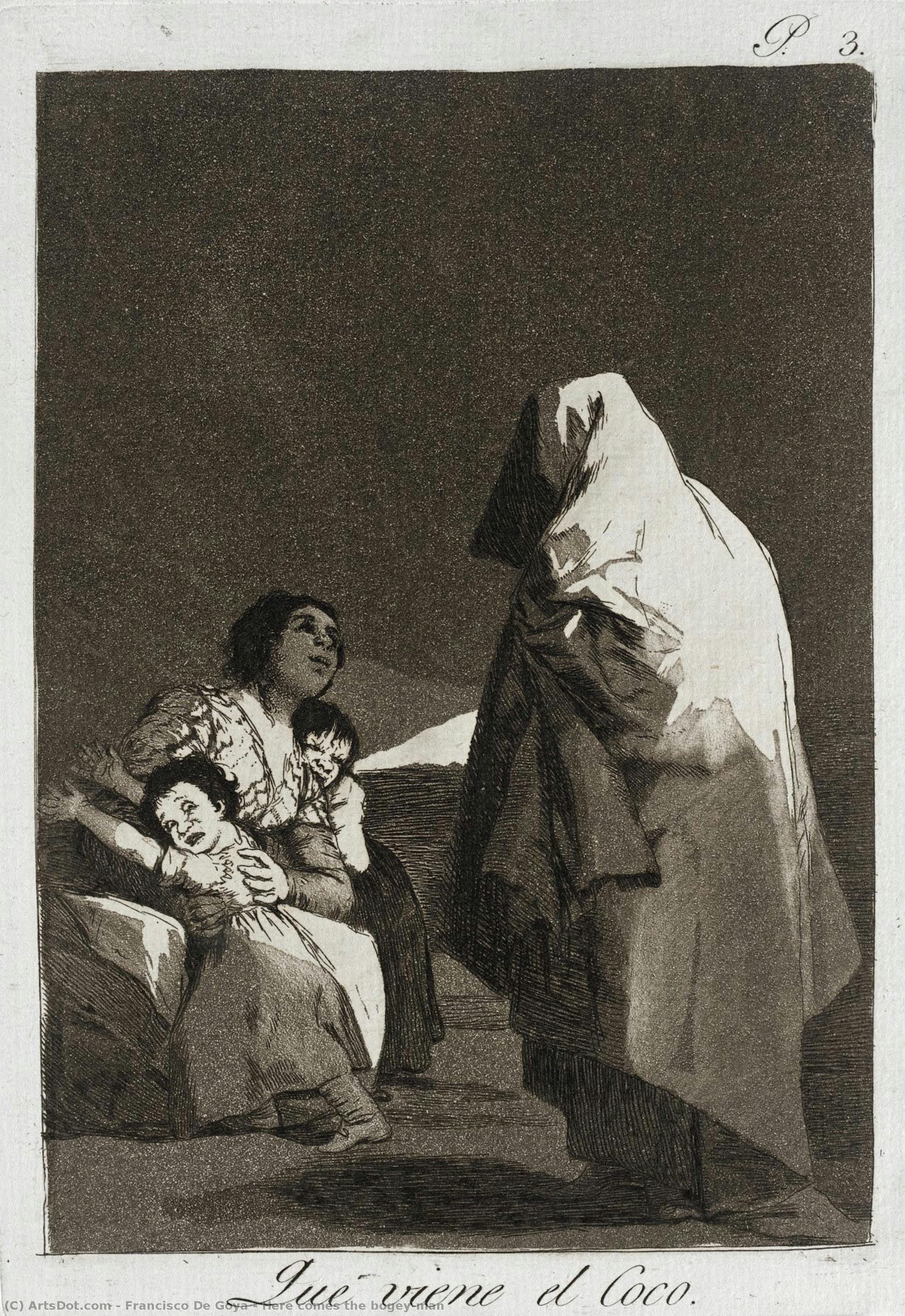
Here Comes The Bogey Man – A Descent Into Fearful Imagination
Francisco José de Goya y Lucientes’ “Here Comes The Bogey Man,” completed in 1799, isn't merely a depiction of a domestic scene; it’s a chilling exploration of anxieties lurking beneath the veneer of bourgeois tranquility. Executed as an etching and aquatint print from his monumental series “Los Caprichos,” this artwork transcends simple storytelling to deliver a profound statement about human psychology and societal unease.
- Subject Matter: The painting portrays a woman seated on a bed alongside her two children, facing the ominous presence of a man dressed in a mask – an instantly recognizable symbol of terror and deception. This figure embodies the bogeyman archetype, representing primal fears associated with childhood nightmares and anxieties about authority figures.
- Style & Technique: Goya’s masterful use of etching and aquatint lends itself to dramatic tonal variations, capturing the unsettling atmosphere with remarkable precision. The artist skillfully employs hatching and cross-hatching to build up textures and contours, emphasizing the shadowy recesses of the room and intensifying the psychological tension.
- Historical Context: “Los Caprichos” emerged during a period of significant social upheaval in Spain – the Napoleonic Wars had disrupted established order, fueling discontent and questioning traditional values. Goya’s satirical intent reflects this broader cultural climate, challenging viewers to confront uncomfortable truths about human nature and societal hypocrisy.
- Symbolism: The mask itself is laden with symbolic significance. It obscures identity, representing hidden dangers and concealing the true intentions of those in power. Furthermore, the woman's posture – rigid yet vulnerable – speaks volumes about the anxieties inherent in motherhood and the struggle to protect one’s children from harm.
- Emotional Impact: “Here Comes The Bogey Man” succeeds in eliciting a visceral response from the viewer. The painting captures the palpable fear of impending doom, prompting contemplation on themes of vulnerability, deception, and the darker side of human experience. It remains a haunting reminder that even within seemingly idyllic settings, anxieties and terrors can persist unseen.
Further research into Goya’s oeuvre reveals his unwavering commitment to portraying the realities of suffering – both physical and psychological – with unflinching honesty. As evidenced by works like “Saturn Devouring His Son” and “The Third of May 1808,” Goya consistently confronted uncomfortable truths about human cruelty and injustice, cementing his legacy as one of the most influential artists of the Romantic era.