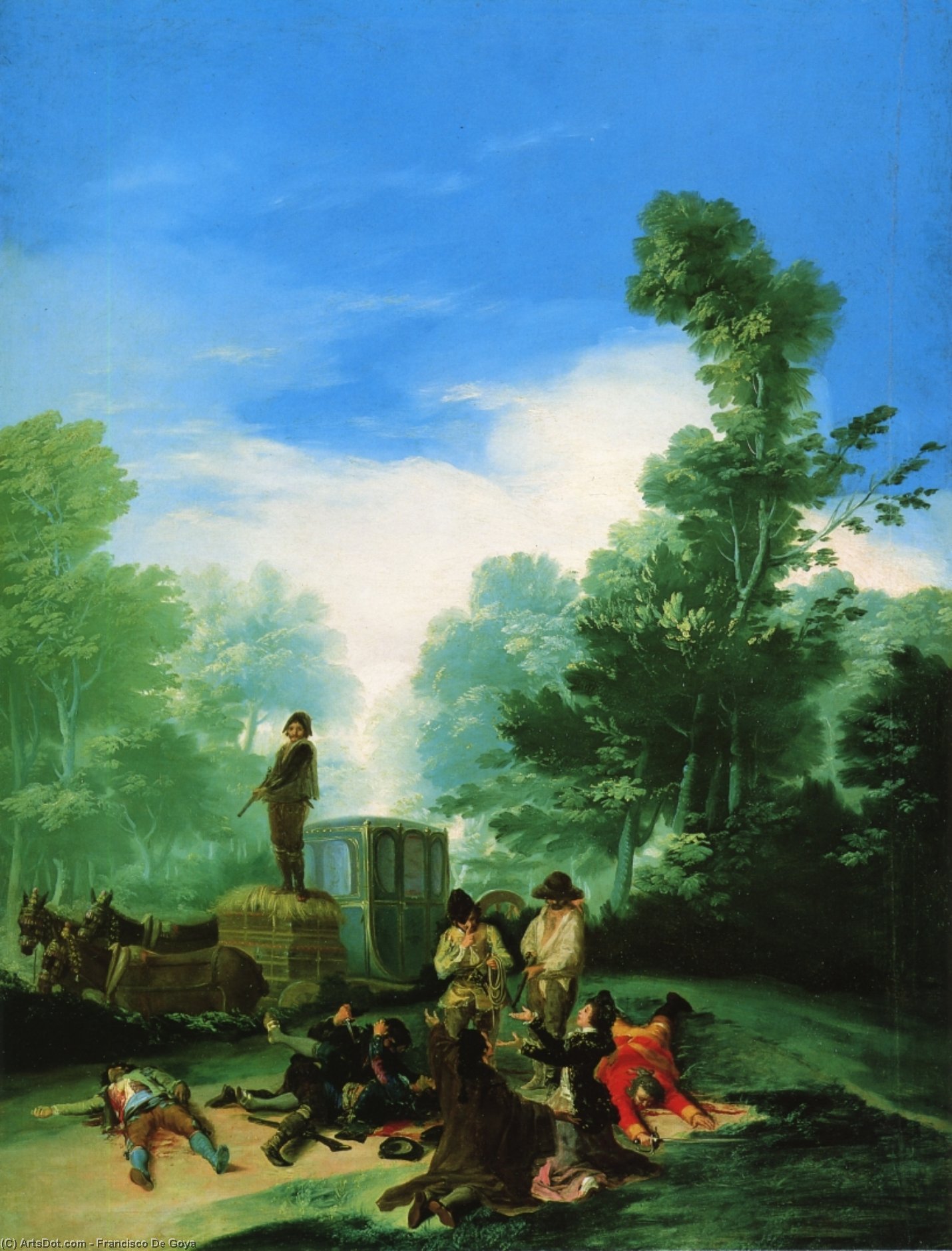
Highwaymen Attacking a Coach: A Romantic Encounter
Francisco José de Goya y Lucientes’ “Highwaymen Attacking a Coach,” completed between 1786 and 1787, stands as an undeniable emblem of the Romantic art movement—a genre that prioritized emotion over reason and celebrated the sublime terror of nature alongside the turbulent realities of human experience. Held in private collection, this monumental oil on canvas (169 cm x 127 cm) transcends mere depiction; it’s a visceral portrayal of violence, fear, and moral decay, cementing Goya's place as one of Spain’s most influential artists.
- Subject Matter: The painting captures a dramatic scene—a brazen assault by highwaymen upon a coach traveling through a dense forest. This juxtaposition of civilized vulnerability against untamed wilderness is characteristic of Romantic aesthetics.
- Style & Technique: Goya’s masterful brushwork employs chiaroscuro – the dramatic interplay of light and shadow – to heighten the emotional impact. Thick impasto creates textural surfaces that convey movement and urgency, mirroring the chaotic action unfolding before the viewer’s eyes.
The Historical Context: Painted during a period of social unrest in Spain—marked by political instability and anxieties surrounding Enlightenment ideals—the artwork reflects the broader Romantic preoccupation with darkness, barbarity, and the darker side of human nature. Goya himself was deeply affected by personal tragedies and witnessed firsthand the horrors of war, informing his artistic vision.
- Symbolism: The forest serves as a potent symbol of isolation and danger, mirroring the psychological state of the travelers caught in the midst of violence. The figures themselves embody contrasting elements – heroism versus brutality—highlighting the moral dilemmas inherent in human behavior.
- Emotional Impact: “Highwaymen Attacking a Coach” evokes feelings of terror, suspense, and compassion for the victims of injustice. Goya’s unflinching gaze compels viewers to confront uncomfortable truths about human cruelty and vulnerability.
Beyond its immediate visual impact, this painting resonates with broader artistic concerns. It anticipates the expressive innovations of later Romantic artists like Eugène Delacroix and Friedrich Nietzsche—artists who similarly sought to capture the sublime beauty and terror of the natural world alongside explorations of psychological complexity. Its legacy continues to inspire interpretations that delve into themes of morality, violence, and the human condition.
- Related Works: Explore Goya’s other masterpieces, including “The Monk,” “Mariana Waldstein,” and “The Military and Senora,” to gain a deeper understanding of his artistic trajectory and thematic preoccupations.
- Collection & Museum: Currently housed at The Museum Escuelas Pias De España Tercera Demarcacion in Madrid, Spain, this artwork exemplifies the museum’s commitment to preserving and presenting exceptional pieces from diverse artistic periods.