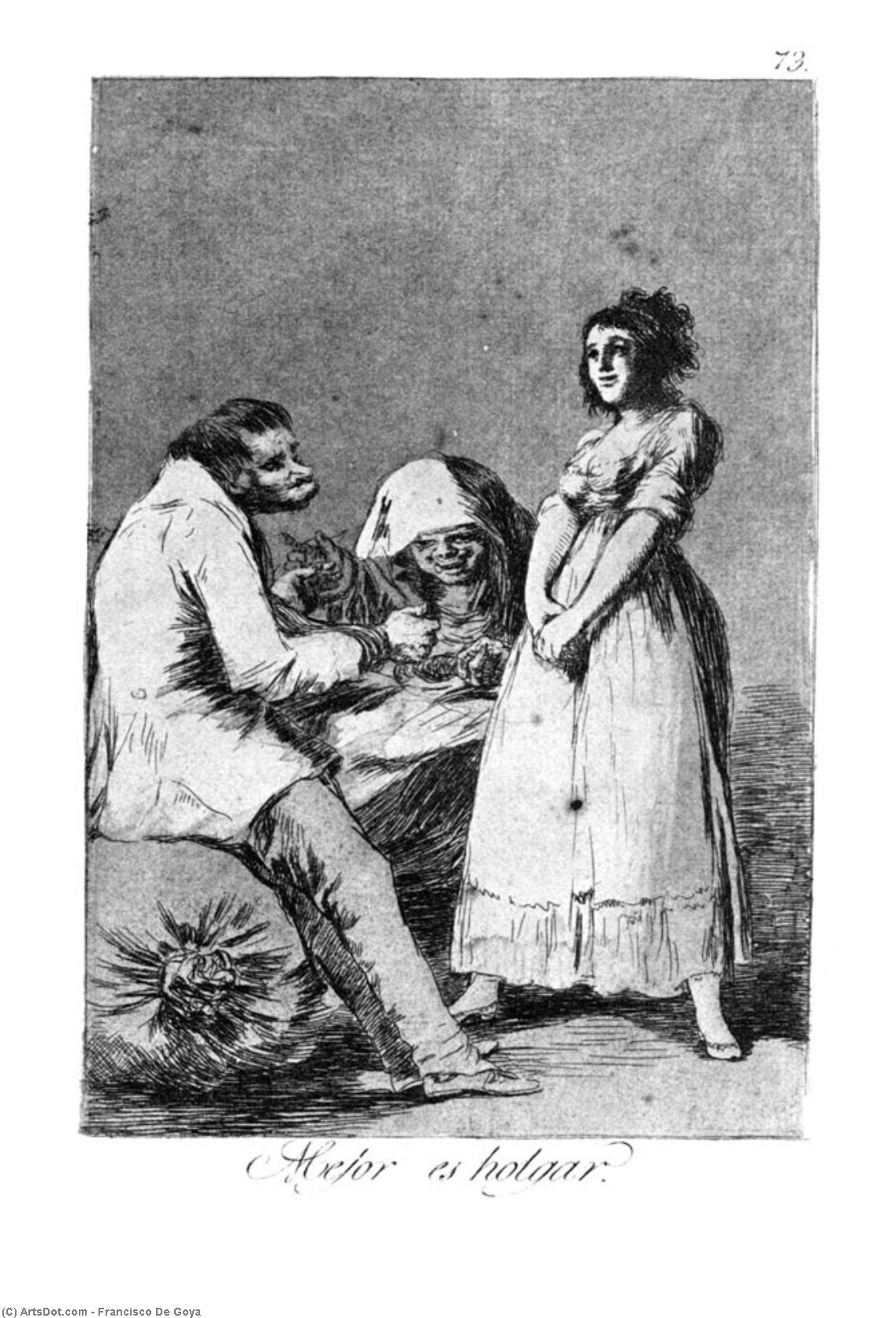
This haunting black and white etching, part of Goya’s iconic ‘Los Caprichos,’ portrays a scene of quiet contemplation punctuated by unsettling detail. Utilizing dense hatching and cross-hatching, Goya captures the mood of social observation and subtle unease. Explore its symbolism, technique—influenced by Rococo and Neoclassical styles—and enduring relevance to artistic expression.
Francisco Goya (1746-1828): Explore the life & work of Spain's Romantic master. Known for portraits, dark satire & 'Disasters of War'. A pivotal figure in art history.
It is Better To Be Idle: A Study in Satirical Observation
Francisco José de Goya y Lucientes’s “It Is Better To Be Idle,” etched in 1799, stands as a cornerstone of Romantic art and a searing indictment of Spanish societal norms. More than just a depiction of leisure—though the scene undeniably portrays figures indulging in inactivity—the print operates on multiple levels of symbolic interpretation, reflecting Goya’s profound engagement with philosophical ideas surrounding reason and morality.
- Composition & Technique: The artwork employs a vertically oriented format that immediately establishes a sense of confinement, mirroring the oppressive atmosphere prevalent during Goya's time. Goya’s masterful use of etching—specifically burnished aquatint and engraving—creates a remarkable tonal range achieved through meticulous line work. Hatching and cross-hatching dominate the image, skillfully modeling forms and conveying textures with astonishing precision. The grainy surface resulting from this technique underscores the artist’s dedication to capturing both visual realism and emotional depth.
- Subject Matter & Narrative: At its core, “It Is Better To Be Idle” presents a tableau of social interaction—a man seated at a table alongside a woman, with another figure partially obscured—set against a bustling backdrop. The title itself serves as a deliberate provocation, questioning the value placed on idleness and suggesting a critique of complacency within aristocratic circles. Goya’s intention wasn't merely to record a moment in time; he aimed to provoke contemplation about human behavior and societal responsibility.
- Symbolism & Emotional Impact: The figures’ expressions convey detachment, bordering on apathy—a palpable sense of boredom that speaks volumes about the anxieties of the era. Goya’s masterful manipulation of light and shadow contributes significantly to the print's unsettling mood, reinforcing its thematic concerns regarding moral decay and the dangers of intellectual stagnation. The image resonates with a broader critique of societal values, prompting viewers to confront uncomfortable truths about human nature.
- Historical Context: Produced during Goya’s turbulent period as court painter—a role fraught with political intrigue and personal disillusionment—the etching reflects the anxieties surrounding Enlightenment ideals colliding with the realities of Spanish aristocratic life. “Los Caprichos,” as a whole, functioned as a subversive commentary on the follies of his time, challenging conventional notions of beauty and virtue.
- Further Exploration: Examining Goya’s artistic lineage reveals connections to both Rococo and Neoclassical traditions—though he decisively rejected their formal constraints—embracing instead an expressive style that anticipates the Romantic movement's emphasis on emotion and imagination. Consider researching related artworks within “Los Caprichos” for a deeper understanding of Goya’s broader artistic vision.