A Bold Departure from Tradition: Goya’s Portrait of Josefa Garcini
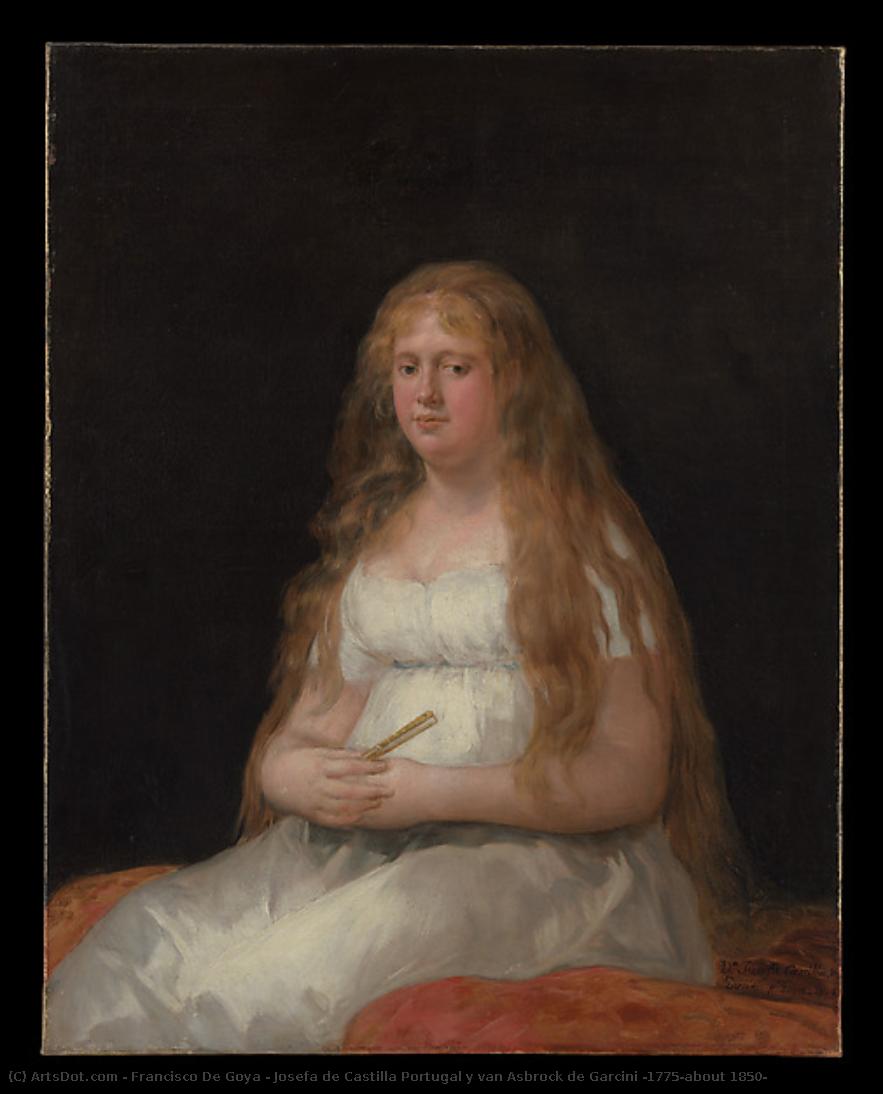
This portrait of Josefa de Castilla Portugal y van Asbrock by Francisco José de Goya y Lucientes stands apart from the prevailing artistic conventions of its time, offering a strikingly intimate glimpse into domestic life and subtly echoing monumental precedents established by Rubens and Rembrandt. Painted in 1804, shortly after her marriage to Colonel Ignacio Garcini y Queralt, it’s considered a companion piece to Goya's depiction of his husband – a deliberate choice that underscores the importance of familial bonds within the aristocratic circles of Madrid.
- Subject Matter: The painting portrays Josefa Garcini in repose on a bed or couch, holding a book, suggesting contemplation and domestic tranquility. Her pregnancy is evident through her loose dress and unbound hair, reflecting the societal expectations surrounding women’s roles during the Napoleonic era.
- Style & Technique: Goya abandons the idealized beauty favored by many of his contemporaries, opting for a more naturalistic approach characterized by loose brushstrokes and subtle tonal variations. The palette is muted yet luminous, prioritizing atmospheric perspective to create a sense of depth and realism.
Rubensian Influence: Echoes of Grandeur
Goya’s artistic vision draws heavily from the monumental canvases of Peter Paul Rubens, specifically his depictions of women—powerful figures imbued with vitality and radiant beauty. Like Rubens's portraits, Goya’s portrayal seeks to convey not merely physical likeness but also inner character. The artist deliberately references Rubens’s masterful use of color and composition, demonstrating a profound understanding of artistic heritage.
Rembrandt’s Legacy: Emotional Depth
Furthermore, Goya's work resonates with the psychological intensity found in Rembrandt’s paintings, notably *Judith at the Banquet of Holofernes*. Just as Rembrandt explored themes of morality and human vulnerability through dramatic lighting and expressive gestures, Goya captures a moment of quiet introspection—a subtle suggestion of inner turmoil beneath an outwardly serene surface. The artist skillfully employs chiaroscuro – the interplay of light and shadow – to heighten emotional impact.
Symbolism & Atmosphere
The darkened background serves as a deliberate counterpoint to Josefa’s figure, emphasizing her presence and fostering a contemplative mood. It mirrors the artistic conventions of Rembrandt's time, where darkness was used to convey solemnity and psychological complexity. The painting isn’t merely a portrait; it’s an exploration of femininity, domestic life, and the artist’s masterful ability to evoke profound emotion through nuanced visual language.
Conclusion: A Timeless Masterpiece
Goya's *Josefa de Castilla Portugal y van Asbrock* transcends its historical context, presenting a portrait that speaks to universal themes of motherhood, contemplation, and the enduring power of artistic inspiration. Its understated elegance combined with masterful technique ensures its place as one of Goya’s most poignant and influential works—a testament to his genius and a captivating subject for discerning art lovers.