A Portrait of Quiet Contemplation: Exploring Goya’s ‘kracher’
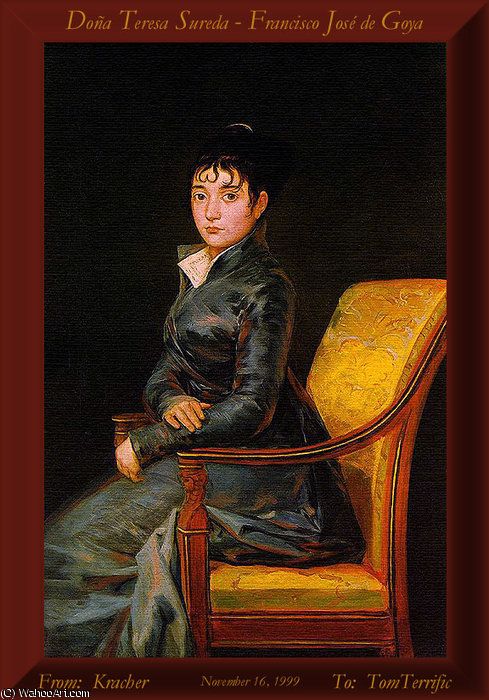
This captivating portrait by Francisco de Goya presents a woman seated in an ornate chair, her hands gently clasped before her. The image exudes a sense of introspective calm and historical weight, characteristic of Goya's mature style. While the exact date and size remain unknown, the work offers a compelling glimpse into the artist’s mastery of portraiture and his evolving artistic vision.
Subject & Style: Echoes of 18th-Century Elegance
The subject is depicted in what appears to be late 18th or early 19th-century attire – a style Goya frequently encountered during his time as a court painter. Her hair, neatly arranged in a bun, and the elegant cut of her clothing suggest a woman of status and refinement. However, it’s not merely a depiction of fashion; Goya transcends simple representation. The painting leans towards a *Rococo* influenced style with its delicate rendering of fabrics and attention to detail, yet hints at the emerging *Romanticism* through the psychological depth conveyed in the sitter's expression.
Technique & Composition: A Masterful Use of Light and Shadow
Goya’s technical skill is evident in his handling of light and shadow. The illumination focuses on the woman’s face, drawing our attention to her thoughtful gaze. This use of *chiaroscuro* – a dramatic contrast between light and dark – adds depth and volume to the figure, while also enhancing the emotional impact of the portrait. The ornate chair, positioned slightly off-center, provides visual interest without distracting from the central subject. Goya’s brushwork is fluid and confident, creating a sense of immediacy and life.
Historical Context: Bridging Eras with Goya
Francisco de Goya (1746-1828) was a pivotal figure in Spanish art history. He served as court painter to the Spanish Crown but increasingly used his art to comment on the social and political turmoil of his time. He transitioned from the decorative style favored by the aristocracy to a more personal and often critical approach, foreshadowing the Romantic movement. ‘kracher’ likely dates from a period where Goya was experimenting with psychological realism in portraiture, moving beyond mere physical likeness to capture the inner life of his subjects.
Symbolism & Emotional Impact: A Window into the Soul
The woman's expression is key to understanding the painting’s power. She isn’t smiling or engaging directly with the viewer; instead, she appears lost in thought, perhaps contemplating a personal dilemma or reflecting on the world around her. This introspective quality invites us to project our own emotions and experiences onto the image. The overall atmosphere is one of quiet dignity and melancholic beauty.
The painting isn’t simply about *seeing* a woman; it's about *feeling* her presence and sensing her inner world.
For Collectors & Designers
- Investment Piece: A Goya reproduction, even as a high-quality print, represents an investment in artistic heritage. His works are consistently sought after by collectors worldwide.
- Interior Harmony: The muted color palette and elegant composition make this portrait suitable for a variety of interior styles – from traditional to contemporary. It would be particularly striking in a library, study, or drawing-room.
- Conversation Starter: This artwork is sure to spark conversation and inspire contemplation among guests. Its historical significance and emotional depth add layers of meaning to any space.
‘kracher’ offers more than just aesthetic appeal; it provides a connection to the past, a glimpse into the human condition, and a testament to Goya's enduring genius.