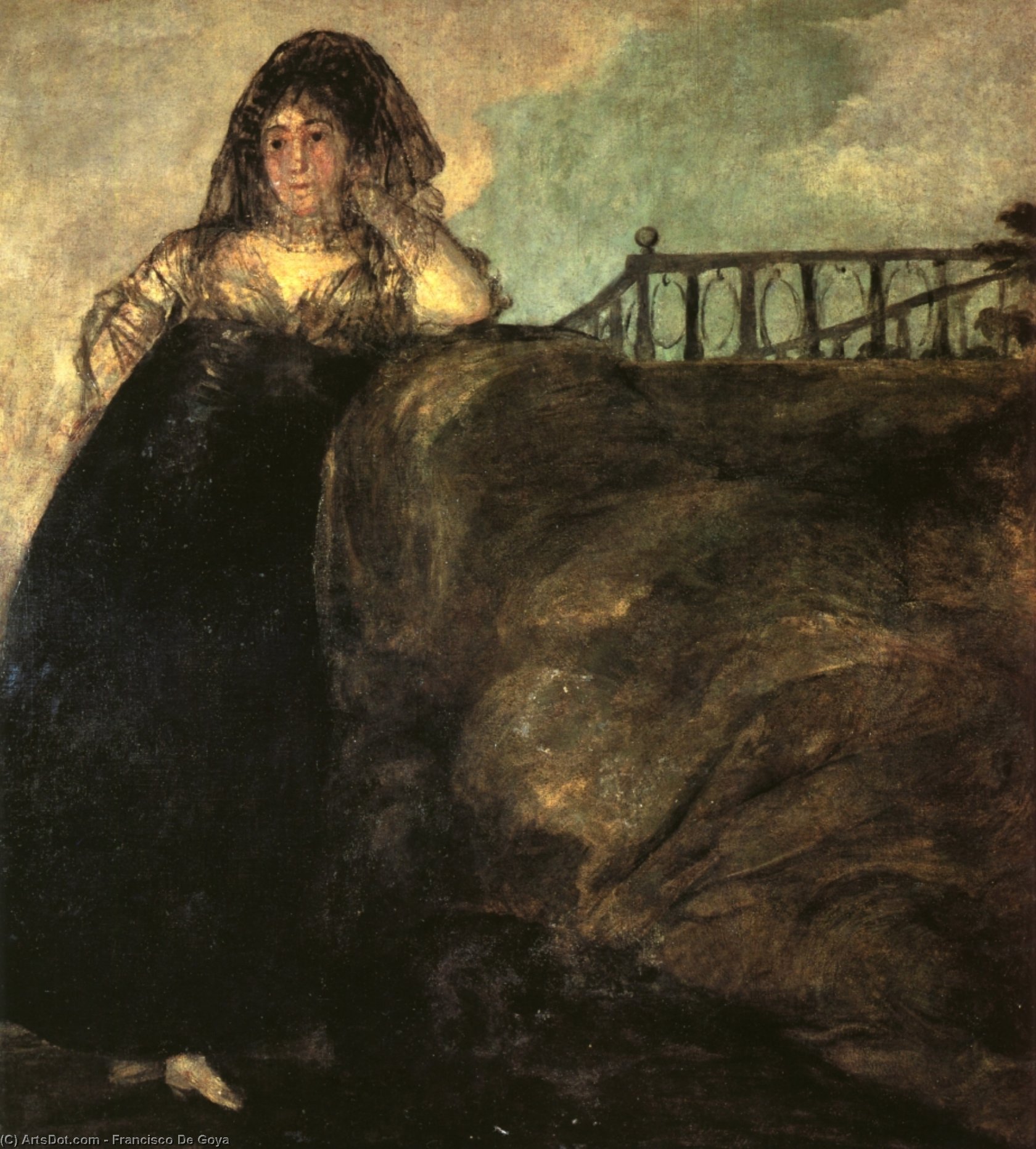
A Window into Goya’s Soul: Exploring *La Leocadia*
Francisco de Goya's *La Leocadia*, painted in 1820, is more than just a portrait; it’s an intimate psychological study rendered with the master’s signature expressive brushwork. This captivating work offers a glimpse into a turbulent period of both the artist’s life and Spanish history, inviting viewers to contemplate themes of melancholy, isolation, and perhaps even forbidden love.
Subject & Historical Context
The subject is believed to be Leocadia Weiss Zorrilla, Goya's maid, companion, and likely lover during his later years. This identification, though debated, adds a layer of intrigue to the painting. Goya was in his seventies when he created this work, having survived a severe illness that left him deaf and profoundly altered his artistic vision. Spain itself was undergoing dramatic shifts – the restoration of the absolute monarchy after Napoleon’s defeat led to political repression and disillusionment, feelings deeply reflected in Goya's *Black Paintings* series, to which *La Leocadia* is often associated. The painting represents a departure from his earlier commissioned portraits; it feels intensely personal and unburdened by courtly expectations.
Style & Technique
*La Leocadia* exemplifies Goya’s transition towards Romanticism, characterized by emotional intensity and a rejection of Neoclassical formality. The painting is executed with loose, visible brushstrokes – a hallmark of his late style – creating a sense of immediacy and raw emotion. The muted color palette, dominated by dark browns, blacks, and grays, contributes to the somber mood.
Goya’s masterful use of chiaroscuro—the dramatic contrast between light and shadow—draws attention to Leocadia's face, illuminating her introspective gaze while shrouding the surrounding environment in mystery. The composition is deliberately simple, focusing solely on the figure and a suggestion of landscape, enhancing the feeling of intimacy and psychological depth.
Symbolism & Interpretation
Several elements within the painting invite symbolic interpretation. Leocadia’s dark dress and slightly downturned expression evoke a sense of mourning or melancholy. The rocky outcrop upon which she sits could represent instability or isolation, while the wrought iron railing behind her might symbolize confinement or restriction.
The two birds, often overlooked, add a subtle layer of symbolism – perhaps representing freedom, hope, or fleeting moments of joy amidst sorrow. Some scholars suggest the painting alludes to themes of forbidden love and societal constraints, given Leocadia’s social standing and her relationship with the aging artist.
Emotional Impact & Legacy
*La Leocadia* is a profoundly moving work that resonates with viewers on an emotional level. It's not merely a depiction of a woman; it’s a portrayal of inner turmoil, quiet contemplation, and perhaps even resignation. The painting’s enduring appeal lies in its ability to evoke empathy and invite introspection.
Goya’s unflinching honesty and his willingness to explore the darker aspects of human experience continue to captivate audiences today. As a key work within Goya's oeuvre, *La Leocadia* stands as a testament to his artistic genius and his profound understanding of the human condition.
For Collectors & Interior Designers
- A high-quality reproduction of *La Leocadia* would serve as a striking focal point in any interior, adding depth, sophistication, and a touch of historical intrigue.
- The painting’s muted color palette complements a variety of décor styles, from traditional to contemporary.
- Its introspective mood makes it particularly well-suited for spaces designed for relaxation and contemplation – libraries, studies, or bedrooms.
- Consider pairing it with complementary artwork from the Romantic period or works that explore similar themes of emotion and psychology.