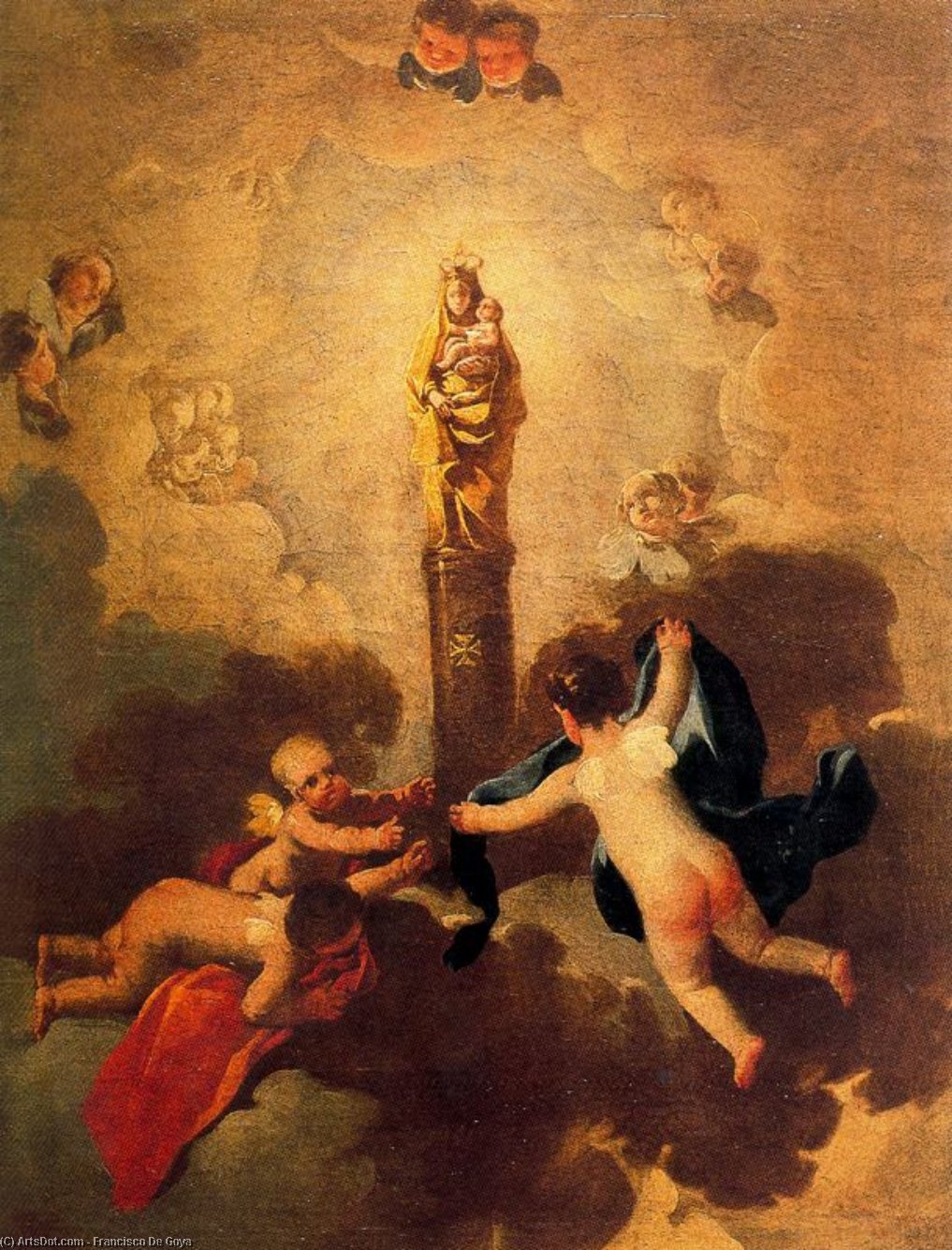
A Vision of Divine Grace: Exploring Goya’s *La Virgen del Pilar*
Francisco de Goya's *La Virgen del Pilar*, painted in the late 18th century, is more than just a religious depiction; it’s a powerful statement of faith and a showcase of the artist’s evolving Romantic style. This oil painting captures a pivotal moment of spiritual significance for Spain, centered around its patron saint, the Virgin Mary of the Pillar. The artwork resonates with both dramatic flair and intimate devotion, making it a compelling piece for any art enthusiast or collector.
Subject & Symbolism
The central focus is, naturally, the Virgin Mary, tenderly holding the infant Jesus. She isn’t presented as distant or untouchable, but rather with a gentle humanity that draws the viewer in. Surrounding her are numerous angels, their forms swirling and dynamic, creating a celestial court of adoration. The very title references the *Pilar* (pillar) upon which, according to legend, the Virgin Mary appeared to Saint James while traveling through Spain. Though not explicitly depicted as a physical pillar within this composition, its presence is felt in the overall sense of steadfast faith and divine protection.
The painting serves as a visual prayer, embodying hope and solace.
Artistic Style & Technique
*La Virgen del Pilar* exemplifies Goya’s transition towards Romanticism. While still rooted in Baroque traditions – evident in the dramatic lighting and dynamic composition – he begins to infuse his work with a greater emotional intensity and looser brushwork.
Key characteristics include:
- Dramatic Chiaroscuro: The stark contrast between light and shadow heightens the spiritual atmosphere, drawing attention to Mary and Jesus.
- Fluid Brushstrokes: Goya’s brushwork is visible and expressive, creating a sense of movement and energy within the scene. This departs from the more polished surfaces favored by earlier masters.
- Vibrant Color Palette: Though grounded in earth tones, bursts of color – particularly in the angels' robes – add vibrancy and visual interest.
- Dynamic Composition: The swirling arrangement of figures and clouds creates a sense of upward movement, symbolizing ascension and divine power.
Historical Context & Goya’s Vision
Goya painted *La Virgen del Pilar* during a period of significant social and political upheaval in Spain. The Enlightenment was challenging traditional beliefs, and the monarchy faced growing unrest. As a court painter, Goya navigated these complexities, often subtly incorporating his own observations and sentiments into his work. This painting can be seen as both an affirmation of faith *and* a reflection of the anxieties of the time – a plea for divine guidance in uncertain circumstances. It’s important to note that this wasn't simply a commission; Goya had a personal devotion to the Virgin Mary of the Pillar, having survived a serious illness through her intercession.
Emotional Impact & Interior Design
*La Virgen del Pilar* evokes feelings of reverence, peace, and hope. The painting’s warm color palette and tender depiction of mother and child create an inviting atmosphere.
For interior design, this artwork would be a stunning focal point in a living room, dining room, or even a bedroom. Its classic composition and rich colors complement both traditional and contemporary settings. A high-quality reproduction allows you to bring the beauty and spiritual depth of Goya’s masterpiece into your home, creating a space that is both aesthetically pleasing and emotionally resonant. The painting's scale also lends itself well to larger rooms, commanding attention without overwhelming the space.