Francisco Goya (1746-1828): Explore the life & work of Spain's Romantic master. Known for portraits, dark satire & 'Disasters of War'. A pivotal figure in art history.
Explore The Metropolitan Museum of Art: 5,000 years of art from around the world! Discover masterpieces, ancient artifacts & immersive exhibitions – a global art destination awaits.
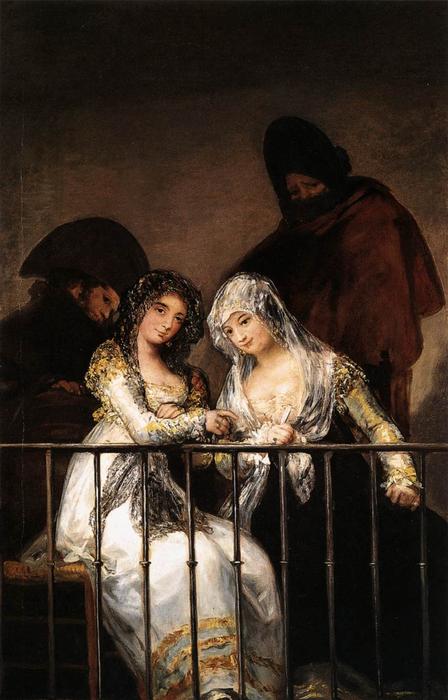
Majas on a Balcony
Francisco de Goya’s “Majas on a Balcony,” completed between 1808 and 1814 during Spain’s tumultuous Napoleonic occupation, transcends mere visual representation; it embodies the anxieties of an era grappling with political upheaval and societal transformation. Held prominently in the Metropolitan Museum of Art, New York City, this oil canvas masterpiece—measuring 193 x 124 cm—offers a profound glimpse into Goya’s artistic vision and his masterful manipulation of Romantic sensibilities. More than just depicting women on a balcony, it serves as a complex commentary on social conventions, gender roles, and the psychological landscape of Spanish aristocratic life.
The Painting: A Window Into Intimacy
Goya's technique is characterized by a deliberate restraint—a calculated use of muted colors and subtle tonal gradations that heighten the drama of the scene without resorting to flamboyant ornamentation. The composition itself is meticulously balanced, employing geometric principles to create a harmonious visual experience. At its core lies a square formed by the balustrade’s vertical grills, dividing the canvas into four quadrants—a device Goya frequently employed to control perspective and emphasize key elements. Within this framework, two women dominate the foreground, positioned in relation to each other as if engaged in an unspoken dialogue. Their attire—elaborate lace mantillas and richly embroidered gowns—underscores their social status and reflects the prevailing fashions of the Empire style. The artist’s keen observation of human anatomy is evident in the depiction of the figures' postures and expressions, capturing a moment of quiet contemplation amidst the backdrop of political uncertainty.
Artistic Style and Influence
“Majas on a Balcony” firmly establishes Goya as a pivotal figure in the Romantic movement—a reaction against Neoclassical ideals that prioritized reason and order. Unlike the idealized forms favored by earlier artists, Goya embraces emotional intensity and psychological depth, mirroring the turbulent spirit of his time. The painting’s use of chiaroscuro—the dramatic interplay between light and shadow—amplifies this effect, creating a palpable atmosphere of suspense and hinting at hidden emotions beneath the surface. Furthermore, Goya's exploration of human vulnerability—particularly evident in the faces of the men—challenges conventional notions of masculinity and foreshadows themes that would resonate throughout subsequent artistic endeavors. Consider Picasso’s own fascination with Goya’s unflinching portrayal of human suffering; it exemplifies how Goya’s legacy continues to inspire artists striving for authenticity and emotional resonance.
Historical Context and Significance
Painted during the Napoleonic Wars, “Majas on a Balcony” reflects the anxieties and disillusionment prevalent in Spanish society—a nation reeling from invasion and internal divisions. The painting's subtle critique of aristocratic complacency serves as a poignant reminder that even amidst opulent surroundings, human beings grapple with profound questions of morality and identity. Goya’s artistic choices—his deliberate avoidance of grand gestures and his focus on intimate psychological portraits—represent a radical departure from prevailing artistic conventions. He wasn’t merely documenting the visual world; he was attempting to convey an emotional truth—a reflection of the anxieties and uncertainties that characterized Spain's experience during this pivotal period in European history.
Relevance in Modern Art
The enduring appeal of “Majas on a Balcony” lies not only in its aesthetic beauty but also in its psychological complexity—a quality that continues to captivate audiences today. Artists across genres have drawn inspiration from Goya’s masterful use of light and shadow, his exploration of human emotion, and his willingness to confront uncomfortable truths. Its influence can be seen in works by Surrealists like René Magritte, who famously reimagined the painting as “Perspective II,” demonstrating how Goya's vision transcends temporal boundaries and speaks to universal themes of perception and reality. For those seeking a deeper understanding of artistic innovation and emotional expression, "Majas on a Balcony" remains an indispensable point of reference—a testament to Goya’s enduring legacy as one of the most influential painters of all time.