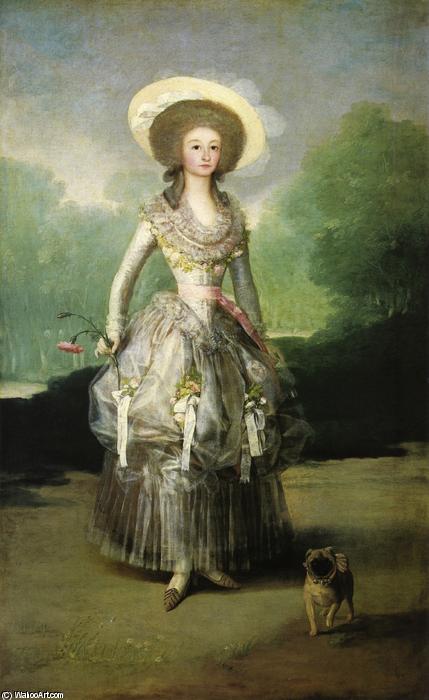
A Portrait of Grace Amidst Tranquility: Exploring Mariana de Pontejos by Francisco José de Goya
Francisco José de Goya y Lucientes’s “Mariana de Pontejos,” painted in 1786, transcends mere representation; it's a masterful distillation of Rococo elegance interwoven with an unsettling glimpse into the complexities of human emotion. Commissioned for María Teresa León y Fernández Cabrera, Duchess of Alba, this portrait captures a moment frozen in time – Mariana strolling alongside her beloved dog, bathed in dappled sunlight beneath blossoming trees—yet Goya’s genius lies not simply in capturing beauty but in subtly hinting at underlying anxieties and vulnerabilities.
- Subject Matter & Composition: The painting depicts Mariana de Pontejos, a noblewoman known for her melancholic disposition and rumored madness. Her posture exudes quiet dignity as she guides her dog through a meticulously landscaped garden. Goya’s compositional choices prioritize balance and serenity, mirroring the idealized aesthetic conventions of the Rococo period. However, this outward tranquility is juxtaposed with Mariana's gaze—a piercing stare directed towards the viewer—that speaks volumes about inner turmoil.
- Style & Technique: Goya employed a technique characteristic of his era yet imbued with an unprecedented level of realism. He utilized oil paints on canvas, applying thin glazes to achieve luminous colors and subtle tonal gradations. The artist’s meticulous attention to detail—evident in the rendering of Mariana's dress, the flowers adorning her hat, and the textures of the foliage—demonstrates his mastery of chiaroscuro, creating dramatic contrasts between light and shadow that heighten emotional impact.
Historical Context: The Shadow of Reason and Sentimentality
“Mariana de Pontejos” emerged during a period marked by intellectual ferment – the Enlightenment – where reason and scientific inquiry challenged traditional beliefs. Yet, alongside this burgeoning rationalism existed a fervent preoccupation with emotion and subjectivity, particularly as expressed in Romantic art. Goya’s portrayal of Mariana reflects this duality; she embodies both aristocratic grace and psychological fragility—a reflection of the anxieties prevalent within Spanish society at the time concerning mental illness and social status.
- Symbolism: The dog accompanying Mariana is a recurring motif in Goya’s oeuvre, symbolizing loyalty and companionship. However, it also carries connotations of melancholy and solitude—mirroring Mariana's own emotional state. Furthermore, the flowers adorning her hat represent beauty and innocence, albeit framed within the context of Mariana’s perceived instability. The parasol serves as a visual barrier between Mariana and the viewer, emphasizing her detachment from the outside world.
Emotional Impact & Legacy
Ultimately, “Mariana de Pontejos” transcends its formal beauty to deliver a profound emotional resonance. Goya’s masterful manipulation of light and shadow—coupled with his unflinching portrayal of Mariana's gaze—creates an atmosphere of palpable sadness and introspection. The painting compels viewers to confront uncomfortable truths about human vulnerability and the elusive nature of happiness. It remains a cornerstone of Romantic art, cementing Goya’s reputation as one of Spain’s greatest painters and influencing generations of artists who sought to explore the darker recesses of the human psyche.