A Surreal Portrait of Nobility and Mockery
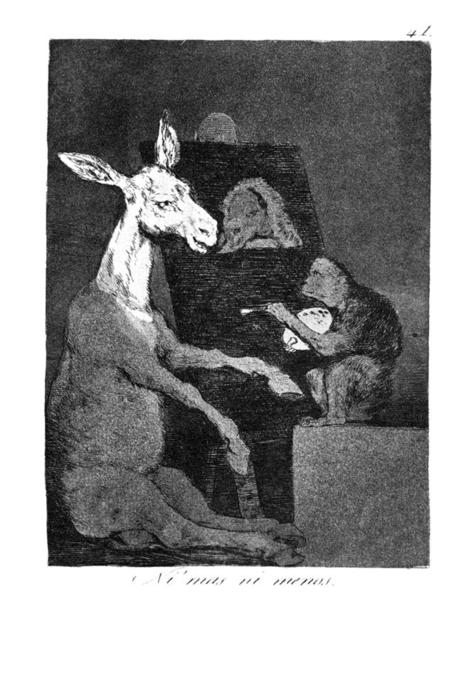
Francisco José de Goya y Lucientes’ “Neither More nor Less,” created in 1799 during his tenure as court painter to Charles IV, stands as a masterful example of Romantic satire. This etching from *Los Caprichos*, Goya's groundbreaking series exploring the follies and anxieties of his time, transcends mere visual representation; it’s an invitation into a meticulously crafted psychological landscape.
- Composition & Narrative: The asymmetrical arrangement immediately draws attention to the central figure—a nobleman seated at a piano—who is portrayed as a monkey. This deliberate juxtaposition serves as a biting critique of artistic pretension, mirroring Goya’s own self-awareness as an artist grappling with societal expectations. Surrounding him are several other figures, subtly contributing to the overall sense of unease and theatricality.
- Technique & Materials: Executed in aquatint etching on ivory laid paper, “Neither More nor Less” exemplifies Goya’s unparalleled mastery of printmaking techniques. The artist skillfully employed hatching and cross-hatching to build up tonal values, creating a dramatic chiaroscuro effect that emphasizes the contours of the figures and imbues the scene with palpable depth. Copper plates were meticulously incised with burins and needles, ensuring exceptional precision and detail in the final impression.
- Symbolism & Emotional Impact: Beyond its formal brilliance, the artwork resonates with profound symbolic implications. The monkey figure isn’t simply a caricature; it represents the artist's own vulnerability to imitation and the danger of losing authenticity amidst artistic ambition. Simultaneously, the scene evokes a disconcerting blend of humor and melancholy—a reflection of Goya’s preoccupation with human suffering and his ability to capture the complexities of human emotion.
- Historical Context: Produced during a period marked by political instability and social upheaval in Spain, “Neither More nor Less” speaks to the broader anxieties surrounding aristocratic privilege and artistic integrity. It aligns perfectly with Goya's larger project of exposing hypocrisy and challenging conventional notions of beauty and virtue—a legacy that continues to inspire artists and scholars today.
- Further Exploration: To delve deeper into Goya’s oeuvre and understand the significance of “Los Caprichos,” consider visiting the Nelson Atkins Museum of Art in Kansas City, where a stunning reproduction of this etching is prominently displayed alongside other masterpieces from the series. Examining scholarly analyses like Tomás Harris' *Goya: Engravings and Lithographs* provides invaluable insight into Goya’s artistic innovations and his enduring influence on art history.