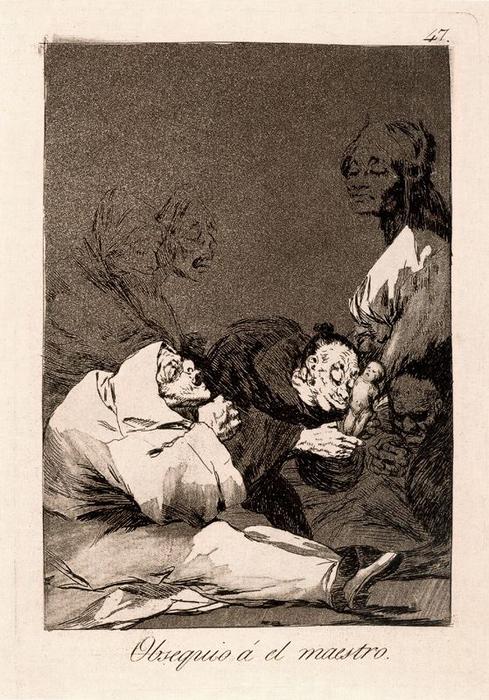
Obsequio á el maestro: A Descent Into Grief and Artistic Critique
Francisco Goya’s “Obsequio á el maestro” (Gift to the Master) is more than just an etching; it's a visceral confrontation with mortality, subservience, and the complex relationship between artist and patron. Executed around 1800 during his prolific period of artistic experimentation—particularly fueled by his involvement in the Peninsular War—the print embodies Goya’s signature blend of unflinching realism and psychological depth.
- Composition & Imagery: The artwork depicts a stark tableau featuring three figures: an elderly man kneeling in profound anguish, supported by a younger man attempting to offer solace. Behind them looms a spectral presence—a ghostly visage that dominates the composition and serves as a chilling reminder of judgment or consequence. The framing is tight, intensifying the emotional impact and drawing the viewer into the immediate psychological space of despair.
- Technique & Material: Goya’s masterful use of etching demonstrates his unparalleled skill in manipulating tonal values through cross-hatching and burnished aquatint—techniques that imbue the image with a palpable sense of texture. Zinc plates were meticulously etched using acid, resulting in an intricate surface pattern that captures the nuances of human suffering.
- Historical Context: Created during the Napoleonic Wars, “Obsequio á el maestro” reflects Goya’s disillusionment with political upheaval and aristocratic decadence. It critiques the unquestioning acceptance of authority—represented symbolically by the deceased master—and questions the moral compromises inherent in artistic patronage.
- Symbolism & Emotion: The elderly man's posture signifies submission and grief, while the ghostly figure embodies divine retribution or the inescapable repercussions of human actions. The overall mood is one of oppressive darkness and profound sadness, conveying Goya’s deeply felt empathy for the human condition.
Goya’s Romantic Vision: Style & Influence
“Obsequio á el maestro” firmly establishes Goya as a pivotal figure in Romantic art. Unlike the idealized depictions favored by Neoclassical painters, Goya embraced emotional intensity and psychological complexity—characteristics that would become hallmarks of his oeuvre. His unflinching portrayal of human suffering aligns with the broader Romantic preoccupation with darkness, trauma, and the sublime.
Detailed Examination: Linearity & Texture
The etching’s sharp lines are deliberately distorted to heighten the sense of unease and convey the ravages of time and despair. These angular shapes contribute to a visual language that prioritizes emotional resonance over formal perfection. The meticulous cross-hatching creates a rich textural surface, mirroring the palpable anguish depicted in the scene—a testament to Goya’s ability to translate psychological states into visual form.
A Legacy of Artistic Integrity
"Obsequio á el maestro" stands as an enduring symbol of artistic integrity and moral questioning. Its haunting beauty resides not merely in its technical prowess but also in its profound exploration of human vulnerability—a timeless masterpiece that continues to captivate audiences worldwide.