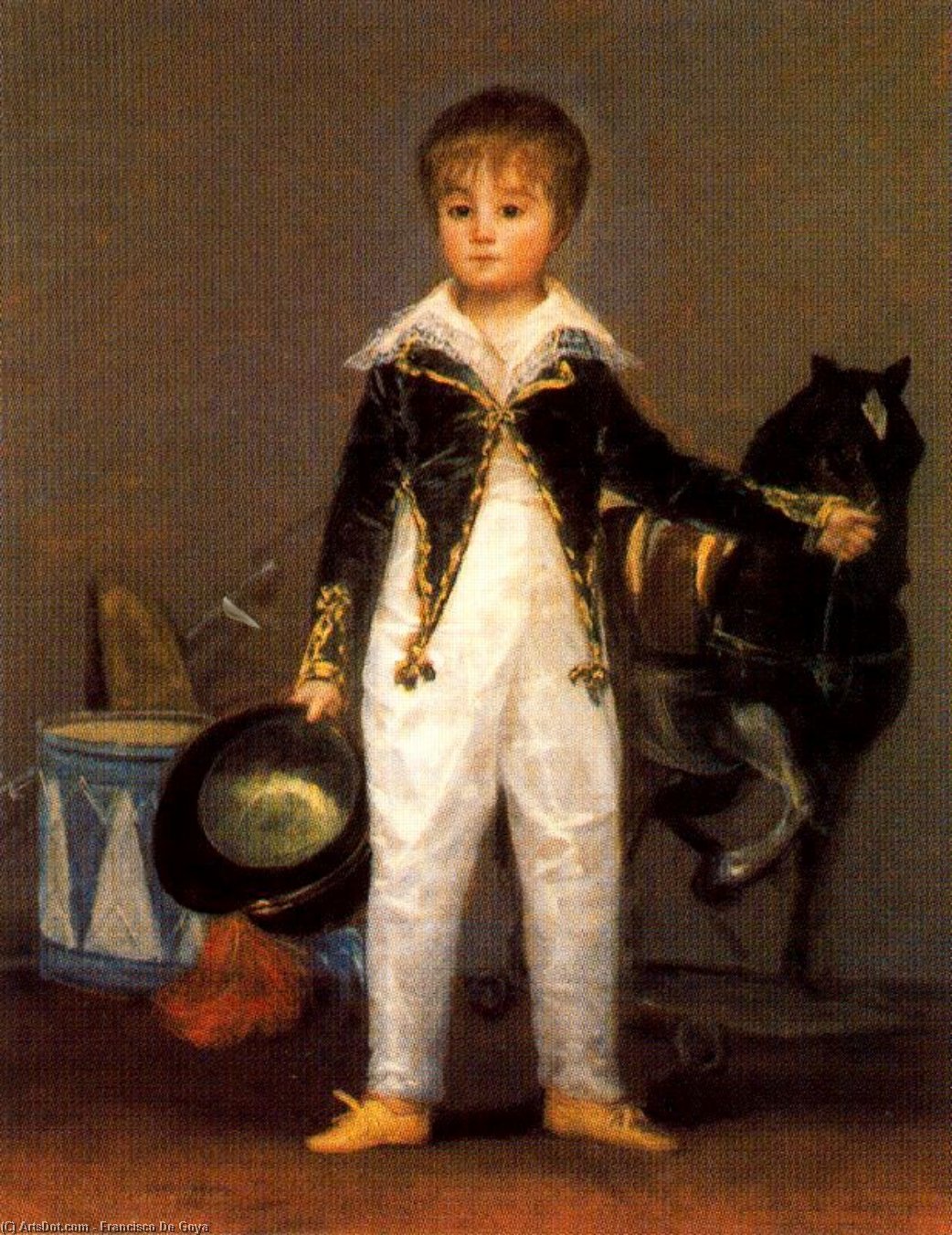
Pepito Costa y Bonells: A Portrait Steeped in Romantic Symbolism
Francisco José de Goya y Lucientes’s “José Costa y Bonells (died l870), Called Pepito” is more than just a depiction of a young boy; it's a meticulously crafted emblem of the Spanish Romantic spirit, brimming with subtle references to political upheaval and familial pride. Painted around 1810 during the tumultuous years of the Peninsular War—a conflict against Napoleon’s invasion—the portrait transcends mere likeness, delving into themes of heritage, innocence, and the anxieties of a nation grappling for identity.
- Subject Matter: The central figure is José Costa y Bonells, son of Rafael Costa de Quintana, a physician serving King Ferdinand VII. He wears an elaborate costume reminiscent of a soldier’s uniform, highlighting the importance of military honor and patriotism within Spanish society at the time.
- Style & Technique: Goya employs his signature Romantic style—characterized by dramatic lighting, expressive brushstrokes, and a penchant for capturing psychological depth—to convey both physical appearance and emotional state. The artist’s masterful handling of oil paint creates a rich textural surface that captures nuances of light and shadow, enhancing the portrait's visual impact.
Symbolism Within the Composition
Beyond its formal elements, “Pepito Costa y Bonells” is laden with symbolic significance. The horse figurine adorning the boy’s attire represents nobility and courage—qualities highly valued during the war effort. Similarly, the drum symbolizes martial fervor and national unity. Even the rifle, held by José, serves as a visual reminder of Spain's defense against Napoleon’s forces. These objects aren’t merely decorative; they actively contribute to the portrait’s narrative, reinforcing its connection to the broader historical context.
- The Horse: Represents nobility and courage—essential virtues during the Peninsular War.
- The Drum: Symbolizes martial fervor and national unity—reflecting Spain's determination to resist invasion.
- The Rifle: A tangible emblem of defense against Napoleon’s armies, underscoring the importance of military prowess.
Emotional Resonance & Artistic Legacy
Goya’s ability to capture a moment of youthful innocence amidst turbulent times speaks volumes about his artistic genius. The boy's gaze—direct and contemplative—suggests an awareness of the surrounding circumstances without succumbing to despair. This quiet dignity contrasts sharply with the dramatic backdrop, creating a poignant juxtaposition that encapsulates the Romantic preoccupation with emotion and psychological realism. “Pepito Costa y Bonells” remains a powerful testament to Goya’s artistic vision and his enduring contribution to European art history—a captivating portrait that continues to inspire admiration for its masterful execution and profound symbolic depth.
High-Quality Reproduction Considerations
A faithful reproduction of this artwork should prioritize archival quality materials – acid-free canvas and pigment – ensuring the vibrancy and longevity of the image. Careful attention to detail—capturing Goya’s nuanced brushstrokes and tonal range—is paramount in conveying the emotional resonance and artistic legacy of this iconic piece. Consider framing options that complement the painting's aesthetic, enhancing its visual impact within any interior space.