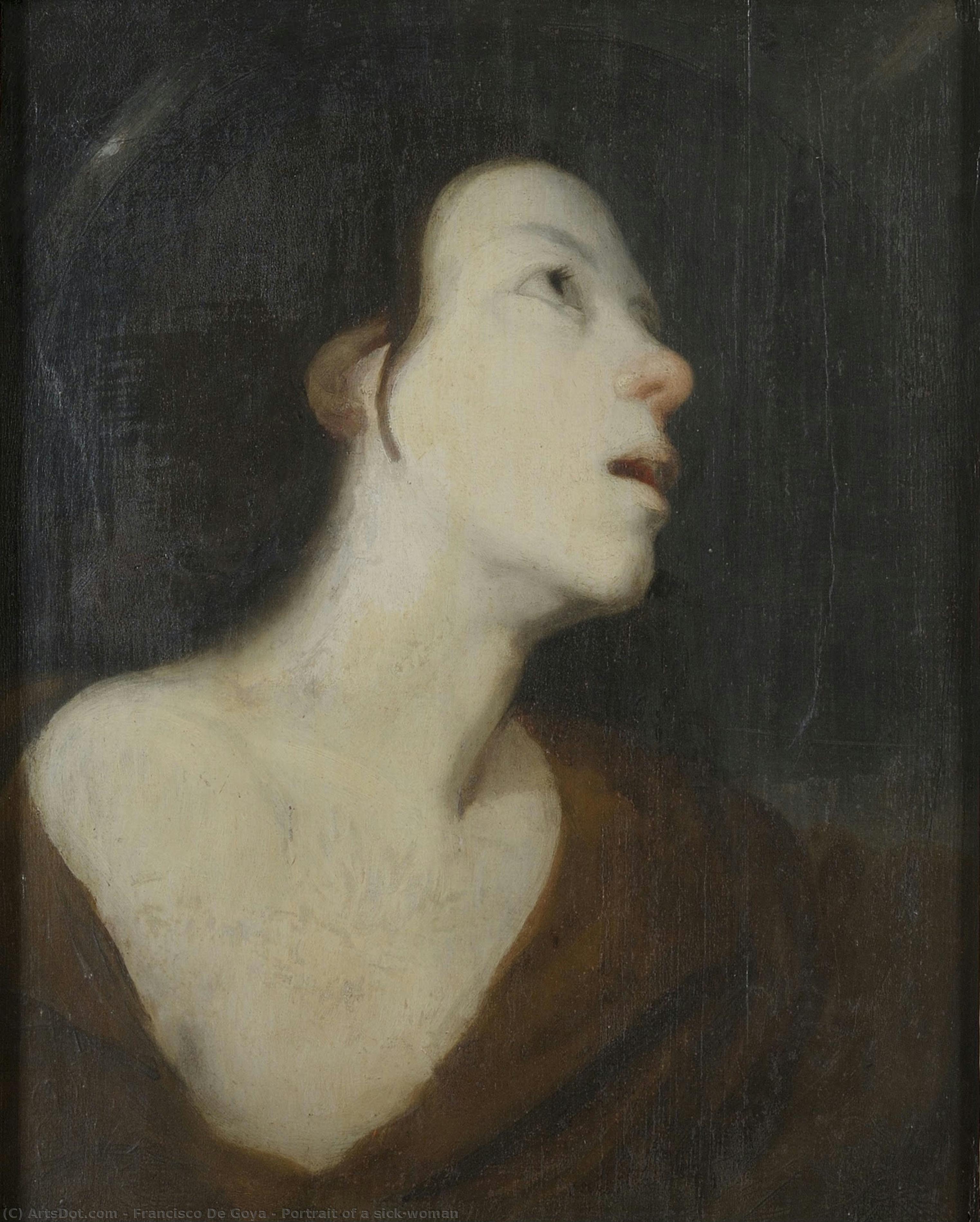
Francisco Goya's "Portrait of a Sick Woman" confronts mortality and suffering with unsettling realism, blending Baroque technique and psychological depth to capture the essence of human vulnerability during Napoleon’s invasion.
Francisco Goya (1746-1828): Explore the life & work of Spain's Romantic master. Known for portraits, dark satire & 'Disasters of War'. A pivotal figure in art history.
Discover Château de Villandry, France's Renaissance masterpiece! Explore stunning gardens, delve into history & experience the visionary artistry of Joachim Carvallo – a timeless treasure.
A Haunting Encounter with Human Vulnerability
In the quiet, shadowed corners of Francisco Goya’s "Portrait of a Sick Woman," one finds an encounter that is as unsettling as it is profoundly moving. The painting does not merely depict a moment of physical ailment; it captures a visceral state of being. As we gaze upon the subject, her mouth slightly parted in what could be a gasp of pain or a silent plea, and her eyes turned upward toward an unseen light, we are drawn into a profound meditation on suffering and isolation. Goya eschews the idealized beauty typical of many court portraits of his era, choosing instead to confront the viewer with an unflinching realism that prioritizes emotional truth over formal perfection. The presence of other figures in the periphery adds a layer of narrative depth, suggesting a world that continues its motions even as the individual struggles within their own private torment.
Mastery of Light and Expressive Technique
The technical brilliance of this work lies in Goya’s ability to bridge the gap between the grandeur of the Baroque and the psychological intensity of Romanticism. Utilizing a masterful application of chiaroscuro, he employs dramatic contrasts between light and shadow to sculpt the flesh tones and lend a three-dimensional weight to the woman's distress. His technique involves a meticulous layering of glazes—a hallmark of the Old Masters—which allows for a luminous surface that seems to pulse with life beneath its somber exterior. The brushstrokes themselves are loose and remarkably expressive, conveying a palpable sense of unease. This fluidity of hand ensures that the painting feels less like a static image and more like a living, breathing moment of human fragility, making it an extraordinary choice for those seeking art with profound texture and movement.
A Mirror to a Turbulent Era
To understand the depth of this portrait, one must look toward the turbulent landscape of early 19th-century Spain. Created during a period marked by the shadows of Napoleon’s invasion and the subsequent political instability, the painting resonates with the collective anxieties of a nation in flux. There is a heavy sense of mortality and decay that permeates the canvas, perhaps reflecting Goya’s own personal struggles following his devastating bout with illness and deafness. For the collector or the admirer of fine art, this piece offers more than just aesthetic beauty; it provides a window into the soul of an era. It is a work that demands contemplation, making it a powerful centerpiece for any space dedicated to the appreciation of profound historical and emotional depth.