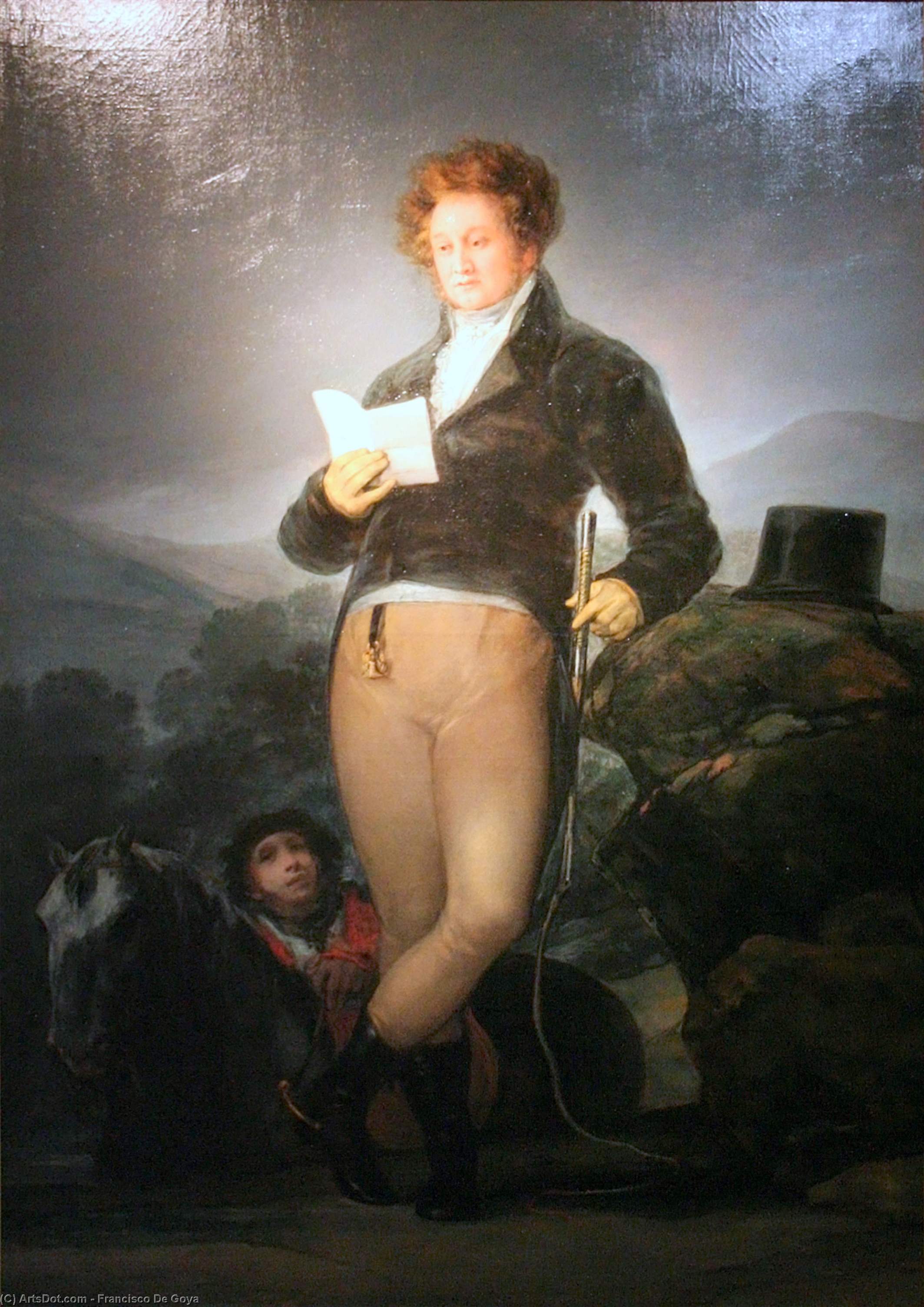
A Masterpiece Captured in Oil on Canvas: Goya’s Portrait of Don Francisco de Borja Tellez Giron
Francisco De Goya's *Portrait of Don Francisco de Borja Tellez Giron*, painted in 1816, stands as a cornerstone of Romanticism and an enduring testament to the artist’s unparalleled ability to convey character and emotion. Currently residing at The Fitzwilliam Museum in Cambridge, United Kingdom, this monumental oil on canvas (140 x 202 cm) transcends mere representation; it delves into the psychological complexities of its subject—a noble Spanish gentleman—and embodies the stylistic hallmarks of the era.
The Composition: Balance and Narrative
The painting’s visual arrangement is meticulously crafted to draw the viewer's eye and tell a story. Don Francisco de Borja Tellez Giron occupies the central position, commanding attention with dignified composure. He stands beside a horse—a symbol of power and nobility—while another horse appears subtly on the left side, creating depth and reinforcing the aristocratic setting. Notably, he holds a book in his hand, an element that speaks volumes about intellectual pursuits and social standing prevalent during Goya’s time. The inclusion of additional figures in the background adds to the scene's dynamism and suggests it unfolds within a formal gathering or event—a characteristic feature of Romantic portraiture.
Artistic Significance: Technique and Style
Goya’s masterful use of oil paint allows for remarkable textural detail and vibrant color palettes, quintessential elements of Romanticism. The artist skillfully captures the nuances of light and shadow, imbuing the portrait with a palpable sense of atmosphere. Brushstrokes are loose and expressive, reflecting Goya's commitment to capturing not just physical likeness but also inner character—a hallmark of his artistic vision. The painting’s balanced composition contributes to its overall impact, guiding the viewer’s gaze across the canvas and emphasizing the subject’s importance within the narrative framework.
Historical Context: Fitzwilliam Museum and Romantic Ideals
The Fitzwilliam Museum's acquisition of *Portrait of Don Francisco de Borja Tellez Giron* underscores its dedication to preserving artistic treasures from diverse periods and movements. Established in 1816 under the visionary bequest of Richard FitzWilliam, the museum has become a beacon for art enthusiasts worldwide. Its expansive collection encompasses artworks spanning centuries—from antiquity to modern times—providing invaluable insights into the evolution of artistic expression and cultural heritage. This portrait embodies Romantic ideals—a fascination with emotion, imagination, and individualism—reflecting the broader intellectual currents shaping Europe during Goya’s lifetime.
Beyond Goya: Comparative Works and Artistic Legacy
Francisco De Goya was a prolific artist whose oeuvre encompasses genre scenes, etchings, and monumental canvases like *The Forge* and *Bartholomew Suerda*. These works demonstrate his versatility and unwavering commitment to exploring the human condition with unflinching honesty. Like *Portrait of Don Francisco de Borja Tellez Giron*, they exemplify Goya’s distinctive style—characterized by dramatic lighting, expressive brushwork, and a profound engagement with social commentary. His influence continues to resonate throughout art history, inspiring generations of artists to push boundaries and challenge conventions.
To explore more about Francisco De Goya and his works, visit /art/list/?Filter=8XY33H-Francisco-De-Goya-Portrait-of-Don-Francisco-de-Borja-Tellez-Giron and /art/list/?Filter=8XXCXE-Francisco-De-Goya-The-Forge.
For more information on the Fitzwilliam Museum, see /art/list/?Filter=A@D3BMU7-The-Fitzwilliam-Museum-(United-Kingdom)-A-Hidden-Gem-of-Art-and-Antiquitie...