The Scene Unfolds: A Journey Through Goya’s Vision
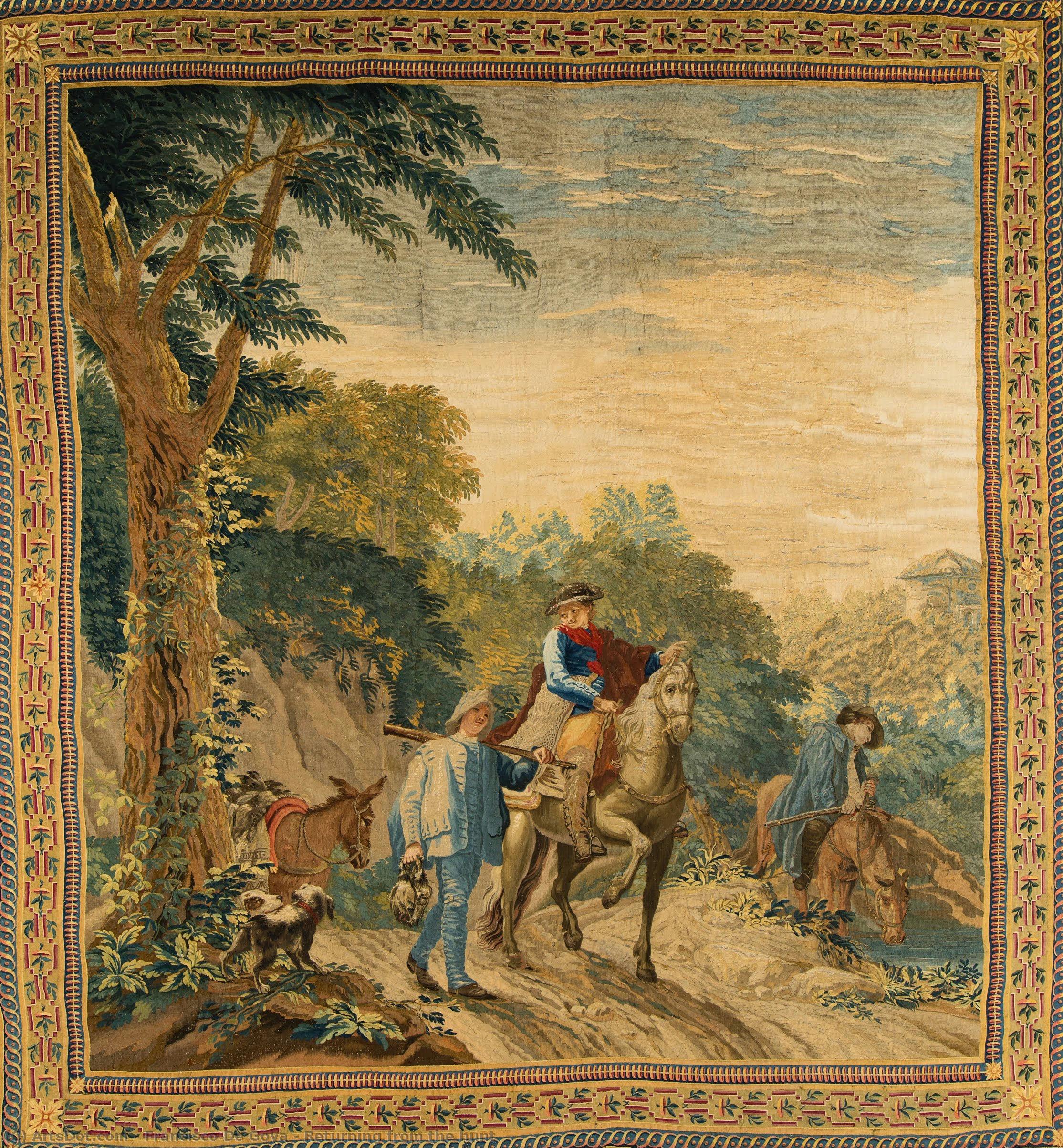
Francisco José de Goya y Lucientes' "Returning from the Hunt" isn’t merely a depiction of a sporting event; it’s a profound meditation on human endeavor, the weight of experience, and the subtle anxieties simmering beneath the surface of 18th-century Spanish society. Painted in 1784, during Goya’s period as court painter to Charles III, the scene unfolds with an almost unsettling stillness – a deliberate contrast to the dynamism typically associated with hunting narratives. A group of men, returning from a successful pursuit, are led by a stoic figure on horseback, his face etched with weariness and a hint of triumph. Behind him walk two companions, their postures suggesting a shared burden of responsibility and perhaps even a quiet melancholy. The composition isn’t one of heroic celebration; instead, it's imbued with a palpable sense of exhaustion and the lingering echoes of violence.
- The Figures: Each man is rendered with meticulous detail – the sweat glistening on their brows, the creases in their clothing, the subtle shifts in their facial expressions. They are not idealized heroes but recognizable individuals, burdened by the realities of their profession and the consequences of their actions.
- The Horse: The lead horse, a magnificent destrier, is equally compelling, its muscles taut with effort, its eyes reflecting the light of the setting sun. It’s a powerful animal, yet it too carries an air of fatigue, suggesting the immense strain placed upon it by its rider.
- The Landscape: The forest backdrop isn't a picturesque ideal; it’s dense and shadowed, hinting at the dangers lurking within the wild. The muted colors – browns, greens, and greys – contribute to the overall atmosphere of subdued intensity.
A Brushstroke of Realism: Goya’s Technique
Goya's mastery lies not just in his ability to capture a scene but in his innovative use of technique. He employed a loose, expressive brushstroke – a hallmark of his later work – that departs significantly from the polished smoothness favored by the Neoclassical painters of the time. This deliberate roughness lends the painting an immediacy and emotional resonance that is remarkably powerful. Notice how he uses *sfumato*—a subtle blurring of lines and edges—to create a sense of depth and atmosphere, particularly in the background. The light, filtered through the trees, casts long shadows, adding to the painting’s dramatic effect.
Color Palette:** Goya's color choices are restrained yet evocative. He favors earthy tones – ochres, browns, and greys—to create a sense of realism and grounding. The subtle use of red in the figures’ clothing draws attention to their faces and adds a touch of warmth to the otherwise somber scene.
Historical Context: Spain at the Turn of the Century
“Returning from the Hunt” was painted during a period of significant social and political change in Spain. The reign of Charles III marked a shift towards enlightened reforms, but beneath the surface lay simmering tensions between tradition and modernity. Goya’s work reflects this duality—a blend of classical influences and a growing awareness of human suffering. The hunting scene itself was a popular pastime among the Spanish aristocracy, symbolizing status, skill, and control over nature. However, Goya subtly subverts this traditional narrative by focusing on the emotional toll of the hunt rather than its outward spectacle.
Goya’s work during this period is often interpreted as a commentary on the corruption and decadence of the Spanish court, while simultaneously offering a glimpse into the lives of ordinary people. The painting can be seen as a reflection of the anxieties and uncertainties that characterized Spain at the end of the 18th century.
Symbolism and Emotional Resonance
Beyond its literal depiction of a hunting party, “Returning from the Hunt” is rich in symbolism. The weary figures represent not just hunters but also soldiers, laborers, or perhaps even members of the aristocracy burdened by responsibility. The horse symbolizes power and control, but also vulnerability and exhaustion. The painting’s overall mood—a blend of stoicism, melancholy, and quiet resignation—suggests a deeper commentary on the human condition. It's a poignant reminder that even in moments of apparent triumph, there is always an underlying sense of loss or disillusionment. The painting invites viewers to contemplate not just what they see but also what lies beneath the surface – the unspoken anxieties and hidden emotions that shape our lives.