A Contemplative Saint: Unveiling Goya’s ‘Saint Ambrose’
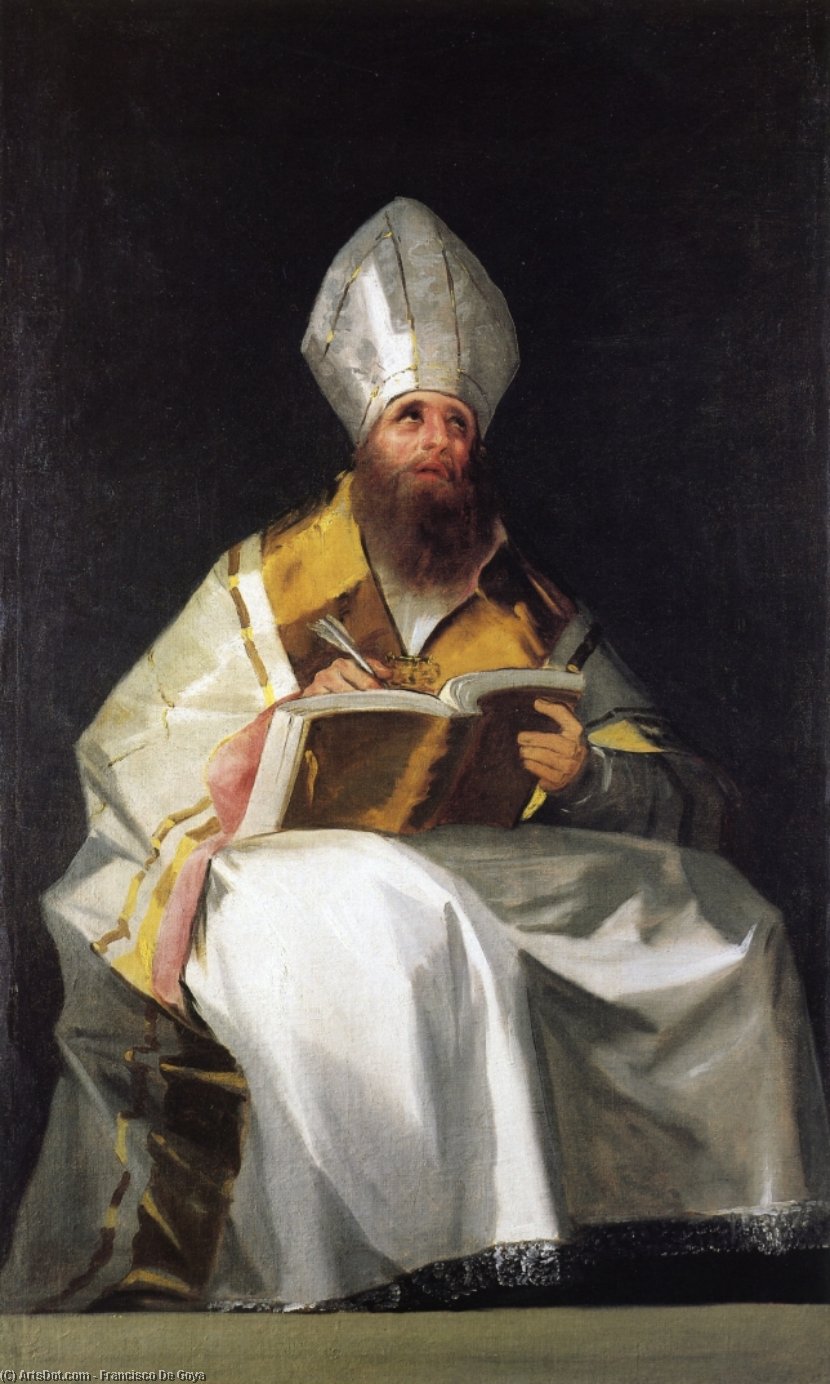
Francisco de Goya's *Saint Ambrose*, painted in 1799, is a powerful and intimate portrait that transcends mere religious depiction. Currently residing at the Cleveland Museum of Art, this oil on canvas (190 x 133 cm) offers a compelling glimpse into Goya’s evolving style and his masterful command of Romantic aesthetics. It's a work that invites quiet contemplation and rewards close examination.
Subject & Composition: A Scholar in Shadow
The painting presents Saint Ambrose, a 4th-century bishop and Doctor of the Church, seated at what appears to be a simple table. He is depicted as a mature man with a full beard, dressed in elegant white robes trimmed with gold – signifying his elevated status. His gaze is directed downwards, focused intently on an open book held in his hands. This emphasizes his role not only as a religious leader but also as a scholar and theologian.
The composition is strikingly simple yet profoundly effective. Goya places the saint against a stark black background, creating a dramatic contrast that isolates the figure and intensifies the sense of introspection.
Technique & Style: The Mastery of Chiaroscuro
Goya’s technical skill shines through in *Saint Ambrose*. He employs
chiaroscuro – the dramatic interplay of light and shadow – to sculpt the saint's form and imbue him with a palpable presence. The focused lighting highlights his face, hands, and the book, drawing the viewer’s eye to these key elements. The brushwork is visible, adding texture and a sense of immediacy to the painting. This isn’t a polished, idealized depiction; it's a raw and honest portrayal that reflects Goya’s growing departure from Neoclassical formality towards the emotional intensity of Romanticism.
Historical Context: Bridging Eras
Painted at the turn of the 19th century, *Saint Ambrose* exists within a period of significant cultural and political upheaval. Goya was transitioning away from his earlier role as a court painter and developing a more personal and expressive style. The late 18th century witnessed the rise of Romanticism, which emphasized emotion, individualism, and imagination – qualities that are clearly evident in this work.
Goya stands as a pivotal figure, bridging the gap between the Old Masters and the burgeoning modern art movements.
Symbolism & Emotional Impact: Faith and Introspection
The symbolism within *Saint Ambrose* is subtle yet resonant. The book represents knowledge, faith, and the saint’s intellectual pursuits. His contemplative pose suggests a deep engagement with spiritual matters.
The darkness surrounding him can be interpreted in multiple ways: as representing the weight of responsibility, the mysteries of faith, or even the anxieties of the era. Ultimately, the painting evokes a sense of quiet dignity and profound introspection. It’s not a celebratory depiction of religious fervor but rather a nuanced portrayal of a man grappling with complex ideas and beliefs.
For Collectors & Designers
*Saint Ambrose* is more than just a historical artifact; it's a timeless work of art that can enrich any collection or interior space. Its muted color palette and dramatic composition make it incredibly versatile, complementing both traditional and contemporary settings. The painting’s emotional depth adds a layer of sophistication and intellectual curiosity to any room.
- Ideal for libraries, studies, or contemplative spaces.
- Its restrained elegance works well with neutral color schemes.
- A striking focal point that invites conversation and reflection.
A high-quality reproduction of *Saint Ambrose* allows art enthusiasts to experience Goya’s genius firsthand, bringing a touch of Romantic grandeur into their homes or offices.