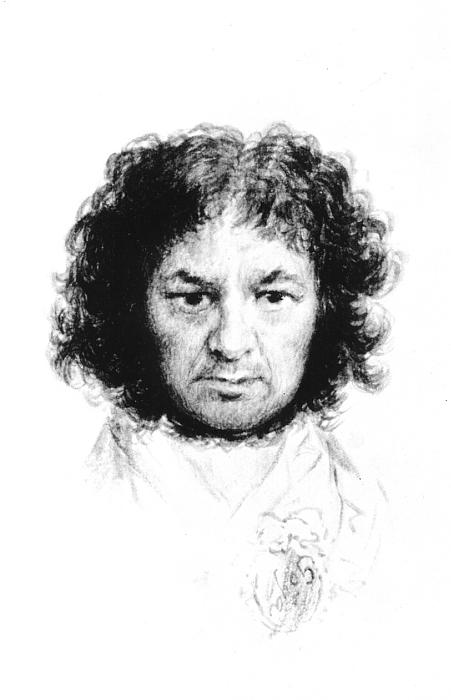
A Window into Goya’s Soul: Examining ‘Self Portrait’
Francisco José de Goya y Lucientes, a name synonymous with Spanish Romanticism and unflinching artistic honesty, stands as one of the most influential painters of his era. His oeuvre transcends mere visual representation; it delves into the anxieties of humanity, confronting darkness alongside moments of sublime beauty—a characteristic powerfully embodied in ‘Self Portrait,’ completed in 1795. This unassuming canvas holds within it a profound exploration of identity and artistic process, offering viewers an intimate glimpse into the mind of a genius grappling with his own mortality.
- Subject Matter: The portrait depicts Goya himself—a figure rendered with remarkable realism despite its unfinished state. He is positioned in profile, gazing directly at the viewer, establishing an immediate connection that transcends time. This gaze isn’t merely observational; it conveys a palpable sense of contemplation and perhaps even melancholy – emotions keenly felt by artists confronting the complexities of existence.
- Style & Technique: Goya's approach to this piece exemplifies his distinctive drawing style, prioritizing expressive shading and capturing the essence of his subject over meticulous detail. The medium employed was charcoal or graphite on paper, a technique that lends itself perfectly to conveying texture and dynamism. Notice how loose lines define facial features, creating volume and suggesting movement—a hallmark of Goya’s artistic vision.
- Composition & Use of Lines: The composition centers around Goya's face, dominating the frame with unwavering intensity. Hatching and cross-hatching are extensively utilized to build up tonal values, meticulously sculpting the contours of his face and highlighting the subtle nuances of skin texture. These lines aren’t merely decorative; they actively contribute to the overall impression of depth and realism.
- Texture & Lighting: The palpable sense of surface is achieved through Goya's masterful application of charcoal—a medium that captures the roughness of hair, wrinkles on his face, and folds in clothing with astonishing accuracy. Furthermore, subtle lighting from above and slightly to the left casts delicate shadows, delineating facial features and enhancing the three-dimensional quality of the portrait.
- Symbolic Significance: Beyond its technical brilliance, ‘Self Portrait’ resonates with symbolic depth. The unfinished nature of the work speaks volumes about Goya's ongoing artistic journey—a quest for self-understanding amidst the turbulent backdrop of his time. It serves as a poignant reminder that art is not merely imitation but an act of confronting one's own vulnerabilities and striving to capture the elusive spirit of human experience.
Historical Context & Artistic Influences
Goya’s artistic trajectory was shaped by the intellectual currents of the Enlightenment and Romanticism, movements that challenged established conventions and championed emotional expression. Like many artists of his generation, Goya sought to move beyond academic formalism, prioritizing psychological insight over idealized beauty—a stance powerfully reflected in ‘Self Portrait.’ The influence of Rembrandt and Caravaggio is evident in Goya’s masterful use of chiaroscuro (light and shadow), techniques honed by masters who similarly aimed to convey emotion through dramatic lighting.
Emotional Impact & Artistic Legacy
‘Self Portrait’ transcends its formal qualities, captivating viewers with its profound emotional resonance. It invites contemplation on themes of aging, introspection, and the artist's relationship with his own identity—subjects that continue to fascinate art historians and resonate deeply within contemporary audiences. Goya’s unflinching gaze confronts us directly, prompting reflection on our own perceptions of selfhood and reminding us that true artistic achievement lies in capturing not just what we see but what we feel. This remarkable artwork remains a cornerstone of Romantic painting, securing its place as an enduring testament to Goya's genius and his unwavering commitment to portraying the complexities of human emotion.