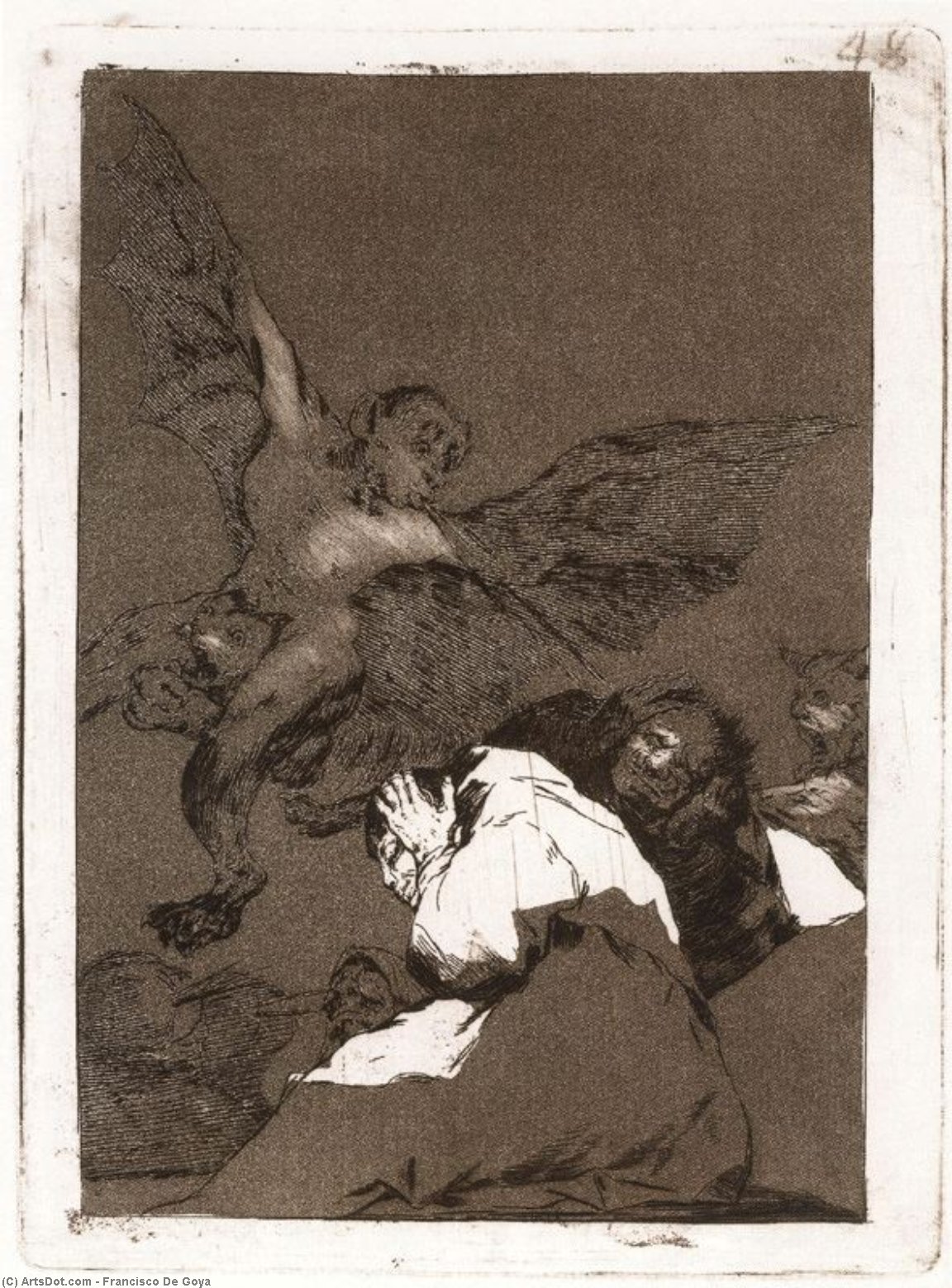
Explore Francisco de Goya’s ‘Soplones 1,’ a dramatic etching depicting struggle & despair. Romantic Expressionism meets intense emotion. A powerful piece for art collectors.
Francisco Goya (1746-1828): Explore the life & work of Spain's Romantic master. Known for portraits, dark satire & 'Disasters of War'. A pivotal figure in art history.
A Descent into Turmoil: Exploring Goya’s *Soplones 1*
Francisco de Goya's *Soplones 1* is a visceral and haunting etching that plunges the viewer directly into a scene of desperate struggle. Created during a period of immense personal and political upheaval for the artist – though its precise date remains unknown – this work exemplifies Goya’s transition from court painter to profound chronicler of human suffering and societal anxieties. It's a piece that resonates with both Romantic fervor and foreshadowings of Expressionism, making it a cornerstone of his groundbreaking oeuvre.
Subject & Narrative
The image depicts a brutal confrontation between a winged figure – often interpreted as an angel or demonic entity – and a human form writhing in agony. The composition is dramatically cropped, focusing on the immediacy of the violence. The man, utterly vulnerable, raises his arms in a futile attempt to defend himself against the overwhelming force descending upon him. The title *Soplones*, which translates roughly to “informers” or “snitches,” adds another layer of complexity. It suggests betrayal and denunciation, hinting that this struggle may not be merely physical but also symbolic of societal pressures and moral corruption.
Style & Technique
*Soplones 1* is a masterclass in etching technique. Goya expertly utilizes the medium’s capabilities to create a dynamic interplay of light and shadow, achieved through dense cross-hatching and sharply defined lines. This creates a sense of jaggedness and unease that perfectly complements the scene's emotional intensity. The style blends elements of Romanticism, with its emphasis on emotion and dramatic composition, and proto-Expressionism, anticipating the distorted forms and psychological depth that would characterize later movements. The flattened perspective prioritizes emotional impact over realistic representation, drawing the viewer into the heart of the struggle.
Historical Context & Goya’s Evolution
Goya lived through a period of immense change in Spain – from the Enlightenment to the Napoleonic Wars and the subsequent restoration of the monarchy. His work reflects this tumultuous era. Initially celebrated for his portraits of the Spanish aristocracy, Goya gradually turned towards darker themes, critiquing societal ills and exploring the horrors of war. *Soplones 1*, likely created during or after the Peninsular War (1808-1814), embodies this shift. It’s a far cry from his earlier, more optimistic works, signaling a profound disillusionment with humanity and power. This period also saw him create *The Disasters of War* series, further cementing his reputation as a fearless social commentator.
Symbolism & Emotional Impact
The symbolism within *Soplones 1* is rich and open to interpretation. The winged figure can be seen as representing fate, divine punishment, or the oppressive forces of society. The man’s contorted body language conveys a sense of utter helplessness and despair. The swirling lines in the background contribute to the overall feeling of chaos and turmoil, suggesting that this struggle is not isolated but part of a larger, more pervasive darkness. Ultimately, *Soplones 1* evokes feelings of anxiety, vulnerability, and the fragility of human existence. It’s a powerful reminder of the darker aspects of the human condition – betrayal, suffering, and the relentless forces that seek to overwhelm us.
Collecting & Interior Design
A reproduction of *Soplones 1* adds a striking focal point to any collection. Its monochrome palette lends itself well to a variety of interior styles, from minimalist modern spaces to more traditionally decorated rooms. The dramatic composition and emotional intensity make it particularly suitable for studies, libraries, or living areas where contemplation and conversation are encouraged. Its historical significance and artistic merit ensure its enduring appeal for both seasoned collectors and those beginning their art journey.