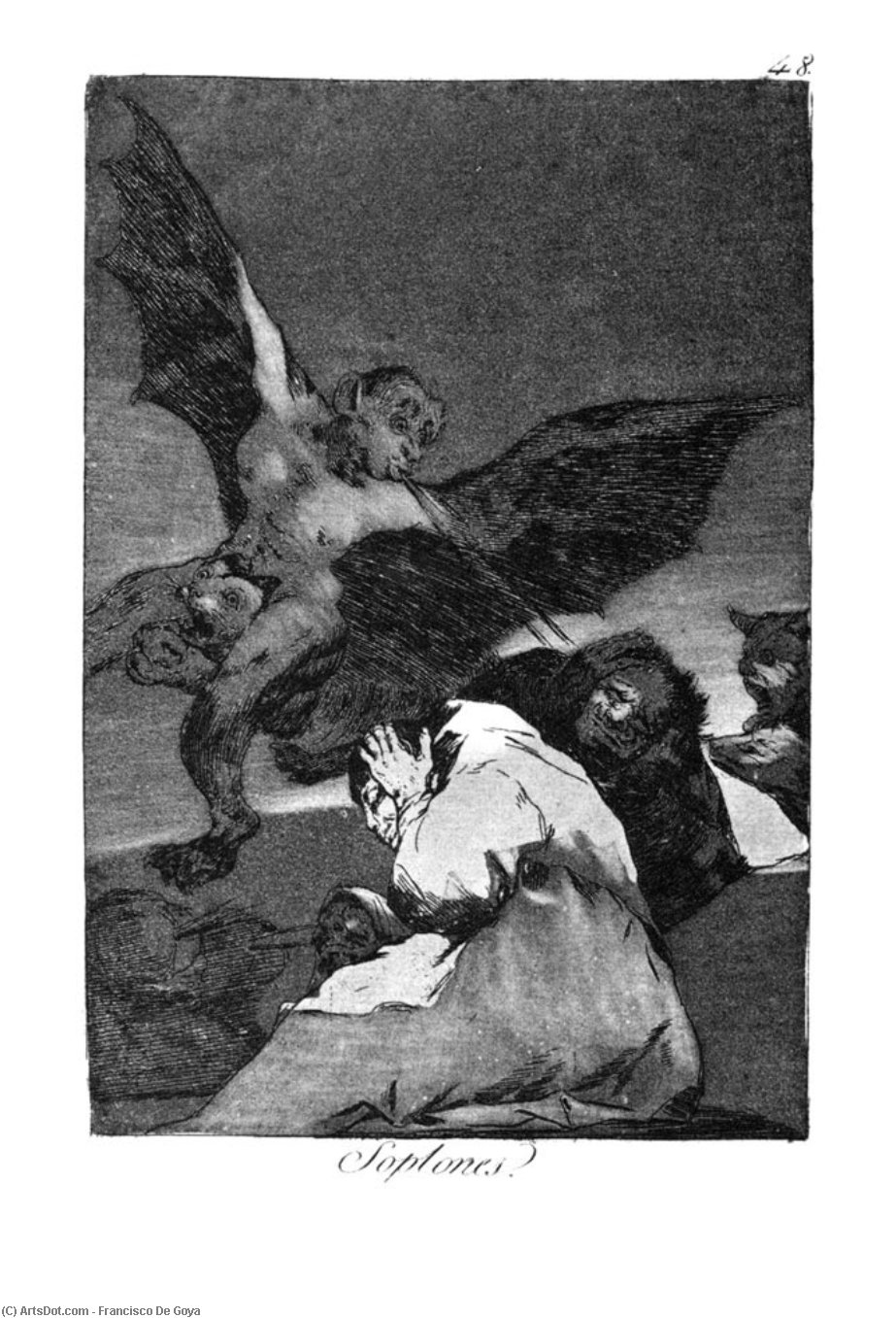
Squealers?, 1799 - A Descent into Darkness
Francisco José de Goya y Lucientes’s “Squealers” is more than just a depiction of torment; it's a visceral confrontation with the horrors lurking beneath the veneer of civilization. Painted in 1799 during his turbulent period as court painter to Ferdinand VII, this stark black and white aquatint etching embodies Goya’s Romantic conviction that art must grapple with uncomfortable truths about human nature.
- Composition & Perspective: The image unfolds like a stage set—a roughly vertical rectangle dominated by a colossal demonic figure positioned high above a kneeling supplicant. Diagonal lines surge across the canvas, amplifying the sense of instability and propelling the viewer’s gaze into the unsettling depths of the scene. Flattened perspective eschews traditional vanishing points, intensifying the claustrophobia and focusing attention on the central figures – a chilling testament to Goya's masterful manipulation of visual space.
- Technique & Texture: Goya employed aquatint, a complex etching process that allowed for astonishing tonal control. Fine lines meticulously etched onto the plate were then subjected to acid application, creating areas of varying density—resulting in velvety dark tones punctuated by lighter textures achieved through sparser hatching. This textural richness isn’t merely decorative; it actively contributes to conveying the palpable dread and psychological anguish at the heart of the artwork.
- Symbolism & Emotion: The demon embodies evil, oppression, and the inescapable darkness within humanity—a potent symbol reflecting Goya's disillusionment with the monarchy and his profound empathy for suffering. Conversely, the kneeling figure represents innocence, vulnerability, and a futile plea for deliverance. “Squealers” compels viewers to confront their own fears and anxieties, prompting contemplation on themes of morality and despair.
- Historical Context: Goya’s work emerged during Spain's Napoleonic Wars and subsequent Bourbon Restoration—a period marked by political repression and social upheaval. The etching reflects the anxieties of its time, capturing a moment of profound psychological torment amidst the backdrop of political turmoil. It stands as a powerful indictment of power structures and a poignant exploration of human vulnerability.
- Style & Influence: “Squealers” firmly establishes Goya within the Romantic movement—characterized by dramatic subject matter, expressive line work, and an unflinching portrayal of darkness. Its influence extends far beyond its immediate era, inspiring artists across generations to confront uncomfortable realities and explore the depths of human emotion.
A reproduction of “Squealers” offers more than just a visual representation; it’s an invitation to engage with Goya's enduring legacy—a masterpiece that continues to resonate with audiences today.