Francisco Goya’s “Subir y Bajar”: A Dance of Power and Precariousness
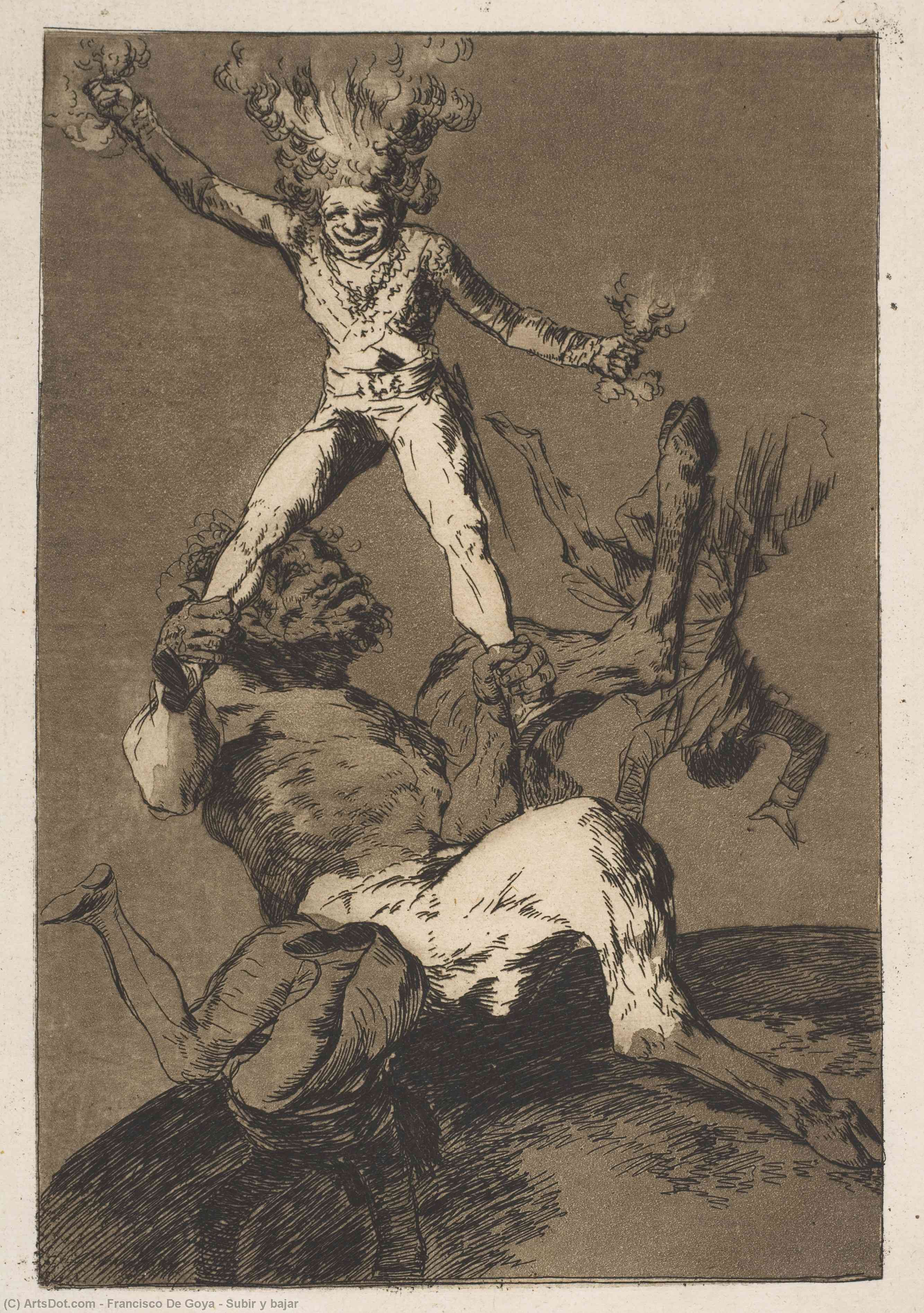
Francisco José de Goya y Lucientes, a titan of Spanish art, possessed an unparalleled ability to capture the complexities of human experience – its triumphs, anxieties, and darkest corners. Among his vast oeuvre, "Subir y Bajar" (To Go Up and To Come Down), a captivating etching from his series “Los Caprichos,” stands as a particularly potent example of his genius. Executed in 1799, this seemingly simple image—a man precariously balanced on the shoulders of another—is far more than a visual trick; it’s a layered meditation on social hierarchy, ambition, and the inherent instability of human endeavors.
The scene unfolds with stark clarity. A masked figure, presumably a nobleman or member of the court, is elevated above a less-dressed individual, seemingly a commoner. The positioning is deliberately unsettling – the man atop appears to be performing some sort of elaborate stunt, a precarious balancing act that teeters on the edge of disaster. Goya’s masterful use of aquatint and etching creates a remarkable sense of texture and depth, emphasizing the rough surface of the shoulders supporting the figure above and the subtle shadows that hint at the potential for collapse. The limited palette – primarily shades of grey and white – amplifies the drama and underscores the painting's inherent tension.
The Romantic Spirit Embodied
“Subir y Bajar” is a quintessential work within the Romantic movement, a period characterized by an intense focus on emotion, imagination, and the sublime. Goya, though working before the full flowering of Romanticism, anticipated its key themes with remarkable prescience. The image’s inherent instability mirrors the Romantic fascination with the limits of human control and the overwhelming power of nature. The masked figure, a recurring motif in Goya's work, represents anonymity, deception, and the hidden forces that govern society. He embodies the capricious nature of fortune – rising to prominence one moment, only to be brought crashing down the next.
Furthermore, the scene subtly critiques the rigid social structures of 18th-century Spain. The disparity in dress between the two figures highlights the vast gulf between the privileged elite and the common populace. Goya doesn’t offer a straightforward condemnation; instead, he presents a complex tableau that invites viewers to question the legitimacy of power and the precariousness of social standing. The act of being carried – literally and metaphorically – suggests a reliance on others, a vulnerability inherent in any position of authority.
Symbolism and Interpretation
Beyond its immediate visual impact, “Subir y Bajar” is rich with symbolic meaning. The act of climbing represents ambition, social advancement, and the pursuit of power. However, the precariousness of the situation suggests that such pursuits are often built on unstable foundations. The mask itself can be interpreted as a symbol of disguise, concealing true intentions and highlighting the deceptive nature of appearances. The downward trajectory – implied by the figure’s position – represents the inevitable fall from grace, a reminder that even those who reach the pinnacle of success are ultimately subject to fate.
Goya's contemporaries offered interpretations of “Los Caprichos” as satirical critiques of Spanish society, warning against vanity and corruption. The etching’s ambiguity allows for multiple readings, ensuring its continued relevance centuries later. It serves as a timeless reminder of the fragility of human endeavors and the importance of questioning established norms.
A Legacy of Innovation
“Subir y Bajar” is not merely a captivating image; it's a testament to Goya’s artistic innovation. His masterful manipulation of etching techniques—particularly aquatint—created textures and tonal variations that were revolutionary for his time. The work also foreshadowed the darker, more psychologically complex themes that would characterize his later paintings, such as “Saturn Devouring His Son.”
Today, reproductions of "Subir y Bajar" continue to resonate with viewers, offering a glimpse into the mind of one of history’s most influential artists. Its enduring power lies in its ability to provoke thought and emotion – a potent reminder of the complexities of human nature and the ever-present dance between ambition and vulnerability.