A Portrait of Sorrow: Unpacking Francisco Goya’s “Tal para Qual”
Francisco José de Goya y Lucientes, a titan of Spanish art, possessed an unparalleled ability to distill the complexities of human experience onto canvas and paper. His oeuvre is a sprawling landscape of emotion – from the joyous exuberance of his early court paintings to the harrowing depictions of war and madness that marked his later years. Within this vast body of work lies “Tal para Qual” (literally, "Fit for Nothing"), a watercolor illustration completed around 1816-1820, a piece that continues to resonate with its potent blend of melancholy, social critique, and profound human empathy. This is not merely a depiction of grief; it’s an invitation into the heart of despair, rendered with Goya's signature mastery of line and color.
The Scene: A Moment of Shared Sorrow
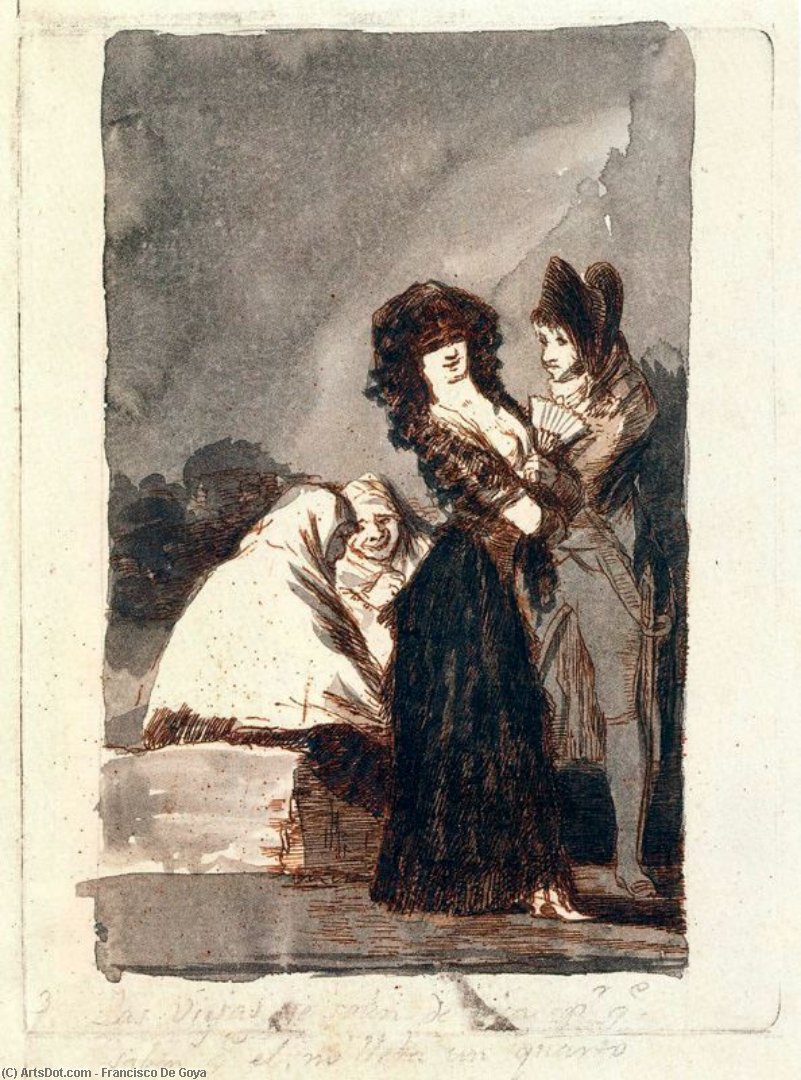
The image presents a starkly intimate tableau. A woman, draped in somber attire, sits supported by two men – one stooped and weary, the other appearing to offer a gesture of quiet comfort. The setting is deliberately ambiguous, suggesting a public space yet retaining an intensely private atmosphere. The figures are not overtly dramatic; their expressions are muted, conveying a profound sense of resignation rather than overt anguish. This restraint amplifies the emotional impact, forcing the viewer to confront the weight of their shared sorrow without resorting to theatrical displays.
Technique and Style: Watercolor’s Delicate Power
Goya's choice of watercolor is crucial to the work’s effect. The medium lends itself beautifully to capturing subtle nuances of tone, texture, and light. Loose, flowing brushstrokes create a sense of movement and fluidity, mirroring the emotional turbulence at play. Notice how the washes are layered – building up form gradually, creating areas of translucent depth that suggest both fragility and resilience. The color palette is predominantly muted – shades of gray, brown, and ochre dominate, reflecting the somber mood. However, subtle highlights—a touch of pale blue in the woman’s dress, a hint of warmth in the men's faces—offer fleeting glimpses of hope amidst the prevailing darkness. The artist skillfully utilizes wet-on-wet techniques to achieve this ethereal quality.
Historical Context and Social Commentary
"Tal para Qual" emerged during a period of immense upheaval in Spain – the Napoleonic Wars, the restoration of the monarchy under Ferdinand VII, and the subsequent repression that followed. Goya witnessed firsthand the horrors of war and the suffering inflicted upon his nation. This experience profoundly shaped his artistic vision, leading him to explore themes of injustice, poverty, and social inequality. The figures in “Tal para Qual” can be interpreted as representing a segment of society marginalized by circumstance – individuals rendered "fit for nothing" by misfortune or societal neglect. The etching, which predates the watercolor, further emphasizes this critique of social disparity.
Symbolism and Emotional Resonance
Beyond its immediate depiction of grief, “Tal para Qual” is rich in symbolic meaning. The woman’s posture – slumped and vulnerable – speaks to the crushing weight of loss. The men's gestures suggest a tentative offer of support, yet their weary expressions hint at the limitations of their ability to alleviate her suffering. The overall composition evokes a sense of isolation and helplessness, mirroring the experience of those trapped within cycles of poverty and despair. Ultimately, Goya’s masterpiece is not simply a portrayal of sadness; it's an enduring meditation on the human condition – a poignant reminder of our shared vulnerability and the importance of empathy in a world often marked by indifference.
Resources for Further Exploration: