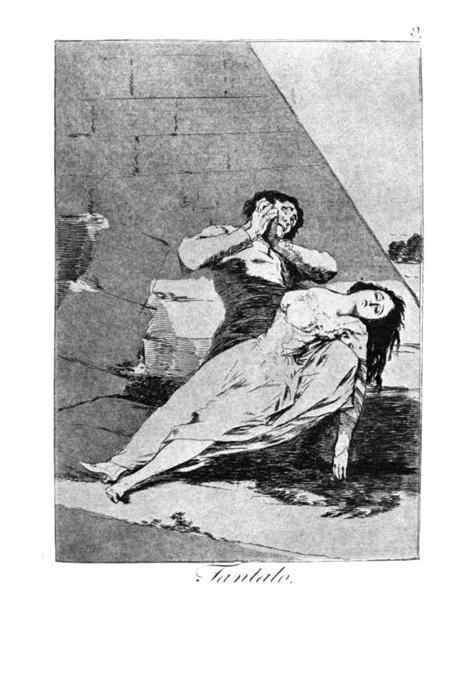
Explore Francisco Goya’s 'Tantalus,' a haunting 1799 etching of Saturn devouring his son. Witness Romantic intensity & brutal symbolism in this powerful black & white masterpiece.
Francisco Goya (1746-1828): Explore the life & work of Spain's Romantic master. Known for portraits, dark satire & 'Disasters of War'. A pivotal figure in art history.
A Descent into Darkness: Examining Goya’s “Saturn Devouring His Son”
“Saturn Devouring His Son,” etched by Francisco José de Goya y Lucientes in 1799, stands as one of the most unsettling and profoundly disturbing images in Western art history. More than just a depiction of gruesome violence—though undeniably horrifying—it’s a masterful exploration of psychological torment and symbolic representation that continues to captivate audiences centuries later. This etching, part of Goya's “Black Paintings,” delves into themes of tyranny, mortality, and the inescapable horrors lurking beneath the veneer of civilization.
The Composition and Technique: A Masterclass in Expression
Goya’s artistic genius shines through in every aspect of this artwork. The diagonal thrust of Saturn’s body dominates the canvas, pulling the viewer’s gaze downwards into a vortex of despair. Lines are employed with ferocious energy—jagged, swirling strokes conveying the brutal force of the act and mirroring the internal turmoil of the scene. Unlike the polished surfaces favored by many Baroque artists, Goya utilizes etching and burnished aquatint on laid paper to achieve remarkable textural depth. Cross-hatching creates subtle tonal variations that heighten the drama and emphasize the contours of Saturn’s face and his son's ravaged flesh. The meticulous process demanded considerable skill and patience, reflecting Goya’s unwavering dedication to capturing raw emotion.
Historical Context: Romantic Angst Unleashed
Created during a period of intense political upheaval in Spain—the Napoleonic Wars destabilizing the monarchy and fueling republican fervor— “Saturn Devouring His Son” embodies the anxieties characteristic of the Romantic movement. This artistic sensibility prioritized feeling over reason, rejecting neoclassicism’s emphasis on order and restraint for an embrace of darkness and irrationality. Goya himself was deeply affected by personal tragedies – including the debilitating illness of his wife and the loss of his son—and these experiences undoubtedly informed the artwork's bleak vision. The etching served as a visceral reaction to the horrors unfolding in Europe, mirroring the pervasive sense of dread and disillusionment that gripped intellectuals and artists alike.
Symbolism: Beyond Horror – A Meditation on Fate
The imagery transcends mere brutality; it’s laden with symbolic significance. Saturn, representing time or fate, consumes his son—a potent allusion to myths concerning Prometheus and Zeus—signifying the inevitable destruction of innocence and the triumph of darkness over light. The distorted anatomy underscores the vulnerability of humanity before overwhelming forces beyond our control. Furthermore, the flattened perspective contributes to a claustrophobic atmosphere, trapping the viewer within the confines of this horrific tableau. It’s not simply about witnessing violence; it's about confronting the inescapable reality of mortality and the terrifying consequences of unchecked power.
Emotional Resonance: A Portrait of Despair
“Saturn Devouring His Son” achieves its profound impact through its unflinching portrayal of psychological anguish. The viewer is confronted with a scene of unbearable terror, eliciting feelings of pity and horror. Goya’s masterful manipulation of light—focused on Saturn's face—intensifies the drama and underscores his monstrous indifference to suffering. This artwork remains a haunting reminder of humanity’s capacity for cruelty and despair, cementing Goya’s place as one of the most influential artists of his time and ensuring that “Saturn Devouring His Son” continues to provoke contemplation and inspire artistic interpretation for generations to come.