A Moment of Divine Revelation: Exploring Goya’s *The Annunciation*
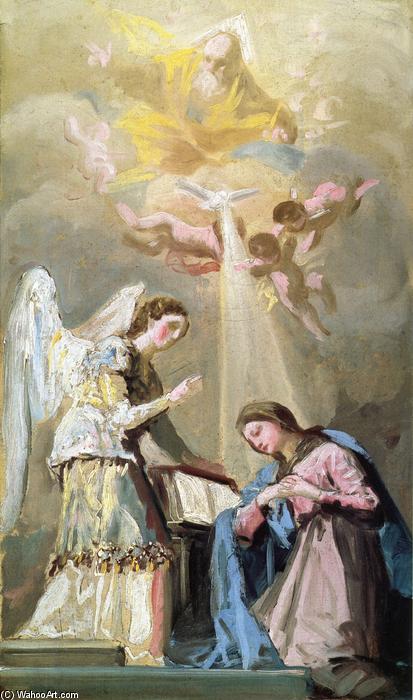
Francisco de Goya's *The Annunciation*, painted in 1785, is a captivating example of the artist’s early mastery and his burgeoning Romantic sensibilities. This intimate oil on canvas (42 x 26 cm) offers a fresh perspective on a timeless religious subject, moving away from the rigid formality of Neoclassicism towards a more emotionally resonant depiction.
Subject & Composition
The painting portrays the pivotal moment when the Archangel Gabriel announces to Mary that she will conceive and bear the Son of God. Mary is depicted kneeling in humble acceptance, her gaze directed downwards as if overwhelmed by the gravity of the message delivered by the angel. The angel, holding an open book – a symbol of divine knowledge and prophecy – gestures towards its contents, making the revelation clear. A subtle background populated with figures adds depth without distracting from the central interaction. Notably, a bird soaring upwards in the top left corner introduces a dynamic element, perhaps symbolizing the ascent of the soul or the arrival of the Holy Spirit.
Style & Technique
*The Annunciation* showcases Goya’s developing style. While still rooted in academic training, it demonstrates his increasing preference for expressive brushwork and a more naturalistic approach to form. The use of light and shadow is particularly effective, creating a dramatic contrast that focuses attention on the faces and gestures of Mary and Gabriel.
Goya's technique here foreshadows the bolder, more emotionally charged works that would define his later career. The painting’s relatively small scale contributes to its sense of intimacy and immediacy.
Historical Context & Symbolism
Commissioned during a period of artistic transition in Spain, *The Annunciation* reflects Goya's position as a court painter navigating the shift from Rococo elegance to emerging Romantic ideals. The subject itself – the Annunciation – is deeply embedded within Christian iconography and has been depicted countless times throughout art history.
However, Goya’s interpretation stands out for its humanism. The figures are not idealized but possess a relatable vulnerability. Beyond the central religious symbolism, elements like the bird can be interpreted as symbols of hope or divine intervention. The open book represents scripture and God's plan unfolding.
Emotional Impact & Artistic Legacy
This painting evokes a sense of quiet reverence and profound spiritual significance. Goya masterfully conveys Mary’s humility, grace, and acceptance of her extraordinary destiny. *The Annunciation* is not merely a depiction of a biblical event; it's an exploration of faith, vulnerability, and the power of divine communication.
It demonstrates Goya’s ability to infuse religious themes with genuine emotional depth. Goya’s influence on subsequent generations of artists is undeniable, paving the way for Romanticism and later movements like Expressionism. His bold use of color, expressive brushwork, and focus on human emotion continue to inspire artists today.
Collecting & Interior Design
A reproduction of *The Annunciation* would be a stunning addition to any art collection or interior space. Its relatively small size makes it versatile for various settings – from intimate studies to larger living areas. The painting’s muted color palette and religious subject matter lend themselves well to traditional or transitional décor styles, while its expressive quality also complements more contemporary spaces seeking a touch of historical depth and emotional resonance.
- Ideal for devotional spaces.
- Adds a classic touch to libraries or studies.
- Creates a focal point in living rooms or dining areas.