The Colossus: A Symphony of Fear and Romantic Vision
Francisco de Goya’s *The Colossus* stands as an arresting testament to the turbulent spirit of Spain during the Peninsular War (1808–1814), a conflict pitting patriotic fervor against Napoleonic aggression. More than just a depiction of a dramatic landscape, it's a profound meditation on terror, powerlessness, and the psychological scars inflicted by war—themes central to the Romantic movement that firmly established Goya as one of its foremost champions.
- Historical Context: The siege of Madrid by Napoleon’s forces fueled anxieties across the nation. Goya witnessed firsthand the horrors of battle and the suffering endured by his countrymen, experiences that profoundly shaped his artistic vision. *The Colossus* isn't merely a visual record; it’s an emotional response to these events, channeling the collective dread felt by ordinary Spaniards facing imminent destruction.
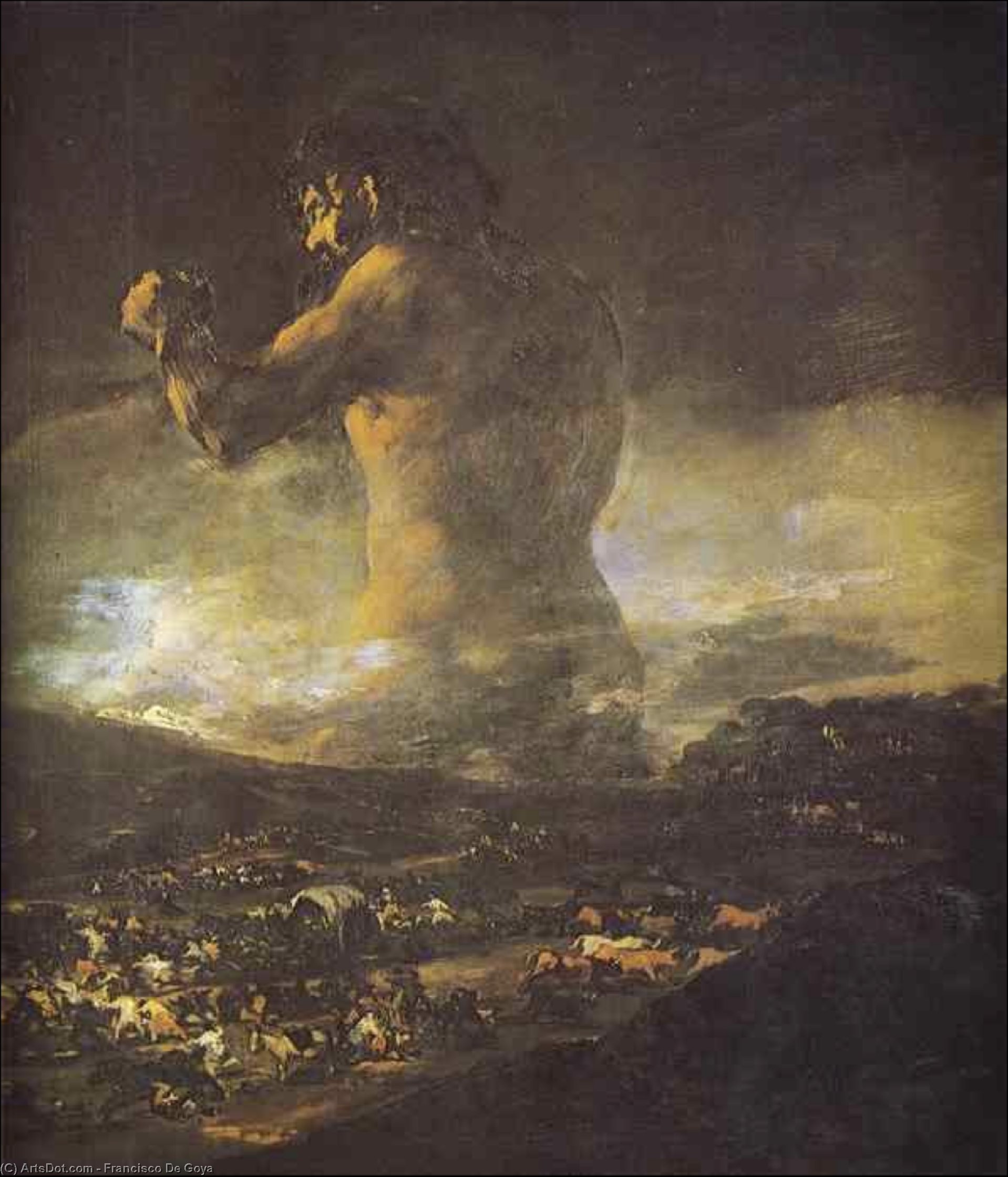
- Composition & Symbolism: The painting presents a colossal figure dominating a desolate valley—a towering presence that embodies Napoleon’s military might and inspires paralyzing fear in those below. The jagged mountains serve as a barrier, emphasizing vulnerability and isolation. Animals fleeing in terror underscore the pervasive sense of panic and reinforce the image of humanity subjugated by overwhelming force.
- Technique & Style: Goya employed masterful oil painting techniques—characterized by dramatic chiaroscuro (contrast between light and dark)—to heighten emotional intensity. The turbulent sky, rendered with swirling brushstrokes, mirrors the psychological turmoil depicted in the scene. Notice the meticulous detail in capturing textures – from the rough stone of the mountains to the terrified faces of the people—demonstrating Goya’s unwavering commitment to realism infused with Romantic idealism.
- Romantic Resonance: *The Colossus* embodies the core tenets of Romantic art: emotion, imagination, and individualism. Unlike Neoclassical restraint, Goya embraced expressive brushwork and bold color palettes to convey profound psychological states. The painting's unsettling atmosphere—a palpable sense of dread and despair—resonates with the Romantic preoccupation with confronting darkness and exploring the depths of human experience.
- Legacy & Influence: Goya’s masterpiece continues to inspire artists and scholars alike, cementing his place as a pivotal figure in Western art history. Its enduring power lies not only in its visual grandeur but also in its ability to evoke visceral emotion—a reminder that art can serve as a conduit for confronting uncomfortable truths and grappling with the complexities of human psychology.
At ArtsDot.com, we strive to capture the essence of Goya’s vision through meticulously crafted oil painting reproductions. Our artists painstakingly recreate each brushstroke, ensuring that every nuance of texture and color faithfully reflects the original artwork.
You can explore more about *The Colossus* on our website: Francisco de Goya – The Colossus .JPG