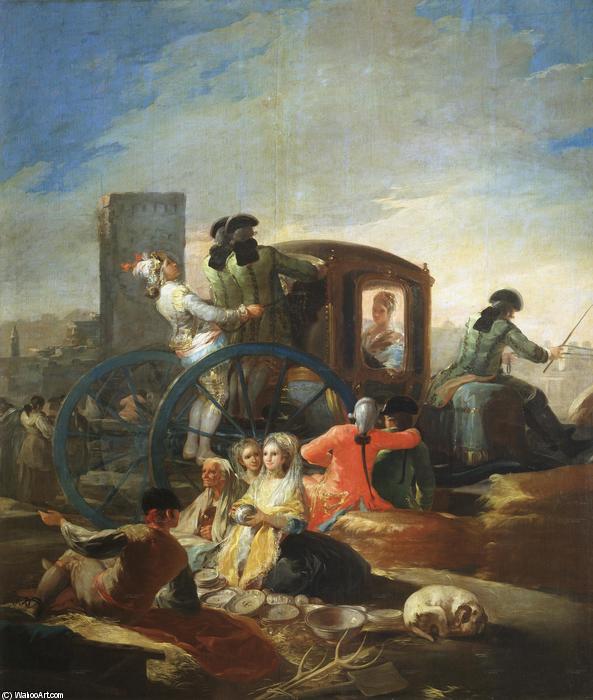
Francisco Goya’s ‘The Crockery Vendor,’ a vibrant Romantic masterpiece housed in Madrid's Museo del Prado, captures the bustling energy of Spanish life with dynamic brushstrokes and expressive color palettes. Explore this iconic depiction of everyday humanity and immerse yourself in Goya’s revolutionary artistic vision.
A Window Into Romantic Spain: Exploring Francisco Goya’s “The Crockery Vendor”
Francisco José de Goya y Lucientes’s “The Crockery Vendor,” completed in 1779, isn't merely a depiction of a bustling marketplace; it’s a profound statement about the spirit of Romanticism and a masterful distillation of artistic innovation. Hanging proudly at the Museo del Prado in Madrid, this monumental canvas—measuring 295 x 272 cm—commands attention not only for its sheer scale but also for its ability to transport viewers back to a pivotal moment in Spanish art history.
Style and Technique: Goya’s approach aligns perfectly with the burgeoning Romantic movement, rejecting Neoclassical ideals of restraint and order. Instead, he embraced dynamism and emotional intensity, utilizing bold brushstrokes and vibrant colors—particularly reds and yellows—to convey a palpable sense of energy. The artist skillfully employs chiaroscuro, manipulating light and shadow to sculpt figures and heighten dramatic effect. This technique wasn’t simply about realism; it was about capturing the psychological state of his subjects.
Historical Context: Painted during Goya's tenure as court painter to King Carlos III, “The Crockery Vendor” reflects the anxieties and contradictions of the Enlightenment era transitioning into Romanticism. While outwardly celebrating commerce and social interaction—a common theme in aristocratic portraiture—the painting subtly hints at underlying tensions. The figures are rendered with unflinching honesty, capturing not idealized beauty but rather the weariness and vulnerability inherent in human experience. This departure from convention signaled a significant shift away from portraying subjects as symbols of virtue and towards exploring darker aspects of human nature.
Symbolism and Narrative: Beyond its visual splendor, “The Crockery Vendor” is laden with symbolic significance. The wagon itself represents prosperity and trade, yet it’s juxtaposed against the faces of ordinary people—a deliberate choice by Goya to elevate the commonplace into artful contemplation. The woman seated beside the man holding a bowl embodies domestic tranquility, albeit tinged with melancholy. Even the dog adds to the narrative complexity, symbolizing loyalty and perhaps hinting at the darker realities lurking beneath the surface of social harmony.
Emotional Impact: Ultimately, “The Crockery Vendor” succeeds in eliciting an emotional response from the viewer. The artist’s masterful use of color and composition creates a scene brimming with life—yet simultaneously imbued with a sense of unease. It compels us to consider not just what we see but also what lies beneath – the unspoken anxieties and vulnerabilities that characterize human existence. This enduring masterpiece continues to resonate with audiences today, reminding us of Goya’s unparalleled ability to transform observation into profound artistic expression.