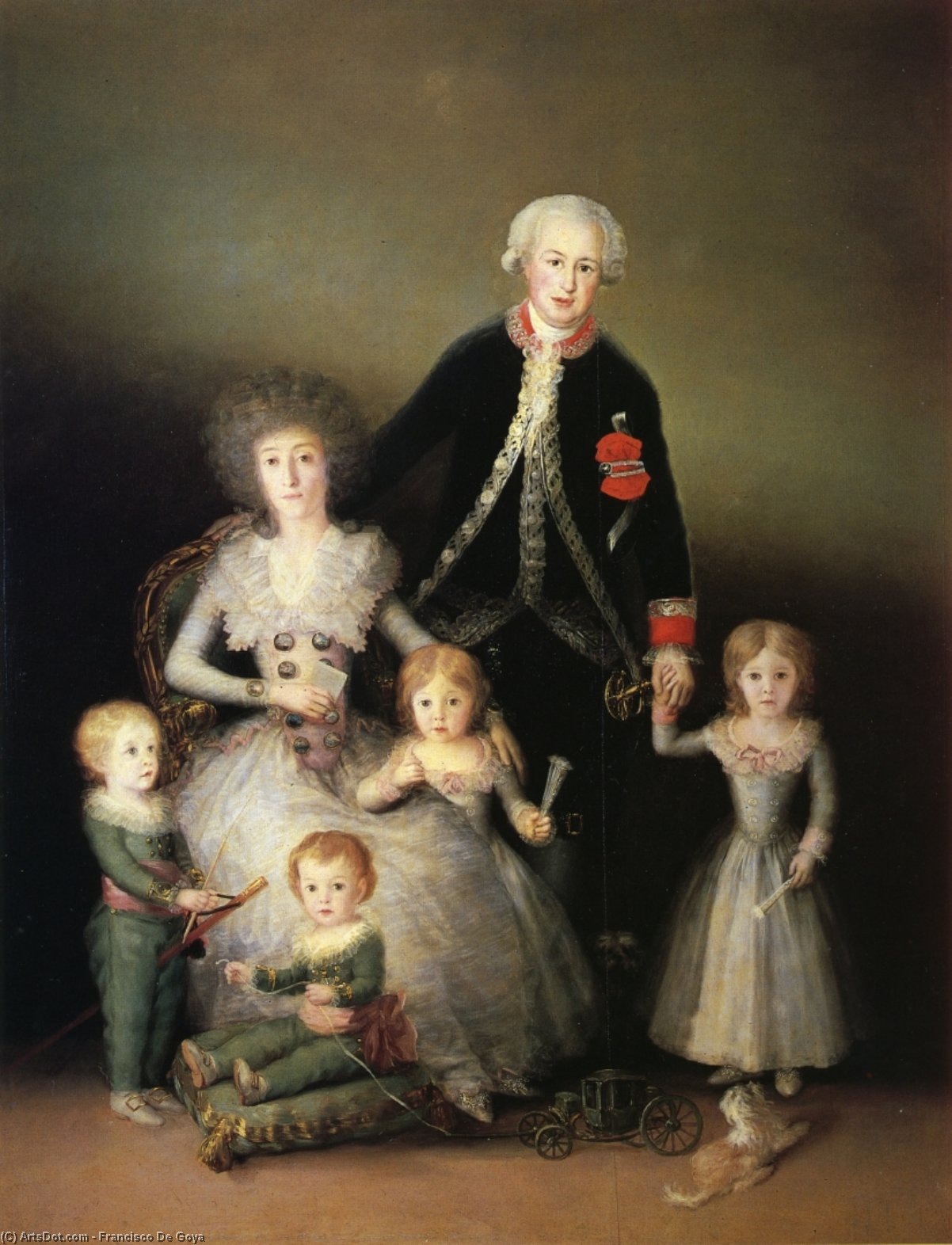
The Duke of Osuna and His Family: A Portrait Steeped in Romantic Sentiment
Francisco José de Goya y Lucientes’ “The Duke of Osuna and His Family” stands as a cornerstone of Spanish Romanticism, transcending mere visual representation to embody the anxieties and burgeoning individualism that defined the era. Completed in 1788, this monumental oil on canvas – measuring 225 x 174 cm – currently resides within the Museo del Prado’s hallowed halls, offering visitors a privileged glimpse into the opulent world of aristocratic Spain.
Context and Significance: The portrait captures Pedro Téllez Girón, the ninth Duke of Osuna, alongside his wife Josefa Alonso Pimentel and their four children. Their family was undeniably influential within Spanish nobility, representing the pinnacle of social prestige. Notably, Goya’s patrons included figures who championed artistic innovation – particularly José Ramón Sorolla—demonstrating a keen understanding of prevailing cultural currents. The Duchess's impeccable taste mirrored Parisian fashions, highlighting the interconnectedness of European artistic circles and reflecting Goya’s own admiration for Mengs’ influence.
Composition and Details: Goya skillfully employs a triangular compositional arrangement reminiscent of Anton Raphael Mengs, positioning the figures with deliberate grace. This technique lends stability to the scene while simultaneously directing the viewer's gaze across the canvas. The Duke is depicted in formal attire—a testament to aristocratic protocol—while Josefa wears an exquisitely crafted French gown, signaling the stylistic preoccupation of the time. Most striking are the children themselves; Goya captures their youthful energy and innocence with remarkable sensitivity, portraying them engaged in playful activities that infuse the portrait with warmth and familial affection.
Artistic Style: “The Duke of Osuna and His Family” firmly establishes Goya’s Romantic style. Unlike the polished idealism prevalent in Neoclassicism, Goya embraced emotional expression and psychological depth. This shift is palpable in his nuanced portrayal of character—particularly the subtle nuances conveyed through facial expressions—reflecting a growing disillusionment with societal conventions and an exploration of darker human emotions. The masterful use of chiaroscuro – dramatic contrasts between light and shadow – enhances the painting’s atmosphere, creating a sense of intimacy and highlighting the familial bonds depicted.
Relevance and Legacy: Beyond its aesthetic beauty, “The Duke of Osuna and His Family” serves as invaluable documentation of 18th-century aristocratic life. It exemplifies Goya's unparalleled ability to capture not only outward appearances but also inner states of mind—a characteristic that distinguishes him from many of his contemporaries. Today, reproductions offer art enthusiasts a chance to experience the grandeur and emotional resonance of this iconic masterpiece, preserving its legacy for generations to come.