The Forge: A Crucible of Emotion and Social Critique
Francisco José de Goya y Lucientes’ “The Forge,” painted circa 1815-20, stands as a monumental achievement within the Romantic canon—a painting that transcends mere depiction to embody the turbulent spirit of its time and grapple with profound questions about human suffering and societal injustice. More than just a visual record of labor, it's an unsettling psychological portrait rendered in oil on canvas, reflecting Goya’s unwavering commitment to portraying the darker side of humanity.
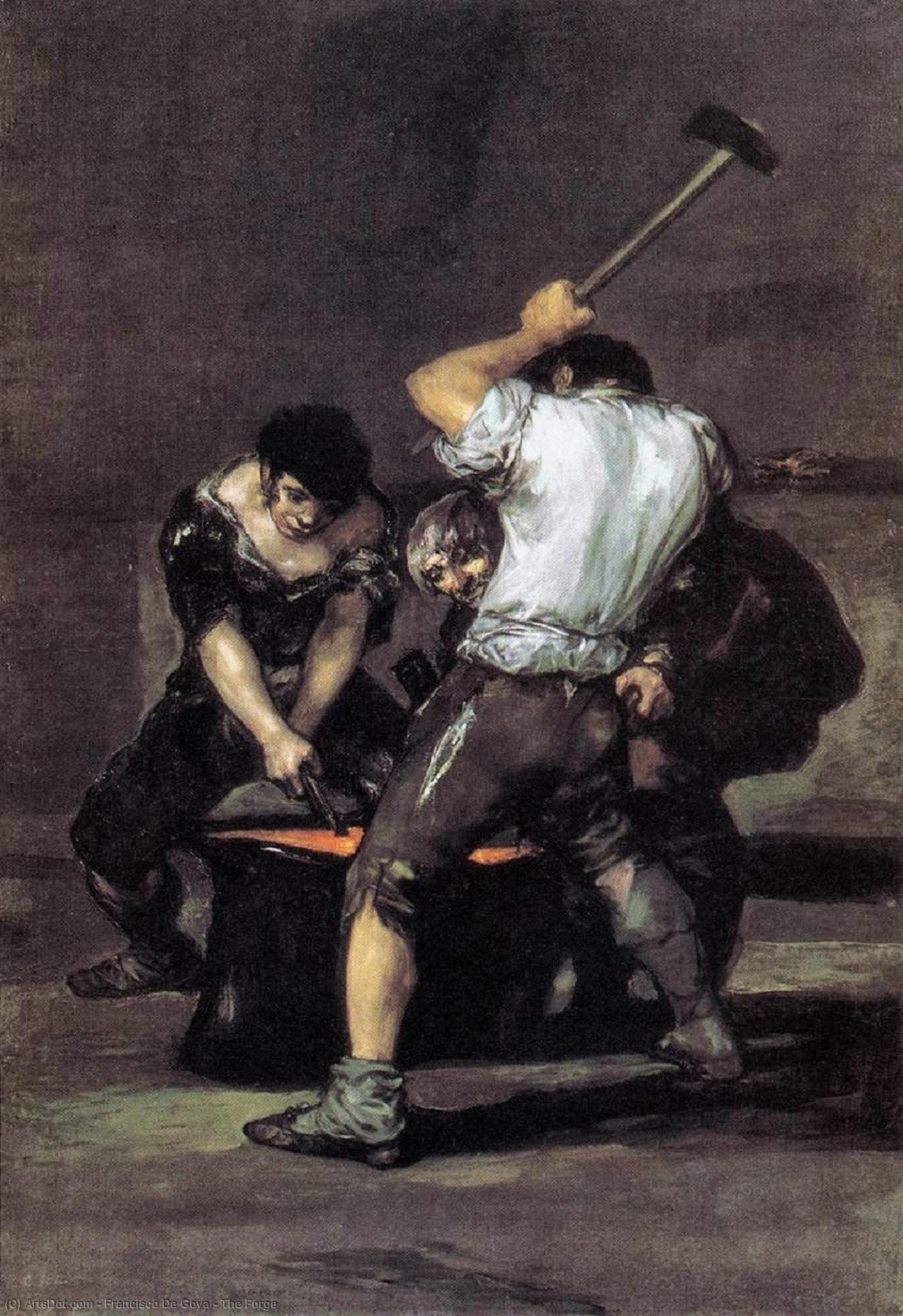
- Composition & Movement: The artwork commands attention immediately with its dynamic diagonal lines—created by the postures of the figures and the angle of the hammer—driving a palpable sense of tension forward. At the center, two men engage in a confrontation, their bodies positioned to draw the viewer’s gaze directly into this pivotal interaction. The dark background serves as an isolating force, amplifying the drama unfolding before us.
- Color Palette & Atmosphere: Dominated by muted browns, grays, blacks, and subdued reds, “The Forge” exudes a pervasive gloom—a deliberate choice that underscores the painting’s oppressive mood. Subtle tonal variations highlight the clothing of the hammer-wielder, providing a slight visual contrast against the darker attire of his kneeling counterpart.
- Technique & Texture: Goya's masterful brushwork is characterized by loose gestural strokes—particularly evident in the rendering of skin tones and clothing—creating a rough texture that speaks to the physicality of labor. This technique isn’t merely stylistic; it conveys an emotional urgency, mirroring the intensity of the scene.
- Lighting & Dramatic Effect: The painting utilizes dramatic directional lighting emanating from an unseen source, casting deep shadows that accentuate muscularity and heighten the sense of mystery. This masterful manipulation of light contributes significantly to the artwork’s overall impact—creating a visual experience that is both unsettling and captivating.
Beyond its formal qualities, “The Forge” resonates with powerful symbolism. The hammer itself represents force and control—a tool wielded by one figure against another, embodying the dynamics of power struggles within the workshop setting. Interpretations extend beyond the literal depiction of labor to encompass broader themes of oppression and vulnerability.
Painted during Goya’s final years—a period marked by profound personal turmoil and artistic experimentation— “The Forge” exemplifies his Romantic style—characterized by an unflinching gaze at human suffering and a willingness to confront uncomfortable truths. It's a testament to Goya’s genius, securing its place as one of the most emotionally resonant and intellectually stimulating artworks of the era.
- Historical Context: Produced amidst the Napoleonic Wars and the subsequent restoration in Spain, “The Forge” reflects anxieties about social upheaval and the precariousness of human existence. Goya’s unflinching portrayal of labor aligns with Romantic ideals—challenging idealized representations of virtue and advocating for empathy toward marginalized populations.
- Emotional Impact: The painting evokes a visceral response—a feeling of unease and apprehension that lingers long after viewing. It compels contemplation on themes of dominance, resistance, and the human cost of ambition. “The Forge” remains a haunting reminder of Goya’s enduring legacy as an artist who dared to confront darkness with uncompromising honesty.
This reproduction captures the essence of Goya's vision—preserving the painting’s dramatic lighting, textured brushwork and evocative color palette. Ideal for enriching any interior space or inspiring artistic appreciation.