A Disturbing Vision of Labor and Morality: Unveiling Goya’s *The Forge*
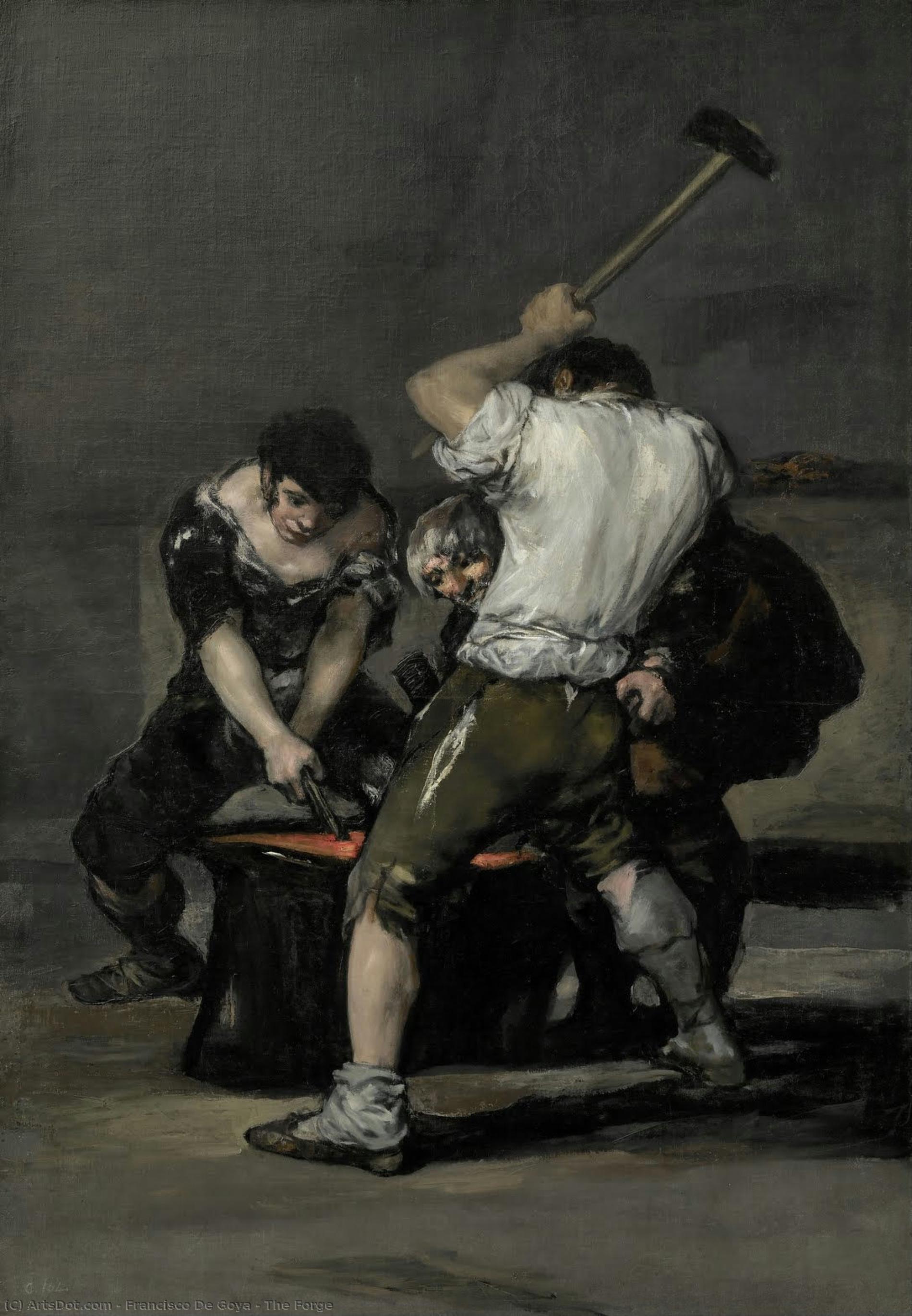
Francisco Goya's *The Forge*, painted around 1820, is a powerfully unsettling work that transcends mere depiction to become a profound statement on the human condition. Housed in the Frick Collection, this large-scale oil painting immediately commands attention with its dramatic composition and somber palette. It’s not simply a scene of blacksmiths at work; it's an exploration of power, labor, and perhaps even a veiled commentary on Spain’s turbulent political landscape.
Subject Matter & Composition
The painting presents three figures – powerfully built blacksmiths – intensely focused on their task at the anvil. Goya eschews narrative detail; we aren't witnessing a specific event but rather *an* event, an eternal moment of strenuous labor. The composition is tightly framed, drawing the viewer into the claustrophobic space and amplifying the physicality of the men. Their muscular bodies are rendered with almost sculptural quality, reminiscent of classical heroism, yet their faces possess a coarseness that grounds them in reality – they are not idealized gods but working-class individuals. The low vantage point further enhances this sense of imposing presence, making us feel as though we’re intruding upon their domain.
Style & Technique
*The Forge* is a quintessential example of Goya's late Romantic style.
Loose brushstrokes and a muted color palette – dominated by grays, blacks, browns, and flashes of fiery red from the forge itself – create an atmosphere of intense drama and emotional weight. Goya’s technique is characterized by *impasto*, particularly in areas like clothing and flesh, adding texture and a tactile quality to the painting. This isn't about precise representation; it’s about conveying feeling and psychological impact. The dramatic chiaroscuro – the stark contrast between light and shadow – heightens the sense of unease and mystery.
Historical Context & Symbolism
Painted in the aftermath of the Peninsular War (Napoleonic Wars) and during a period of significant political upheaval in Spain, *The Forge* is often interpreted as an allegory for national reconstruction. The blacksmiths can be seen as representing the Spanish people, hammering out their future on the “anvil of history.” Some scholars suggest a connection to the drafting of the Spanish Constitution of 1812, symbolizing the forging of a new political order. However, Goya’s symbolism is rarely straightforward. Art historian Janis Tomlinson proposes a link to classical mythology – specifically, the Forge of Vulcan – and suggests layers of meaning relating to fidelity and deception. The painting's ambiguity allows for multiple interpretations, adding to its enduring power.
Emotional Impact & Legacy
*The Forge* evokes a complex range of emotions: awe at the physical strength of the figures, unease at the darkness and intensity of the scene, and perhaps even a sense of moral questioning. It’s not a comfortable painting; it challenges viewers to confront difficult truths about labor, power, and the human condition.
Goya's masterful use of light, shadow, and composition creates an atmosphere that is both captivating and disturbing. This work stands as a pivotal moment in the transition from traditional art to modernism, influencing generations of artists with its raw emotionality and innovative technique. It remains a compelling piece for collectors seeking impactful artwork and interior designers aiming to create spaces that provoke thought and conversation.
Further Exploration
- Consider pairing this reproduction with neutral color palettes to allow the painting’s drama to take center stage.
- The painting's scale makes it a statement piece for large living areas or studies.
- Explore other works from Goya’s late period, such as his *Black Paintings*, to gain a deeper understanding of his artistic evolution and thematic concerns.