Introduction
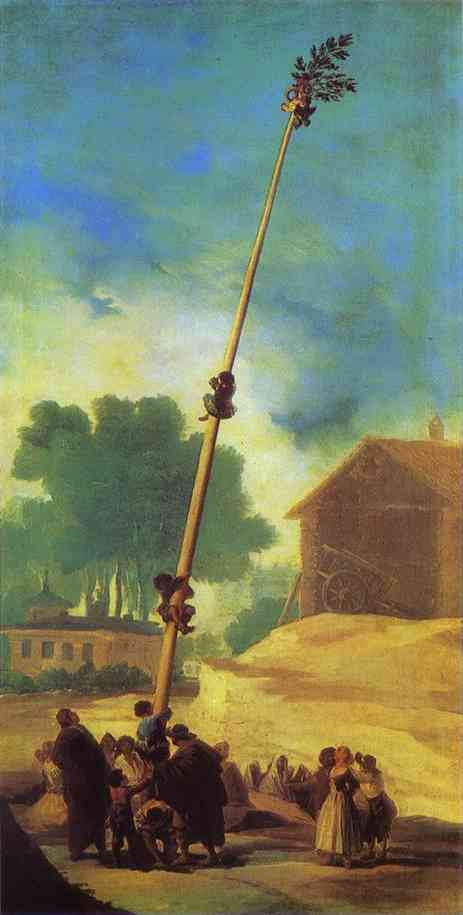
Francisco de Goya, a renowned Spanish artist, created
The Greasy Pole in 1819. The painting is an excellent example of his unique style and technique. In this article, we will explore the artist's background, the painting's title, media, style, and provide an analysis of the image.
Artist: Francisco de Goya
Francisco de Goya was born in 1746 in Fuendetodos, Spain. He is considered one of the most important Spanish artists of the late 18th and early 19th centuries. Goya's works are known for their powerful depictions of war, political turmoil, and social issues. His style evolved over time, from a Rococo influence to a more expressive and personal approach.
Title: The Greasy Pole
The Greasy Pole, also known as
La Cucaña, is a painting that depicts a traditional Spanish festival where participants attempt to climb a greased pole to reach a ham at the top. The painting reflects Goya's interest in capturing everyday life and his unique ability to convey movement and energy.
Media: Oil on Canvas
Goya painted
The Greasy Pole using oil on canvas, a medium that allowed him to create rich textures and vibrant colors. The painting measures 106 x 153 cm and is currently housed in the Museo del Prado in Madrid, Spain.
Style: Romanticism
Goya's style evolved over time, but his later works, including
The Greasy Pole, are characterized by a romantic sensibility. Romanticism was an artistic and literary movement that originated in the late 18th century and emphasized emotion, individualism, and the beauty of nature. Goya's use of loose brushstrokes and his ability to convey movement and energy reflect this style.
Analysis of the Image
The Greasy Pole is a lively and energetic painting that captures the excitement and chaos of the traditional Spanish festival. Goya's use of loose brushstrokes and his ability to convey movement and energy are evident in the painting's dynamic composition. The painting features a group of people attempting to climb a greased pole, with some falling off and others cheering them on. The painting's focal point is the ham at the top of the pole, which represents the prize that the participants are striving to reach. Goya's use of color and light creates a sense of depth and perspective, drawing the viewer's eye towards the ham. The painting's background features a crowd of people watching the spectacle, adding to the sense of excitement and energy.
Conclusion
The Greasy Pole by Francisco de Goya is an excellent example of his unique style and technique. The painting reflects Goya's interest in capturing everyday life and his ability to convey movement and energy. As a leading Spanish artist, Goya's works continue to inspire and influence artists today. If you are interested in purchasing a hand-made oil painting reproduction of
The Greasy Pole, please visit our website at
/en/art/show/art-6e3t8s-en/. We offer a wide range of reproductions, including works by Francisco de Goya and other famous artists.
The Greasy Pole is just one example of the many masterpieces that can be found in the Museo del Prado in Madrid, Spain. If you are planning a visit to Madrid, we highly recommend visiting this world-renowned museum to see the original painting and other works by Francisco de Goya.
The Greasy Pole is an excellent addition to any art collection, and its unique style and technique make it a valuable piece of art history. Whether you are a collector or simply an art enthusiast, this painting is sure to inspire and captivate you.